
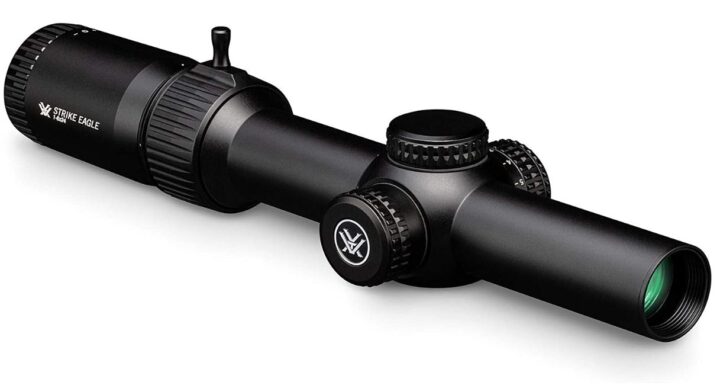
If you’ve ever taken a shot and gotten the scope slapped back into your brow, you already know why eye relief matters. It’s one of those specs that shooters often overlook until they get burned, sometimes literally. Whether you’re running an AR-15 in competition, building a do-everything carbine, or just trying to stretch your effective range without giving up close-quarters speed, a good LPVO with forgiving eye relief can make your whole shooting experience safer and more enjoyable.
This guide breaks down what eye relief actually is, why it matters so much on a low-power variable optic, and reviews five LPVOs with long eye relief.
| Scope | Eye Relief |
| Vortex Razor HD Gen II-E 1-6×24
|
4.0″ |
| SIG Sauer TANGO-MSR 1-6×24
|
3.74″–3.93″ |
| Vortex Crossfire II 1-4×24
|
4.0″ (up to 5″ at 1x) |
| Primary Arms SLx 1-6×24 Gen IV
|
4.0″ |
| Leupold VX-6HD 1-6×24
|
3.7″–3.82″ |
LPVOs with Long Eye Relief -Reviews
1) Vortex Razor HD Gen II-E 1-6×24
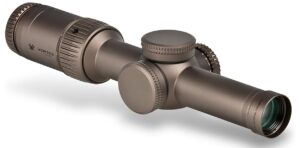
The Razor HD Gen II-E is Vortex’s flagship LPVO, and it wears that crown well. The eye relief checks in at a clean 4 inches, which is on the generous end for a 1-6x optic. What makes it especially shooter-friendly isn’t just the number, though, it’s the eye box that comes with it. At true 1x, an ultra-forgiving eye box complements the generous eye relief, giving you a heads-up-display-like sight picture that lets you engage close targets almost like you would with a red dot.
Practically speaking, the eye relief of around 3–4 inches make it a good fit for AR-platform rifles, and there’s practically no outline shadow of the scope body when shooting both eyes open. That’s a meaningful real-world advantage when you’re coming up on a target fast.
- Eye Relief: 4 inches
- Magnification: 1–6x
- Tube: 30mm
- Weight: 21.5 oz
2) SIG Sauer TANGO-MSR 1-6×24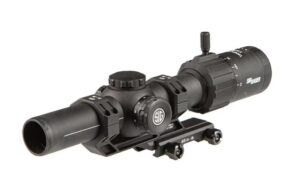
SIG’s TANGO-MSR is often the first recommendation you’ll hear for shooters stepping into the LPVO world on a reasonable budget, and its eye relief is a big part of why. Eye relief runs from 3.74 inches at high magnification to 3.93 inches at low magnification, consistent and shooter-friendly across the zoom range. That slight increase at 1x is exactly what you want for fast transitions.
At 1x, the eye relief sits at around 3.5 to 4 inches, which is typical for the class, while the field of view is strong at around 122 feet at 100 yards. One thing that reviewers consistently flag is that the eye box tightens up at higher magnification, so this scope rewards consistent cheek weld, especially when you dial up to 6x for precision work.
- Eye Relief: 3.74″–3.93″
- Magnification: 1–6x
- Tube: 30mm
- Weight: 18.5 oz
3) Vortex Crossfire II 1-4×24
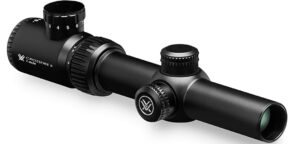
The Crossfire II is one of the most popular budget LPVOs on the market, and its eye relief story is surprisingly good. The official spec is 4.0 inches of eye relief, and in real-world testing it performs even better than that. One hands-on reviewer measured it at about 5 inches at 1x and 4 inches at 4x, which suggests Vortex is publishing conservative numbers. That real-world forgiveness makes the Crossfire II especially friendly for newer shooters still dialing in their cheek weld.
For mounting on a lever gun, the 4-inch eye relief is excellent, and for a flat-top AR with a cantilever mount, it works just as well. The 1-4x magnification range is worth noting, it tops out lower than most modern competition LPVOs, but for a hunting build, a truck gun, or someone’s first magnified optic, the 4x ceiling is plenty capable out to 200 yards or so.
- Eye Relief: 4.0 + inches
- Magnification: 1–4x
- Tube: 30mm
- Weight: 14.8 oz
4) Primary Arms SLx 1-6×24 Gen IV
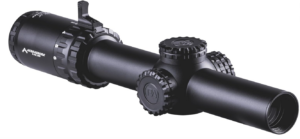
Primary Arms has quietly become one of the most respected names in the budget-to-mid-range LPVO space, and the SLx 1-6×24 Gen IV is the product that gets them there. Eye relief is listed at 4 inches across the magnification range, and multiple reviewers confirm this holds up in practice. The generous eye relief works well across the entire magnification range and accommodates different shooting positions, whether prone, standing, or off a barricade.
The standout feature here is the ACSS reticle system. The ACSS Nova or Aurora reticles are legitimately clever designs that integrate BDC, wind holds, ranging, and moving target leads into a single intuitive sight picture. The optic is 10.4 inches long and weighs 17.9 ounces, with a generous eye relief of four inches and an integrated throw lever.
- Eye-Relief: 4 Inches
- Magnification: 1–6x
- Tube: 30mm
- Weight: 17.9 oz
5) Leupold VX-6HD 1-6×24
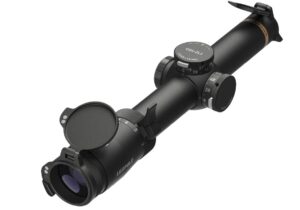
If you’re ready to step into premium territory, the Leupold VX-6HD 1-6×24 is the LPVO that serious hunters and professional shooters have trusted for years. Eye relief runs from 3.7 to 3.82 inches depending on magnification, and Leupold’s Professional-Grade Optical System makes the most of every millimeter of that eye box.
What sets the VX-6HD apart is the overall quality of the package. It offers ample eye relief, and at long range, it can faithfully engage targets at 400 yards and beyond at 6x power, with the kind of glass clarity that makes long-range target identification genuinely easy. Wide zoom range, an in-scope electronic reticle level, CDS-ZL2 Zero Lock elevation dial, and removable throw lever make the VX-6HD one of the most versatile Leupold scopes ever made.
The eye box, while not dramatically wider than the competition, is highly consistent and forgiving across the entire magnification range.
- Eye Relief: 3.7–3.82 inches
- Magnification: 1–6x
- Tube: 30mm
- Weight: 13.4 oz
FAQs
What Is Eye Relief?
Eye relief is the distance between the rear lens of your scope (the ocular lens) and your eye at which you get a full, clear sight picture. Measure too close, and you see a dark ring around the image. Pull back too far, and the same thing happens. There’s a sweet spot, a window, where everything lines up, and the full field of view opens up cleanly.
For most centerfire rifle scopes, that window is somewhere between 3 and 4.5 inches. Fixed-power scopes tend to be more forgiving, while variable-power scopes, especially at higher magnifications, can get quite demanding, shrinking the usable eye box considerably.
Why Eye Relief Is Especially Important on an LPVO
Low-power variable optics live in a unique performance space. At 1x, you want to shoot both eyes open, fast and instinctive like a red dot. At 4x, 6x, or beyond, you’re punching out to medium range with more precision. That demand for speed at close range means your head doesn’t always land in the same position on the stock when you’re transitioning fast or shooting from awkward positions.
A scope with generous eye relief forgives an imperfect cheek weld. If your eye lands an inch further back than ideal, you still get a usable sight picture instead of a blackout ring that costs you precious seconds.
There’s also the matter of safety. On high-recoil rifles, scopes with short eye relief can “kiss” your brow under recoil, earning the nickname “scope bite.” Even on moderate AR-calibers, it can happen with the wrong mount height or a poorly-fitted scope-to-stock relationship. More eye relief means more margin between your face and the optic when the rifle drives rearward.
Eye Relief vs. Eye Box
It’s worth separating these two related but distinct concepts. Eye relief is the distance from the lens to your eye. The eye box is the size of the zone at that distance within which your eye can move laterally and still see the full image. A scope can have generous eye relief but a tight eye box, which means you have to be at the right distance and perfectly centered. The best LPVOs give you both.
What’s a Good Eye Relief for an LPVO?
Generally speaking, anything above 3.5 inches is considered comfortable for a centerfire rifle scope. Most shooters are happy in the 3.5-to-4-inch range, and anything north of 4 inches starts to feel genuinely generous. For high-recoil calibers, think .308 or above, you want to prioritize the longer end of that range to give yourself more margin against scope bite.
For LPVOs specifically, it’s also worth paying attention to how the eye relief changes across the magnification range. Some scopes have quite different numbers at 1x versus 6x, which can be disorienting if you’re not expecting it. The best LPVOs keep that variation narrow, so your head doesn’t have to move when you dial up.
Related