
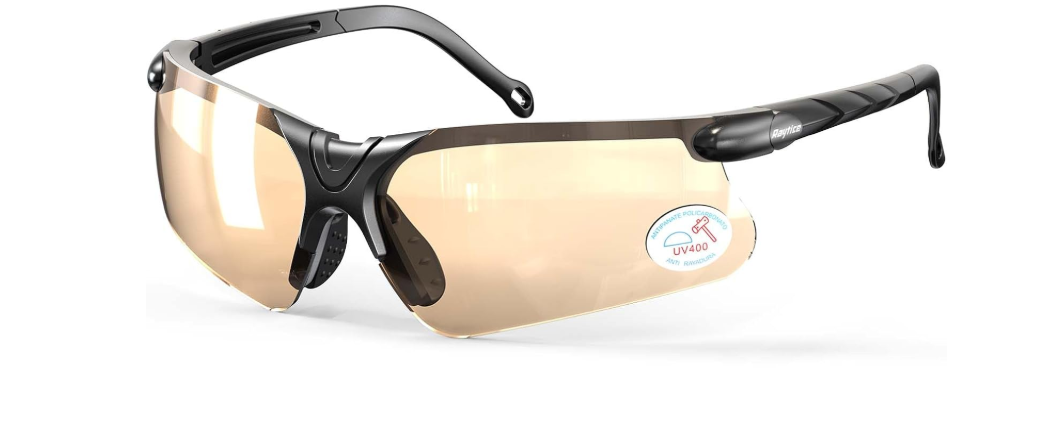
Wearing the best gun range eye protection is the simplest habit that prevents catastrophic eye injuries at the firing line.
The eye, being one of the softest spots in the body, makes it very vulnerable in the case there is a spent case, flying debris, a ricocheted fragment, or even chemical irritants at indoor ranges. The best shooting glasses or ballistic eyewear give you clear vision, reliable impact protection, comfort, and durability.
In this article, we’ll review some of the best currently available real-world shooting glasses and tell you why you should buy them.
At a glance;
- ESS Crossbow Suppressor 2X Kit
- Oakley SI Ballistic Det Cord
- Wiley X Saber Advanced
- RayTice shooting glasses
- Oakley SI Ballistic M-Frame 3.0
- HTS Huntersky shooting glasses
- Radians Revelation Glasses
- xaegistac Shooting Glasses
Best Gun Range Eye Protection -Top Picks
1. ESS Crossbow Suppressor 2X Kit
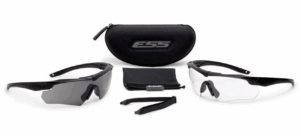
The ESS Crossbow Suppressor 2X Kit is designed with serious tactical/range needs in mind. Its standout feature is the ultra-thin temple arms on the Suppressor frame, letting you use over-ear hearing protection or communication headsets without compromising the seal or comfort.
The 2.4 mm polycarbonate lenses are ballistic-rated with MIL-SPEC MIL-PRF-31013, ANSI Z87.1+, and OSHA ratings.
The kit includes more than one frame and multiple lenses (clear, smoke/gray, hi-def copper) so you can adapt to lighting conditions. The frames are ergonomic, the nose piece options are adjustable, and the fit is secure without undue pressure.
For shooters who switch between environments or use hearing protection gear, this kit is well-suited.
Pros
- Bballistic ratings, ANSI compliance.
- Thin temples improve compatibility with earmuffs and headsets.
- Multiple lens tints plus secure locking system.
- Good anti-fog and scratch-resistant coatings.
Cons
- Thin temple arms may be less robust than bulkier frames.
2 Oakley SI Ballistic Det Cord
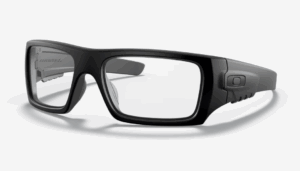
The Oakley SI Ballistic Det Cord blends tactical-level ballistic protection with refined optical clarity and practical ergonomics. Built around an O-Matter™ frame, the Det Cord uses a “Thin Stem Technology” design so that the temple arms stay low-profile and better accommodate over-ear hearing protection or mounts.
The lens is constructed of Plutonite® polycarbonate and engineered with Oakley’s HDO® (High-Definition Optics) system, which helps minimize distortion across the optic field even under wrap-around curvature.
It meets or exceeds stringent ballistic standards, including MIL-PRF-32432, as well as ANSI Z87.1 for high-velocity impact
The nosepiece is made of Unobtainium™, giving a secure grip even in sweaty or rapid motion conditions.
Pros
- Excellent ballistic protection (meets MIL-PRF-32432) and ANSI high-velocity ratings
- High optical quality via HDO® system, minimizing distortion
- Thin stems improve compatibility with earmuffs and headsets
- Good coatings (anti-fog, scratch resistance) and multiple lens options
- Comfortable fit with a secure nose grip
Cons
- Premium cost relative to simpler safety glasses
- Lens and tint swaps are additional expenses
- Wrap-around curvature can cause peripheral distortion for some users
- May feel slightly bulky with large side coverage for smaller faces
- Dark tints reduce visibility in low-light or indoor conditions
3. Wiley X Saber Advanced
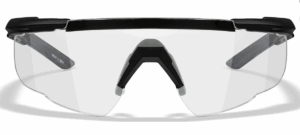
The Wiley X Saber Advanced shooting glasses combine rugged ballistic protection with features built for comfort, utility, and adaptability.
The lenses are made of Selenite™ polycarbonate, certified to MIL-PRF-32432(GL) standards as well as ANSI Z87.1 for high-velocity and high-mass impacts, so you can rely on them under demanding shooting conditions.
Clarity is maintained through high-quality optics and Wiley X’s T-Shell™ scratch-resistant coatings. The frame design includes an adjustable “Take Flight” nosepiece so users with different nose bridges can dial in comfort and seal.
Behind the lenses, there’s a removable foam insert that helps block wind, dust, or debris especially helpful in outdoor ranges or windy conditions.
The lens tint options typically include clear, smoke/gray, and variants in between, letting you match light conditions. Additionally, Wiley X offers a PTX prescription insert system, enabling shooters who need vision correction to retain full ballistic protection. The frame is robust yet light enough for extended wear.
Pros
- Certified to top ballistic and impact standards (MIL-PRF-32432(GL), ANSI Z87.1)
- Strong optical clarity with quality coatings
- Adjustable nosepiece enables personalized fit
- Foam insert helps block wind, debris, and aids in anti-fog/wind control
- Option for prescription insert (PTX)
Cons
- Smoke or dark tints can severely reduce visibility in low-light
- Foam insert and extra features add bulk and may feel warm or tight in hot weather
4. Oakley SI Ballistic M-Frame 3.0
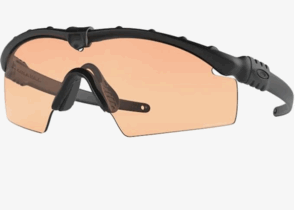
The Oakley SI Ballistic M-Frame 3.0 is a rugged, full-coverage ballistic eyewear solution built for high-threat environments.
Its frame has been widened (~145 mm) and lens height increased (~50.7 mm) over earlier models, offering broader peripheral coverage and better protection from side and angled threats.
The lenses are crafted from Plutonite® polycarbonate and employ Oakley’s HDO® (High-Definition Optics), ensuring minimal distortion and consistent clarity across the viewing field, even with wrap-around geometry. The M-Frame 3.0 meets or exceeds ANSI Z87.1 high-mass and high-velocity impact criteria, as well as MIL-PRF-31013 ballistic fragmentation standards.
Venting and anti-fog systems are improved over prior models, helping maintain clarity during strenuous activity. The detachable brow guard and optional strap increase versatility. The frame is robust and built to withstand rigorous use, though it is bulkier than minimalist safety glasses.
Pros
- Excellent ballistic protection
- Wide lens and frame design provide superior side/angled coverage
- High optical quality with minimal distortion
- Optional brow guard/strap for flexibility
- Built for heavy use
Cons
- Overkill for casual shooters
- May interfere with helmets
5. HTS Huntersky shooting safety glasses
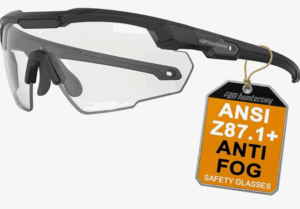
The HTS Huntersky shooting safety glasses aim to deliver a military-grade look and utility at an affordable price.
The frame is lightweight, flexible, and designed to fit various head shapes, with features like a hinge expansion mechanism that allows slight width adjustment and an adjustable nose piece for custom comfort.
The lenses are polycarbonate and they meet ANSI Z87+ safety standards, making them rated for high-velocity impact in many consumer safety applications.
Some variants also incorporate anti-fog properties and polarized or smoke/gray tints to reduce glare, especially outdoors.
The wrap-around or semi-wrap profile helps shield from side risks, while the half-frame or low-profile design keeps weight modest and comfort acceptable for extended wear.
The HTS Huntersky glasses, however, don’t always carry the rigorous military ballistic certifications (e.g. MIL-PRF) that premium tactical models do, so while they’re solid for general range use, they may not offer the extra margin needed in heavy-duty fragmentation scenarios.
Pros
- Meets ANSI Z87+ safety certification
- Lightweight, flexible frame with some adjustability
- Variety of tints
- Affordable compared to premium ballistic eyewear
Cons
- Lacks full military ballistic certifications.
- Optical clarity may suffer more distortion than high-end brands
6. Radians Revelation (RV0110CS)
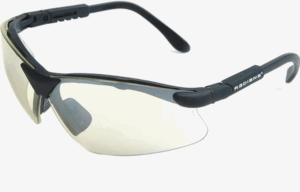
The Radians Revelation line is another budget option for casual shooters who want ANSI-rated protection without major cost.
These glasses have hard-coated polycarbonate lenses that are impact-resistant, scratch-resistant, UV protective (99.9% UV), and have anti-fog or ventilated designs to help reduce fogging.
The Revelation glasses often include features like multi-position lens tilt, adjustable temple length, sometimes rubber sleeves on temples, and soft rubber nose pads, making them more comfortable for general range use.
While they do meet ANSI Z87.1+ safety standards, they do not generally meet the higher ballistic or MIL-SPEC ratings that the more expensive frames do.
These glasses, however, are less suited where you expect fragmentation or heavy ballistic exposure, or for use with very bright outdoors, unless you have tinted lenses. Also, the coatings are less premium and may degrade faster.
Pros:
- Very affordable; great for casual or occasional shooters.
- Decent safety (ANSI Z87.1)
- Light weight, comfortable
- Simple, easy to replace if damaged.
Cons:
- Lacks the higher ballistic standard protection of premium models.
What to Look for in Gun Range Eye Protection
To pick the eyewear that works for you, consider these factors. Each of them matters, often in trade-offs, so understand what’s important for your usage.
1) Safety & Impact Standards
Not all shooting or safety glasses are built to the same level of protection, so it’s vital to understand the markings you’ll find on quality eyewear. These standards ensure the lenses and frames can withstand specific impact levels and optical performance requirements. Always check for these markings on the frame or lens before buying.
ANSI Z87.1 / Z87+ — U.S. Civilian Standard
This is the American National Standards Institute (ANSI) safety standard that applies to most safety glasses sold in the U.S. The Z87.1 certification ensures that the eyewear meets basic impact and optical clarity requirements, protecting against hazards like debris or low-velocity particles.
When you see Z87+, that “plus” indicates a high-impact rating, meaning the glasses have passed more rigorous testing involving higher-speed projectiles. This certification is essential for shooters, range users, and industrial workers because it confirms both strong physical durability and clear, distortion-free vision.
MIL-PRF / MILSPEC — Military Ballistic Standards
The MIL-PRF (Military Performance) specifications are far tougher than civilian standards. These tests involve projectiles fired at much higher velocities than those used in ANSI testing, simulating shrapnel or fragmentation hazards encountered in combat environments. For example, MIL-PRF-32432A defines the ballistic fragmentation protection standard for U.S. military eyewear.
Glasses that meet or exceed this are suitable for military, law enforcement, and tactical use. They ensure lenses can absorb extreme energy impacts without shattering or penetrating, providing true battlefield-level eye safety.
EN166 and Related Marks — European Standards
In Europe, safety eyewear is rated according to EN166 and its related subcategories (EN167, EN168, etc.). These define various protection levels, including resistance to low-, medium-, and high-energy impacts, optical quality, and environmental factors.
For example, markings like EN166 F, B, or A indicate different projectile energy ratings, with “A” being the highest. For international buyers or users in regions following European regulations, EN166-certified eyewear assures that the glasses meet stringent protection and optical standards comparable to or exceeding ANSI in some cases.
2) Lens Material
The material determines both the clarity and durability of your shooting glasses. Polycarbonate lenses are the most common choice they are lightweight, impact-resistant, and naturally filter harmful UV rays.
Some higher-end models use Trivex or NXT materials, which provide slightly better optical clarity with similar toughness. Avoid standard glass lenses for shooting, as they can shatter more easily upon impact. The right lens material combines safety, optical precision, and comfort without adding excessive weight.
3) Frame Fit and Comfort
A comfortable frame ensures stability during recoil or extended range sessions. Look for models with adjustable nose pads, rubberized temples, and lightweight but durable materials such as nylon or polymer composites.
The glasses should stay securely in place even when you’re sweating or moving quickly. Frames that are too tight can cause headaches, while loose ones might slip at critical moments. The ideal pair feels snug without pressure and doesn’t interfere with your cheek weld or shooting posture.
4) Compatibility with Hearing Protection and Helmets
Many shooters overlook this factor, but it’s crucial. Thick temple arms can push against ear muffs, breaking the seal and reducing noise protection. Opt for glasses with thin-stem or low-profile temples if you often use over-ear hearing protection.
If you wear helmets or tactical headgear, ensure the frame doesn’t create pressure points. Models like Oakley’s SI series are designed with this compatibility in mind, providing both comfort and consistent fit alongside other protective gear.
5) UV Protection
Even though most modern polycarbonate lenses naturally block 100% of UVA and UVB rays, it’s worth confirming. Long shooting sessions under direct sunlight can strain your eyes and cause long-term damage.
Good shooting glasses should clearly state their UV protection rating. Some models even filter blue light, reducing glare and eye fatigue during extended outdoor sessions. Always prioritize lenses that offer full-spectrum UV coverage.
6) Lens Interchangeability and Customization
Many high-quality shooting glasses offer interchangeable lenses that allow you to switch tints or replace damaged ones without buying a new frame. This flexibility is useful for shooters who train in different environments—indoor ranges, outdoor ranges, or tactical fields. Some models even support prescription inserts, enabling users with corrective vision needs to enjoy full ballistic protection. Interchangeable systems also make it easier to clean or upgrade your lenses over time.
Gun Range Eye Protection -FAQs
Are regular “safety glasses” enough, or do I need ballistic-rated glasses?
Regular safety glasses (ANSI Z87.1-rated) protect against low-velocity impacts and small debris. If you’re shooting firearms, the shells, hot brass, propellant particles, or even ricochets can exceed what basic safety glasses are designed for.
Ballistic-rated eyewear is tested for much higher-velocity projectiles, fragmentation, and specific norms (MIL-STD or MIL PRF).
How do I prevent my glasses from fogging up while shooting?
Fogging is a common issue due to sweat, heat, or rapid movement. To prevent this, use lenses with proper anti-fog coatings, or double-lens or vented frame designs. Keep the glass clean, as fog is worse when the lens surface is dirty. Some shooters use anti-fog sprays or wipes.
Will ballistic lenses distort my vision or mess with precision?
Any lens has the potential to distort, especially at edges or if the curvature (base curve) is strong. However, premium ballistic eyewear is designed to control distortion, maintain clarity across the field of vision.
If you get poorly made or low-cost lenses, distortion or aberration can reduce precision, cause eye fatigue, or mislead you about the point of aim.
Can I use prescription glasses or inserts with ballistic glasses?
Yes, but with caution. Some ballistic eyewear is made to accept prescription inserts, so you get the ballistic protection plus corrected vision. If you try to grind your prescription directly into a very curved ballistic lens, that can compromise the ballistic integrity.
Always ensure the insert system or the lens conversion is approved by the manufacturer and that the resultant product still meets the required safety standards. Alternatively, wearing contacts plus ballistic glasses is another option.
How do I choose the right lens tint for different shooting environments?
Tint (or lens color) is about managing light and contrast. Clear lenses are good indoors, low light, or when lighting is controlled. Gray/smoke reduces brightness for outdoor daylight conditions without much color shift.
Where can I confirm standards and product claims?
You can confirm eyewear standards and product claims by checking the manufacturer’s official website, packaging labels, and engraved markings on the lenses or frame. Reputable brands also provide certification documents or test reports.
Related