
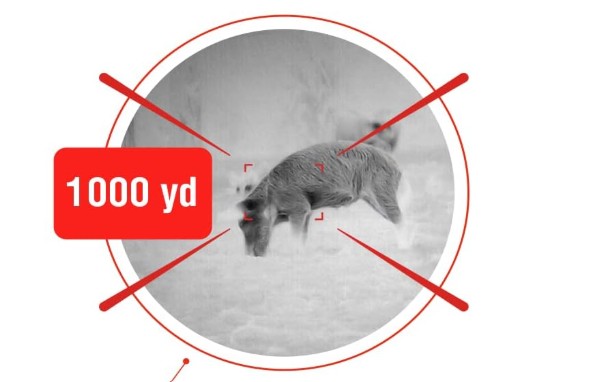
A rangefinder is maybe the quickest and most accurate way to estimate the ranging distance to your target. Whether you are using your scope during the day or at night.
Using a scope with a rangefinder makes it even easier and can go a long way in refining a shooter’s skills. But remember, these skills have to be in existence for a start.
Few scopes on the market incorporate this tool as a built-in feature, and this article is here to review the best ones.
Here is a quick recap;
- Burris Eliminator 6 4-20x52mm
- AGM Spectrum LRF 4K
- BURRIS Eliminator 5 LaserScope 5-20x50mm
- RIX LEAP L6R 50-640
- ATN Thor 5 LRF 4-16x
Benefits of a Rangefinder Rifle Scope
Improved Accuracy
The biggest benefit of a rangefinder scope is accuracy. By giving you the exact distance to your target, it removes guesswork. This is especially important for long-range shots where even small distance errors can cause big misses. When paired with a ballistic calculator, the scope can also provide a corrected aiming point, making your shot placement far more reliable.
Faster Target Engagement
Because the rangefinder is built directly into the optic, you don’t need to switch to a separate device. You stay on the rifle, press a button, and get your range instantly. This saves valuable time when an animal is moving, light is fading, or you need to react quickly in the field.
Shooting Confidence
Knowing the exact range boosts confidence. Instead of estimating bullet drop or wind hold-overs from memory, you rely on precise data. This helps reduce hesitation and supports clean, ethical shots.
Less Movement
Using a handheld rangefinder often requires lifting your head, shifting your position, or adjusting your stance. A rangefinder scope lets you stay locked on the target. Less movement means a more stable shot and less chance of spooking the game.
Convenience in the Field
Carrying one optic that handles aiming, ranging, and ballistic adjustments is far easier than juggling multiple tools. This is especially useful during long hunts, steep climbs, or nighttime shooting when carrying fewer items makes a real difference.
Best Rangefinder Rifle Scopes -Review
1) Burris Eliminator 6 4-20x52mm
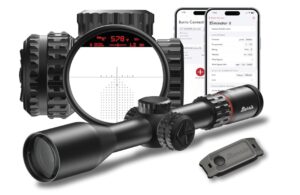
The Burris Eliminator 6 4-20x52mm is a day scope that includes the modern convenience of a built-in laser rangefinder and ballistic calculator for shooters who do not want to compromise on effectiveness and accuracy.
The addition of a clear and bright glass further makes long-range shooting feel much easier. The 4–20× magnification gives you plenty of flexibility to hit targets at medium and long distances.
With a quick press of a button, the scope measures distance, reads the angle, and calculates the correct holdover. It then lights up a precise aiming point inside the reticle, removing much of the guesswork that usually comes with long-range shooting.
The reticle itself is clean and simple, designed to avoid cluttering your view. Since the Eliminator 6 uses an illuminated holdover dot, the reticle stays open and easy to read while still giving you the exact point of aim once the scope does its calculation. Additionally, a heads-up display is there to give you the information you need without breaking your focus.
The scope is extremely sturdy and solidly built, although it’s heavier than normal scopes. The setup, however, is very easy, as it mounts just like a traditional scope.
Pros
- Extremely accurate ranging and holdover system
- Clear, bright glass at all magnifications
- Easy-to-read heads-up display
- Fast target engagement with less guesswork
Cons
- Heavier than standard scopes
2) AGM Spectrum LRF 4K
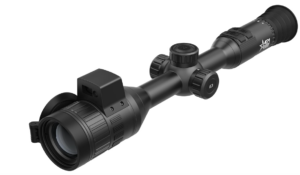
The AGM Spectrum LRF 4K is a modern digital day-and-night rifle scope that brings together a high-resolution video sensor, a built-in laser rangefinder, and smart features. In daylight, the 4K CMOS sensor and adjustable aperture deliver a crisp, clear image that stays usable even in low light.
At night or in low-light conditions, the scope switches to night mode and still shows usable detail, thanks to its digital sensor. The zoom range (about 3.5× to 28×) provides flexibility for close, mid-, or long-range shots.
The built-in laser rangefinder, up to 1,000 m, and the internal ballistic calculator help you aim more precisely. That means less guessing and faster target engagement. The scope also lets you record video or photos right on board the built-in storage, which can be handy if you want to review the shot or record a hunt.
It’s a bit heavier and more complex than a traditional optic, but for someone who wants modern versatility and features in a single package, Spectrum LRF 4K delivers a strong mix of clarity, convenience, and day-or-night usability.
Pros
- Clear, sharp image in daylight thanks to 4K sensor and adjustable aperture
- Works in both day and night
- Built-in laser rangefinder and ballistic calculator
- versatile zoom range
- On-board video/photo recording
Cons
- Clarity gets grainy after about 8x zoom
3) BURRIS Eliminator 5 LaserScope 5-20x50mm
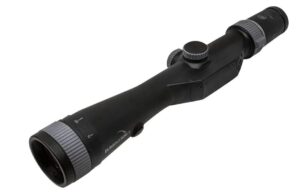
The Burris Eliminator 5 is a smart, all-in-one scope that combines precision optics with advanced technology. The 5–20× magnification and 50 mm objective lens provide bright, sharp images across various distances. Its standout feature is the built-in laser rangefinder paired with a ballistic calculator and inclinometer.
When you press the rangefinder button, the scope measures the distance, accounts for shooting angle and ammunition type, and then displays the exact aiming point on the X96 reticle.
The rangefinder is effective up to about 2,000 yds, but it depends on proper ammo setup and clear line-of-sight. This removes much of the guesswork in long-range shots and allows for faster, more confident targeting.
The wireless remote adds convenience by letting you range targets without disturbing your shooting position, which is especially useful when prone or concealed. Built with durability and weather resistance in mind, the Eliminator 5 can handle tough field conditions.
Pros
- Built-in laser rangefinder and ballistic calculator
- Clear, sharp optics with versatile magnification
- X96 reticle shows exact aiming point
- Wireless remote for easy rangefinder use
- Durable and weather-resistant
Cons
- Pricey
- Requires proper ballistic setup
4) RIX LEAP L6R 50-640
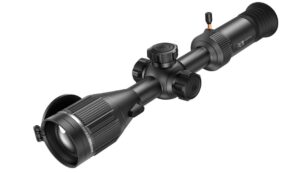
The RIX LEAP L6R 50-640 is a high-performance, valuable thermal scope that uses a 640×480 high-sensitivity thermal sensor paired with a 50 mm germanium lens to deliver excellent thermal detail.
Even when visibility is poor. Heat signatures appear crisp and well-defined, allowing you to identify animals or targets at extended distances with confidence. The continuous optical zoom system (roughly 2.8×–8.4×) feels smooth and natural, giving you wide scanning ability and then the option to tighten in without that grainy “digital-zoom look.”
The built-in laser rangefinder and ballistic calculator work together to give instant holdover information, which is especially helpful for long shots or for hunters who frequently engage targets across open terrain.
The OLED display is bright, the menu is straightforward, and the unit’s construction feels tough enough for hard outdoor use. Extra features like photo and video recording, multiple reticle styles, and external power support make it even more versatile.
Pros
- Excellent thermal clarity and long-range detail
- Smooth optical zoom without major image loss
- Built-in LRF and ballistic calculator
- Rugged, weather-resistant build
- Easy controls plus photo/video recording
Cons
- Heavier than basic scopes
- Pricey due to advanced features
- Battery-dependent electronics
5) ATN Thor 5 LRF 4-16x
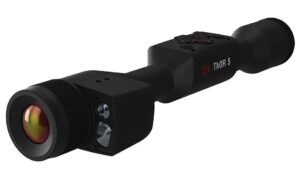
The ATN ThOR 5 LRF 4–16x stands out as a thermal scope that feels both modern and surprisingly easy to settle into. Its upgraded 640 × 480 thermal sensor with a 12-micron pixel pitch and 60 fps refresh rate delivers a clean, detailed image where animals and heat signatures glow clearly against the background, even in the kind of darkness or fog that normally shuts down visibility.
The zoom range from 4× to 16× transitions smoothly, giving you a wide view when you’re scanning and enough magnification to confidently identify and track game at longer distances.
The scope, a built-in laser rangefinder paired with the ballistic calculator, which adds to the great features. With a single press, you get the distance and a corrected aiming point, removing a lot of the guesswork that normally comes with night hunting.
The controls respond quickly, the menus are simple to learn, and extra features like recording, customizable reticles, and recoil-activated video add value without making the scope feel overly complicated. Its rugged build handles weather and recoil well, making it a dependable partner for long nights in the field.
Pros
- Sharp and detailed thermal imaging
- Customizable reticles
- Accurate LRF with ballistic support
- Smooth 4–16× zoom range
- Useful recording and wireless features
- Strong, weather-ready build
Cons
- Needs steady battery management
Rangefinder Rifle Scope Buying Guide
These are some of the other factors to consider in addition to a rangefinder when looking to buy a rangefinder scope.
Reticle
The reticle is the aiming point or crosshair inside the scope. It can be simple or advanced, such as ballistic or range-compensating. A good reticle helps you aim accurately at targets at different distances, speeds up shot placement, and reduces guesswork, especially when using long-range scopes or angled shots.
Some scopes allow customization of reticle style, color, and brightness, improving visibility in various lighting conditions and environments. Choosing a reticle that matches your shooting style and target type is crucial for precision and efficiency in the field.
Optical Clarity
Optical clarity refers to how sharp, bright, and distortion-free the image appears through the scope. High-quality glass, proper lens coatings, and careful construction enhance light transmission, reduce glare, and provide crisp detail.
Clear optics help you identify targets quickly, see subtle differences in terrain or animal movement, and reduce eye fatigue during long observation periods. Poor optical clarity can make it difficult to distinguish targets, especially in low-light conditions, fog, or dense foliage. A scope with excellent clarity ensures a reliable and comfortable viewing experience.
Durability
Durability is the scope’s ability to withstand harsh field conditions, rough handling, recoil, and weather. A durable scope is built with strong materials, is shock-resistant, waterproof, and fog-proof. It is essential for anyone who frequently operates in rugged environments
This ensures consistent performance even in rain, snow, extreme temperatures, or after accidental drops. Durable scopes last longer and maintain accuracy over time.
Effective Range
Effective range is the maximum distance at which the scope’s rangefinder can accurately detect and help you engage a target. For a rangefinder scope, this depends on the laser’s power, target reflectivity, and environmental conditions.
A scope with a longer effective range allows you to see and accurately shoot at distant targets, improving versatility for hunting or long-range shooting.
Magnification
Magnification determines how much the target appears enlarged through the scope. Variable magnification (e.g., 4–16×) allows you to scan wide areas at low power and zoom in for detailed observation or precise aiming.
Higher magnification helps with long-range shots but can narrow the field of view and amplify hand movement or shaking. Lower magnification offers a wider view, faster target acquisition, and easier tracking of moving targets.
Frequently Asked Questions (FAQs)
How accurate are rangefinder scopes?
Rangefinder scopes are generally very accurate, often measuring distances within 1–2 yards under ideal conditions. Accuracy depends on factors like target size, reflectivity, environmental conditions such as fog or rain, and the quality of the scope’s laser and optics. High-end models tend to perform best.
What is a rangefinder scope?
A rangefinder scope is a rifle scope with a built-in system, usually a laser, that measures the distance from the shooter to the target. Some also include ballistic calculators or digital displays that help you adjust your aim for precise, long-range shooting.
Can a rangefinder scope calculate bullet drop?
Yes, many modern rangefinder scopes include ballistic calculators. By inputting ammunition type, muzzle velocity, and shooting angle, the scope can calculate bullet drop and display an adjusted aiming point on the reticle, reducing guesswork and improving accuracy at long ranges.
Do rangefinder scopes require batteries?
Yes, most rangefinder scopes rely on batteries to power features like the laser, illuminated reticle, ballistic calculator, or digital display. Battery life varies by model, so it’s important to carry spares or rechargeables for extended use in the field.
Can I use a rangefinder scope for moving targets?
You can, but performance depends on the scope’s laser refresh rate, reticle design, and user skill. High-quality scopes allow you to track moving targets and provide continuous distance updates, while lower-end scopes work best on stationary or slowly moving objects.
Related