
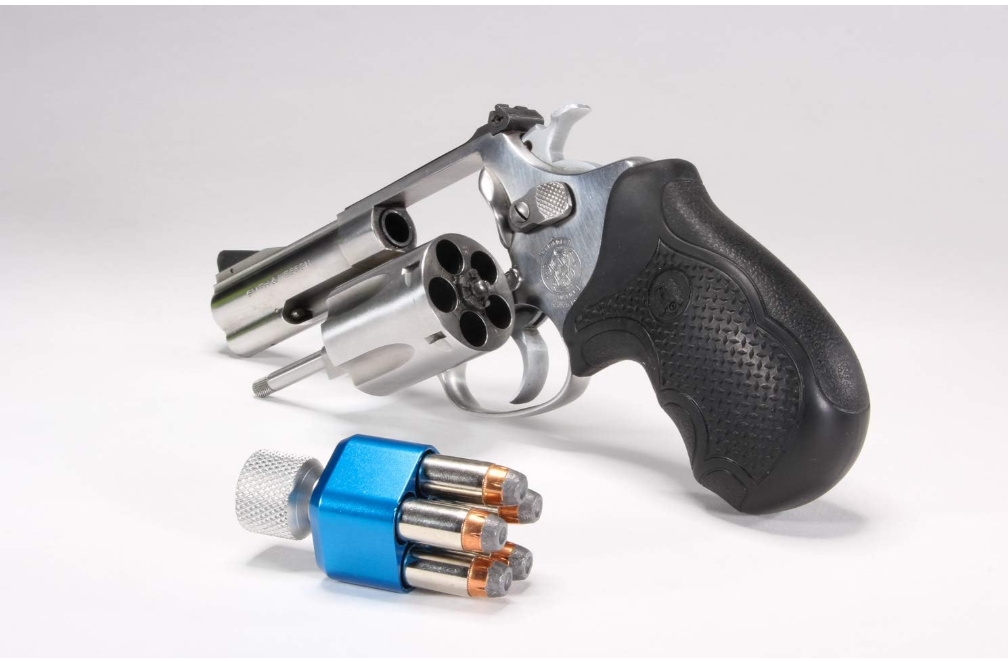
If revolvers are the elegant old-school engines of the handgun world, speedloaders are the tiny performance upgrades that keep them humming under pressure. The one weak link in that smooth experience of revolvers has always been the reload, a tiny pause that can feel much larger when time matters.
A well-chosen speedloader turns that pause into a practiced motion, giving you faster, cleaner reloads on the range and steadier confidence if you ever need to act quickly.
This guide strips away jargon and sales puffery to focus on real-world performance. Read on to find the speedloader that makes your revolver feel like it was always meant to be that fast.
But first, here is a quick summary
Speedloader for Revolvers- Top Picks
1) Safariland Comp III Speedloader
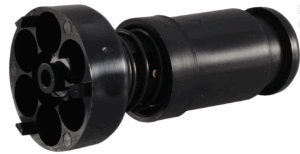
The Safariland Comp III is a purpose-built, spring-assisted push-in speedloader made for competition shooters who want the fastest, most positive seating available.
Unlike a twist or friction loader, a Comp III uses an internal spring so that when you press the loader into the cylinder, the cartridges are “kicked” home with a single confident action. That makes timing repeatable and minimizes partial seats or fiddling with rounds,f a clear advantage in timed stages, drills, and high-adrenaline scenarios.
Construction is an injection-molded polymer for the body with metal internals; it’s rugged and designed for many cycles, but the unit is larger than a slim pocket loader and usually carried in a pouch or dedicated holder rather than loose in a pocket.
Safariland sells Comp III in frame-specific sizes (commonly K and L frame sizes), so you must buy the size that matches your revolver for clean alignment. Many competition shooters praise the Comp III for shaving split-seconds from reloads and providing a very confident “drop and go” feel after practice
Pros
- Extremely fast, and repeatable
- Built for competition reliability and thousands of cycles.
- Produces a very confident, positive-feeling reload.
Cons
- Larger profile best carried in a pouch.
2) STG Speedloader SW6 (6 Rounds)
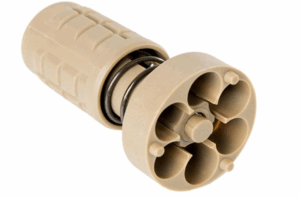
For everyday carry owners and range shooters who want an affordable, reliable mid-speed option between tiny strips and full competition loaders, the STG speedloader SW6 delivers a practical combination of speed, concealability, and durability without unnecessary complexity.
Its spring-assisted “jet” style forces cartridges decisively into the cylinder the moment you press it home, which reduces fiddling and helps ensure positive seating even when the cylinder is vertical or you’re operating with one hand.
The body is made from reinforced polymer to keep weight down and resist corrosion, while textured contact points improve grip when your hands are wet or gloved. The SW6’s profile is deliberately low.
It tucks into a pocket or small pouch easily, and its simple push action makes it straightforward to learn during live practice. Fit is model-dependent, so the loader’s real-world performance hinges on selecting the correct variation for your revolver’s frame and chamber spacing.
Pros
- Fast, positive seating from the spring-assisted “jet” mechanism.
- Lightweight and corrosion-resistant polymer construction.
- Low-profile design suitable for pocket or pouch carry.
- Easy to operate one-handed.
- Budget-friendly compared with high-end metal loaders.
Cons
- Performance depends on correct model/frame matching.
- Polymer parts may show wear faster
3) Safariland Comp II Speedloader
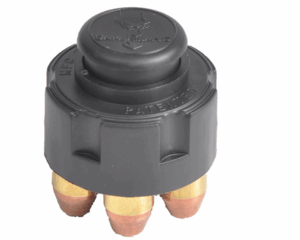
The Safariland Comp II Speedloader is a trusted option for revolver owners who want a balance between rapid reloading and practical carry.
Unlike traditional twist-style loaders, the Comp II relies on a spring-loaded release system that allows cartridges to drop cleanly into the cylinder with a simple push.
This design reduces fumbling and speeds up reloads, especially under stress. It’s compact enough to carry discreetly, making it suitable for both duty use and concealed carry, while still being rugged enough for frequent practice at the range.
The loader is available in multiple frame sizes to fit a wide range of revolvers, ensuring proper alignment for consistent operation. Its intuitive push-action makes it easier for shooters of all experience levels, requiring less fine motor effort compared to twist loaders.
Overall, the Comp II strikes an excellent middle ground, faster than budget models yet still highly practical for everyday use.
Pros
- Quick, push-release system speeds reloads.
- Compact and easy to carry for duty or CCW.
- Available in multiple frame sizes for compatibility.
- Reliable and durable design.
Cons
- Not as fast as the Comp III in competition use.
- Bulkier than ultra-slim pocket loaders.
- Requires correct frame size for proper fit.
4) HKS Speedloader
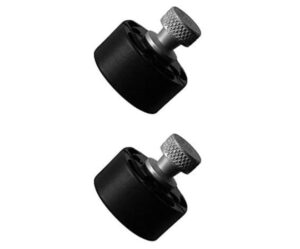
HKS is the long-time inexpensive workhorse in the revolver speedloader world, and the Model 36A (also sold as SL-36-A in some catalogs) is the kind of twist-style loader many shooters trust for simple, durable service.
The HKS 36A is typically sized for 5-shot J-frame .38/.357 revolvers and uses a twist-knob release. The simplicity is the point; few moving parts mean high reliability and low lifetime maintenance.
HKS units are widely available in multiple model numbers, offering the broadest range of wheelguns (J, K, L frames and Magnum sizes), making it easy to find the exact fit for older or commonly used revolvers.
For everyday carry and backup use, HKS strikes an excellent value. It’s small enough to carry in a pocket, robust enough for long-term use, and inexpensive to replace if you misplace one. The tradeoff is that HKS is slightly slower in sprint reloads.
Pros
- Inexpensive, durable, and widely available for many models.
- Simple twist release with few failure modes.
- Great fit options for older and common revolvers.
Cons
- Twist action is generally a touch slower than push/spring designs.
- can wear under heavy use.
5) Pachmayr 02650 Aluminum Speedloader
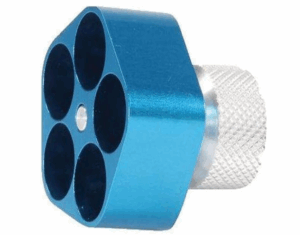
Pachmayr 02650 is a premium aluminum speedloader designed specifically for J-frame revolvers, offering shooters a blend of durability, precision, and reliability.
Unlike many polymer-based loaders, the 02650 is CNC-machined from aluminum, giving it a rugged build that can handle years of repeated use without wearing out.
Its knurled release knob provides excellent grip, even with wet or gloved hands, and the twist-release mechanism allows cartridges to drop smoothly into the cylinder once properly aligned. Because it is crafted with tight tolerances, rounds are held securely with minimal wobble, reducing the chance of misalignment during a fast reload.
This loader is particularly popular with competitive shooters and frequent range-goers who value equipment that can withstand heavy cycling. While it is slightly heavier and more expensive than plastic alternatives, the solid feel and long service life make it a worthy investment for serious revolver owners.
Pros
- CNC-machined aluminum construction for superior durability.
- Smooth, reliable operation with secure cartridge retention.
- Knurled release knob enhances grip and control.
- Excellent choice for competition and heavy range use.
Cons
- Heavier than polymer speedloaders.
- Pricier
See Also: HKS 5-Shot Revolver Speedloader Review
Buying guide — factors explained
Fit & Compatibility
Revolver cylinders differ in diameter, spacing between chambers, extraction rod clearance, and cylinder stop locations. A speedloader that doesn’t seat flush will cause misfeeds or jammed rounds.
Always cross-reference your revolver’s make, model, and barrel length with the loader’s compatibility list to avoid needless returns and dangerous surprises at the range.
Mechanism & Speed Profile
There are different mechanisms involved, such as twist, push-button, spring-assisted, and moon-clip, to match your intended use.
Twist loaders are durable and cheap but slightly slower. Push/spring designs offer faster single-action reloads and help when you must reload one-handed. Moon-clips deliver the fastest reloads for certain cartridges and setups. Pick the mechanism whose real-world performance aligns with carry, duty, or competition priorities.
Retention & Security
Retention determines whether rounds stay snug during movement and whether they release cleanly under pressure. A loader should hold cartridges without rattling, yet permit a predictable release when you actuate it.
Poor retention leads to lost rounds and slower reloads. Consider also pouch choices or carriers that keep loaded speedloaders secure and accessible without damaging the loader.
Material & Durability
Materials affect weight, feel, and longevity. Polymer is quiet, light, and inexpensive, making it ideal for concealed carry. Aluminum and metal alloys offer tighter tolerances and better long-term durability, which appeals to competitors and heavy users.
Evaluate how often you’ll use the loader, whether weight or noise matters in concealment, and whether you prefer the tactile confidence of metal components.
Concealability & Carry Method
Where and how you plan to carry the loader should inform your choice. Pocket-friendly designs and flat speed strips are preferable for deep concealment.
If you use a dedicated belt pouch or range bag, larger competition loaders become practical. Also consider how the loader sits with other pocket contents, and whether it can be drawn cleanly in a reload scenario.
Ease of Use & One-Hand Operation
Under stress you may only have one hand free, loaders that operate with a single, repeatable motion are preferable. Push-button and spring designs excel here, whereas some twist loaders require two-handed manipulation or practiced wrist motion.
Price & Value
Budget is real, but the cheapest option isn’t always the best value. Consider longevity, ease of use, and how well the loader fits your gun. A mid-priced, well-fitting loader that you’ll actually use is typically better value than a cheap universal that misaligns.
Accessory Ecosystem
Some loaders have well-developed ecosystems, pouches, holsters, or quick-release mounts that make them more useful. If you plan to carry a loader on your belt or on a tactical rig, check for compatible pouches or holsters.
A good ecosystem increases convenience and integrates the loader into your carry setup smoothly.
Frequently Asked Questions –(FAQs)
Are speedloaders legal to own and carry?
In most jurisdictions, speedloaders are legal accessories; they are tools, not weapons. However, firearm and accessory laws vary widely by country, state, and local authority.
The legality of a speedloader often tracks the legal status of the firearm itself, but you must still check local rules, especially when transporting gear across borders or into restricted areas where magazines or accessories are regulated differently.
What’s the difference between a speedloader and moon clips?
A speedloader holds individual cartridges and releases them into open chambers, often using a twist, push, or spring mechanism.
Moon clips retain cartridges as a single unit that inserts and extracts as one piece, enabling very fast reloads and simplified extraction. Moon clips are especially useful for rimless calibers adapted to revolvers, whereas speedloaders are more universal for rimmed cartridges.
Can I use any speedloader on any revolver?
Not reliably. Revolver cylinders vary in spacing and rim clearance, so many speedloaders are frame- or model-specific.
While some universal types exist, the most reliable performance comes from loaders matched to your gun. Using the wrong type can result in misfeeds and dangerous failures at the range, so confirm compatibility before relying on a speedloader.
How should I maintain and store a speedloader?
Keep it clean, inspect springs and moving parts, and apply light lubrication to metal components if needed. Polymer bodies generally require only a wipe-down.
Store loaded speedloaders in a protected pouch or case and avoid keeping internal springs compressed indefinitely. Rotate and check spares periodically, and retire any unit with cracked plastic or fatigued springs.
Is a speedloader better than speed strips for concealed carry?
It depends on priorities. Speed strips are flat, extremely concealable, and very light, great for deep concealment.
Speedloaders generally offer faster reloads because the cartridges are already in a circular configuration matching the cylinder, but they are bulkier.
If concealability is paramount, speed strips may be preferable; if speed under stress is the priority, a properly sized speedloader is typically better.
How do I choose the right size for my revolver?
Identify the exact make, model, and often the frame type of your revolver and consult the speedloader manufacturer’s compatibility chart and select the loader sized specifically for your model.
If you are unsure, contacting the vendor or a knowledgeable gunsmith to confirm the fit saves time and prevents dangerous misalignment.
Final thoughts
Speedloaders are one of the highest-value accessories you can buy for a revolver. They are relatively inexpensive, easy to carry, and immensely beneficial once you practice with them. Match the loader to your revolver, practice with it until the motion is second nature, and carry or store spare loaders where they will actually be accessible when needed.