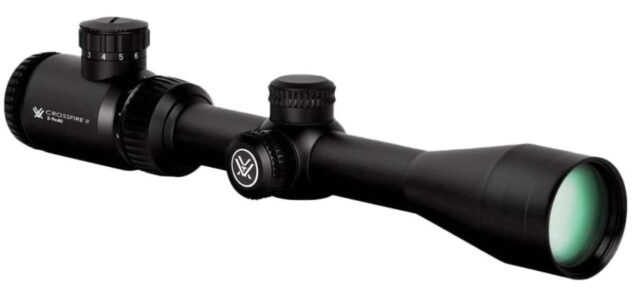
When it comes to choosing an optic for your rifle, a high-quality LPVO (Low-Power Variable Optic) can completely transform your shooting experience.
These scopes are celebrated for their versatility, letting you engage targets quickly at close range while still providing enough magnification for precise mid-range shots.
The good news is, you don’t need to spend a fortune to get an LPVO that performs well. Cheap LPVO scopes have come a long way, offering impressive clarity, durable construction, and practical features without breaking the bank. Some options combine quality, reliability, and affordability.
In this article, we’ll explore some of the best budget-friendly LPVOs on the market, what makes them a smart choice, and how to select one that suits your shooting needs.
But first a quick recap;
| Scope | Price | Where to Buy |
| Vortex Strike Eagle 1-8x24mm
|
>$300 | Amazon | OpticsPlanet |
| Sig Sauer Tango MSR 1-6×24 mm
|
>$260 | Amazon | OpticsPlanet |
| Vortex Venom 1-6×24 SFP AR-BDC3
|
>$261 | OpticsPlanet |
| Primary Arms SLx 1-6×24mm
|
>$260 | Amazon | OpticsPlanet |
| Bushnell AR Optics 1-4x24mm
|
>$270 | Amazon | OpticsPlanet |
| TRYBE Optics SLED 1-6×24mm
|
>$199 | OpticsPlanet |
| Primary Arms Classic Series 1‑6×24mm
|
>$200 | OpticsPlanet |
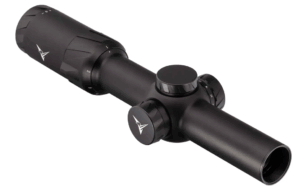
Cheap LPVO Scopes -Reviews
1) Vortex Strike Eagle 1-8x24mm
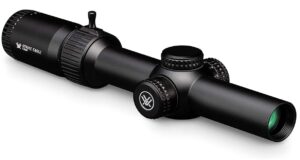
For under $300 you get the Vortex Strike Eagle 1-8x24mm 30mm Tube Second Focal Plane Rifle Scop. It is a versatile and well-rounded optic that has earned its popularity among shooters for good reason. It’s designed to perform equally well at close range and medium distances, making it a strong choice for AR platforms or tactical rifles.
At 1x, it behaves like a red dot, fast, intuitive, and ideal for quick target transitions. As you zoom to 8x, the clarity and detail remain impressive for its price, offering a confident view for targets out to several hundred yards.
The illuminated BDC3 reticle is clean and practical, helping shooters estimate holdovers easily in daylight or dim conditions. The build feels rugged and reliable — just what you’d expect from Vortex, with dependable tracking and a solid turret clicks.
Pros
- Wide and useful 1–8x magnification range
- Clear glass and bright image quality
- Rugged, weatherproof construction
- Simple illuminated BDC reticle
- Great value backed by Vortex’s lifetime warranty
Cons
- Slight edge blur at maximum zoom
- Reticle can appear small in low light
- A bit heavier than similar models
2) Sig Sauer Tango MSR 1-6×24 mm
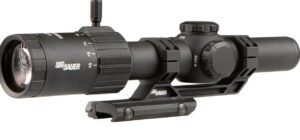
The Sig Sauer Tango MSR 1-6×24 mm LPVO is a well-designed optic that delivers excellent performance for its price, which is under $280, making it one of the most popular entry-level choices for modern sporting rifles.
Built around a 30 mm tube, it offers a true 1× magnification for quick, both-eyes-open shooting and smooth transitions up to 6× for confident mid-range accuracy. The low-dispersion glass provides a bright, clear image with minimal color fringing, and the illuminated MSR BDC-6 reticle gives easy holdovers and quick target reference points.
The included power throw lever adds convenience when adjusting magnification on the fly. Its construction feels robust, waterproof, shockproof, and fog-proof, ensuring reliability in demanding environments.
The Tango MSR tracks consistently, holds zero well, and comes ready to mount, offering serious value for the cost.
Pros
- True 1–6× magnification for close and mid-range use
- Clear, bright glass with good color accuracy
- Illuminated MSR BDC-6 reticle with multiple brightness levels
- Rugged, weatherproof, and recoil-resistant construction
- Includes throw lever and mount
- Excellent overall value
Cons
- Eye relief tightens slightly at higher magnifications
- Some edge distortion at full zoom
- Reticle may appear fine or light for shooters preferring bold designs
3) Primary Arms SLx 1-6×24mm LPVO
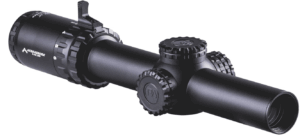
The Primary Arms SLx 1-6×24mm LPVO is widely regarded as one of the most capable and thoughtfully designed optics in the budget-to-midrange category.
For under $270 you get an LPVO purposefully, built for shooters who want reliability, and precision, and it delivers far more than its cost suggests.
The true 1× magnification allows for quick, both-eyes-open target engagement, behaving almost like a red dot for close encounters. At 6×, it provides enough clarity and magnification to reach confidently out to several hundred yards.
The standout feature is the illuminated ACSS reticle, which combines range estimation, bullet-drop compensation, and wind holds into one intuitive design ideal for dynamic shooting or hunting scenarios.
The glass is bright and crisp for its class, while the robust 30mm tube ensures durability in rough field conditions. Additionally, it’s Waterproof, fog-proof, and shockproof.
Pros
- True 1–6× magnification for close and mid-range versatility
- Clear, bright glass with good edge-to-edge clarity
- Intuitive ACSS reticle with accurate holdovers
- Tough, weatherproof construction built for field use
- Excellent performance-to-price ratio and strong warranty
Cons
- Illumination not the brightest under harsh sunlight
- Reticle may take practice to fully master
4) Bushnell AR Optics 1-4x24mm
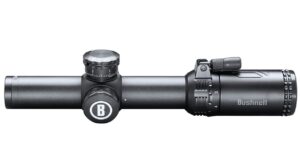
If you want an LPVO for close range and a few hundred yards, then a Bushnell AR Optics 1-4x24mm is more than enough for someone looking for versatility to around 200 to 300 yards.
At 1× the optic gives you rapid target acquisition, while the 4× magnification adds enough clarity for deliberate shots out to moderate distances.
The throw-down power change lever on the magnification ring enhances speed when shifting between magnifications, and the fully multi-coated optics help deliver surprisingly good light transmission for the price point.
On the downside, the fixed parallax and tighter eye box at higher magnification remind you this isn’t a premium optic. The glass and edge clarity are decent but not outstanding, and the non-illuminated reticles lacks some finesse.
Pros
- Versatile 1–4× magnification well suited to AR-style use.
- Compact form factor
- Solid build quality with shock- and waterproofing.
- Throw-down lever for rapid magnification changes.
- Fully multi-coated optics deliver good image clarity for the class.
- Excellent price-to-performance ratio.
Cons
- Fixed parallax and relatively small objective limit performance at longer ranges.
- Eye box and comfort tighten noticeably at 4× magnification.
5) TRYBE Optics SLED 1-6×24mm
For a painfully low price of under $200, you can get the TRYBE Optics SLED 1-6×24mm LPVO. It is a surprisingly capable scope that feels at home on both the range and in practical field use.
Its true 1× setting allows for fast, instinctive shooting, letting you pick up close targets almost instantly, while the 6× magnification gives just enough reach for mid-range precision.
The PCR‑1 reticle is simple, intuitive, and surprisingly effective, helping you estimate holdovers and track moving targets without cluttering your sight picture. The glass is clear and bright for its class, offering solid contrast and color fidelity, while the generous eye relief keeps follow-up shots comfortable.
Built tough, the SLED is waterproof, fog-proof, and shock-resistant, standing up to rough handling with ease.
Pros
- True 1–6× magnification for close and mid-range engagements
- Clear, bright optics with good contrast
- Intuitive PCR‑1 reticle with practical holdovers
- Durable, weatherproof, and shock-resistant design
- Exceptional value for its performance
Cons
- Illumination can be weak in bright sunlight
- Slight edge softness at maximum magnification
6) Primary Arms Classic Series 1‑6×24mm
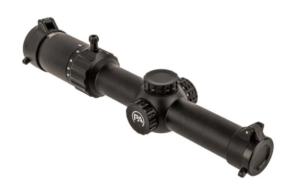
For a shooter who wants no frills, then you get the Primary Arms Classic Series 1‑6×24mm LPVO, for under $200 still. It’s a functional straightforward, rugged solution for shooters.
With its true 1× magnification, you’re ready for fast close‑quarters shooting with both eyes open. When you dial it up to 6×, you’ve got just enough reach to tackle moderate distances with confidence.
The illuminated duplex‑dot reticle draws your eye to the center quickly and the simple second focal plane layout keeps things intuitive under stress.
The construction is noticeably tough. It’s nitrogen‑purged, IP67 waterproof rated, and built on a 30 mm tube with a lightweight 17‑oz body that won’t weigh you down.
The glass clarity is impressive for the price, but nothing outstanding, and the adjustment turrets feel crisp. While it doesn’t offer all the sophistication of high‑end scopes, the Classic 1‑6×24mm gives excellent value, making it an ideal pick for beginners or anyone who wants a solid LPVO without breaking the bank.
Pros
- True 1–6× magnification gives both speed and reach
- Clear optics with solid clarity for the price range
- Simple, effective reticle with illumination for low‑light use
- Rugged build: fog‑proof, waterproof (IP67), durable with lightweight design
- Excellent value backed by lifetime warranty
Cons
- Reticle design is very basic
- Fit and finish could improve
Cheap LPVO Scopes Buying Guide
These are some of the factors to consider when you have already figured the budget that you need to spend on an LPVO scope
Magnification Range
When buying an LPVO (Low-Power Variable Optic), one of the first factors to consider is magnification range. LPVOs typically range from 1–4×, 1–6×, or 1–8×. Lower magnification is ideal for fast target acquisition in close quarters, while higher magnification helps reach mid-range targets with accuracy. Choosing the right balance depends on how and where you plan to shoot.
Optical Clarity and Glass Quality
Optical clarity and glass quality are equally important. Bright, clear glass with good contrast and minimal distortion allows you to see targets sharply in varied lighting conditions. Fully multi-coated lenses often perform better in low light, making a scope more versatile for morning or evening use.
Reticle Type and Placement
The reticle type and placement also impact usability. First focal plane reticles scale with magnification, which is useful for range estimation, while second focal plane reticles stay the same size and can be easier for beginners. Consider illumination and reticle complexity based on your needs.
Build Quality and Durability
Finally, build quality and durability cannot be ignored. A solid LPVO should be waterproof, fog-proof, and shock-resistant to handle recoil and environmental conditions. Additional features like adjustable turrets, eye relief, and tube diameter also affect comfort and customization, helping ensure the scope matches your rifle and shooting style.
Frequently Asked Questions (FAQs)
What is an LPVO, and how does it differ from other scopes?
An LPVO (Low-Power Variable Optic) is a rifle scope that offers a low starting magnification, usually 1×, and variable zoom up to 4×, 6×, or 8×. Unlike fixed scopes, LPVOs combine fast, close-range targeting with mid-range precision, making them versatile for both tactical and hunting applications.
What magnification range should I choose?
Your choice depends on the intended use. 1–4× is excellent for close-range engagements, 1–6× is the most versatile for both close and mid-range shooting, and 1–8× or higher adds extended reach while still allowing fast target acquisition at 1×.
Should I choose a first focal plane (FFP) or a second focal plane (SFP) reticle?
FFP reticles scale with magnification, allowing accurate range estimation and holdovers at any zoom. SFP reticles stay the same size and are simpler to use for fast target acquisition, making them beginner-friendly.
Do I need an illuminated reticle?
Illumination improves visibility in low-light conditions, such as dawn, dusk, or shaded areas. It also makes the reticle stand out against complex backgrounds, aiding faster and more accurate aiming.
What is the best scope tube diameter?
Most LPVOs use either 30 mm or 34 mm tubes. A larger tube allows for more elevation and windage adjustment, which is especially helpful for long-range shooting or dialing in holdovers.
It can also improve light transmission, making the image brighter in low-light conditions. However, bigger tubes usually add weight and bulk, which might affect handling on lightweight rifles.
A 30 mm tube is generally sufficient for most shooters, balancing durability, adjustment range, and portability, while a 34 mm tube suits those who need maximum adjustment or enhanced brightness.
Related