
What Does Gun Caliber Mean?
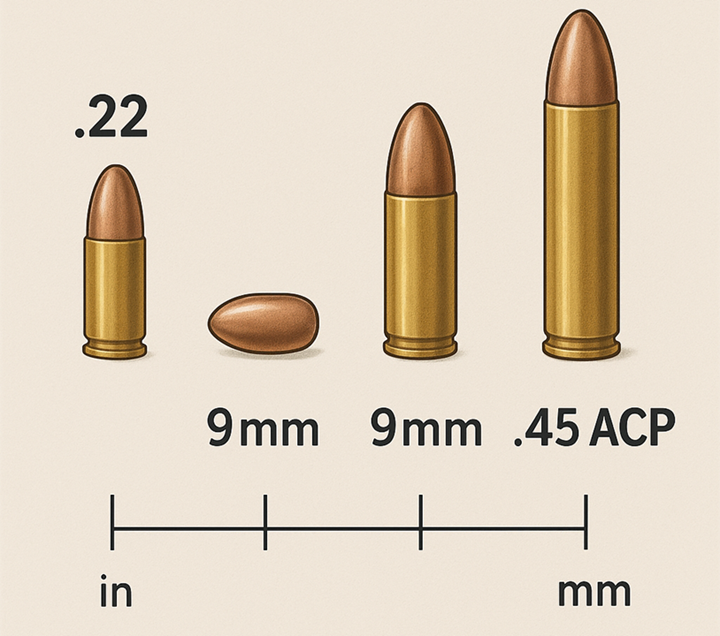
When discussing firearms, one of the most important terms is caliber. The gun caliber definition is the diameter of a gun’s barrel and, by extension, the diameter of the bullet or projectile that fits inside it. This simple measurement carries massive implications for a weapon’s performance, handling, and purpose.
Imagine two popular handguns, a 9mm pistol and a .45 caliber pistol. At first glance, they may look similar, but the caliber tells you about the bullet size, power, and recoil. A 9mm round is slimmer and faster, while a .45 is wider, slower, but more powerful.
The Technical Explanation of Caliber
Caliber is, in technical terms, the measurement across the bore of the barrel, between the raised lands of the rifling. The rifling grooves cause the bullet to spin after it has been fired, which stabilizes the bullet with just the right amount of accuracy.

How Caliber is Measured
One of the first things new firearm enthusiasts notice is the two dominant systems for caliber measurement: imperial (inches) and metric (millimeters).
- Inches (Imperial System): Common in the U.S. (.22, .38, .45).
- Millimeters (Metric System): Common internationally (9mm, 7.62mm, 5.56mm).
It’s important to note that caliber is not always a perfect measurement. Sometimes calibers are named after marketing terms rather than exact sizes. For example, the .38 Special is actually .357 inches in diameter.
The History of Gun Caliber
An Early Standard for Gun Caliber
During the 1500s and 1600s, firearms existed (muskets), and it was common that guns would not be made with a standard caliber. All craftsmen made guns differently, and soldiers, at times, made lead balls on site.
The Move to Factory Production
Once the 1800s came around and the factories started coming onto the scene, with interchangeable parts, the ammunition became standard. Countries started adopting military calibers like the .303 British or the 7.92mm Mauser.
The Battle for Calibers over the 20th Century
During WWI and WWII, there were innovations that led to adaptations in small-caliber ammunition. The military pondered adopting a small fast round (accuracy, can carry more ammunition) or a large powerful round (stopping power). Eventually, the U.S went with the 5.56×45mm NATO for the M16 rifle, and Russia went with 7.62×39mm.
Types of Gun Calibers

- Small caliber: Under .25 inches (e.g., .22 LR, .25 ACP, 5.7×28mm). These are popular for training, target shooting, and pest control because of their low recoil and affordability.
- Medium caliber: Between .25 and .40 inches, like the 9mm, .38 Special, .40 S&W. This includes many popular self-defense and law enforcement. They are liked for their balanced recoil, good stopping power, and wide availability
- Large caliber: Above .40 inches, like the .44 Magnum, .45ACP, or .50 BMG. These rounds are designed for stopping power, hunting big game, or military use against vehicles and equipment.
Gun Caliber vs. Gauge
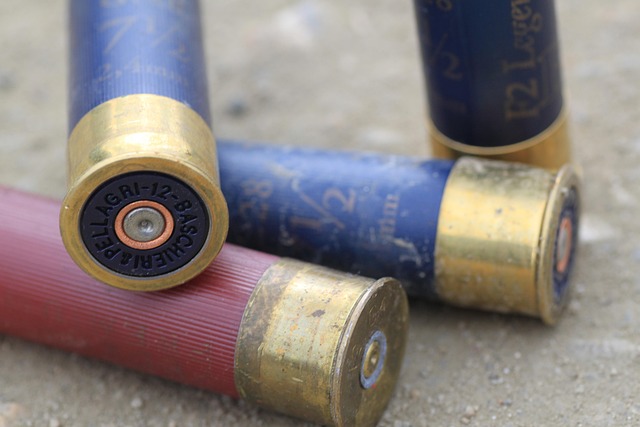
While caliber is the standard way to describe the size of most rifles and handguns, shotguns use a completely different system called gauge. This often confuses beginners, since a “12-gauge” shotgun doesn’t sound anything like a “.45 caliber” pistol.
What is Gauge?
Gauge is based on an old measurement system that counts how many lead balls of the gun’s bore diameter it would take to equal one pound. For example:
- A 12-gauge means it would take 12 lead balls the size of the bore to weigh one pound.
- A 20-gauge would require 20 smaller balls to make a pound, and has a lighter recoil.
This means the smaller the gauge number, the larger the bore. A 12-gauge has a wider barrel than a 20-gauge. The only common exception is the .410 bore, which is measured in caliber instead of gauge.
Why the Difference?
The reason shotguns use gauge instead of caliber comes from history. Shotguns traditionally fired many small pellets (shot) rather than a single bullet, so exact bore diameter mattered less than the overall volume of shot the barrel could handle. Over time, the system stuck, even as ammunition technology evolved.
How Caliber Affects Performance
- Accuracy and Range
Smaller calibers like .22 LR travel flatter and are easier to control, while larger calibers can be harder to shoot accurately, but deliver more energy.
- Stopping Power
The larger the caliber, the more tissue damage and energy transfer it creates. That’s why.45 ACP is preferred by some for defense.
- Recoil and Handling
Recoil increases with caliber size. While a .22 LR feels like a tap, a .44 Magnum can be overwhelming for beginners.
Common Calibers and Their Uses
Popular Handgun Calibers
- 9mm: Global law enforcement choice.
- .45 ACP: Famous for the Colt 1911 pistol.
- .380 ACP: Compact, excellent for concealed carry.
Popular Rifle Calibers
- 56 NATO/.223 Remington: The AR-15 standard.
- 62 NATO/.308 Winchester: Long-range accuracy.
- .30-06 Springfield: Classic American hunting round.
Popular Military and Hunting Calibers
- 62×39mm: AK-47 standard, rugged and reliable.
- .50 BMG: Used for anti-vehicle and sniper roles.
FAQs About Gun Caliber
1) What does gun caliber mean in simple terms?
Gun caliber is basically the measurement of the inside diameter of a firearm’s barrel, which directly determines the size of the bullet that can be fired from it. In other words, if you know a gun’s caliber, you know the approximate thickness of the bullet it shoots. This measurement is usually expressed in either inches or millimeters, depending on where the gun was designed.
2) Is 9mm bigger than .45 caliber?
No, 9mm is not bigger than .45 caliber. The .45 caliber bullet is physically wider in diameter than a 9mm round. However, 9mm ammunition tends to be lighter, faster, and more common worldwide, while .45 is heavier and generally delivers more stopping power but with fewer rounds per magazine.
3) Why are some calibers in inches and others in millimeters?
The reason calibers are sometimes listed in inches and sometimes in millimeters comes down to regional systems of measurement.
The United States has historically used the imperial system, so calibers like .22, .38, and .45 are expressed in fractions of an inch. Most of Europe and the rest of the world use the metric system, which is why you see designations like 9mm, 7.62mm, or 5.56mm.
4) What’s the difference between caliber and gauge?
Caliber measures the inside diameter of a firearm’s barrel, which corresponds to the size of the bullet it fires. Gauge, on the other hand, is used for shotguns and is based on an older system: the number of lead balls the size of the bore that would add up to one pound. That’s why a 12-gauge has a wider bore than a 20-gauge.
5) Does caliber affect accuracy?
Yes, caliber can influence accuracy, though it’s not the only factor. Smaller calibers like .22 or 9mm often allow for easier handling, less recoil, and faster follow-up shots, which can make them more accurate for many shooters.
Larger calibers may deliver more raw power and penetration, but the increased recoil can make precise shooting more difficult, especially for beginners.
6) What is the most common caliber in the world?
The 9mm is the most widely used handgun caliber globally, adopted by both military and law enforcement agencies across many countries. Its popularity comes from its balance of power, manageable recoil, and higher magazine capacity compared to larger rounds like .40 or .45. This makes it a versatile and economical choice for civilians as well.
Conclusion
The gun caliber definition may seem like a simple measurement, but it’s the foundation of understanding firearms. From history and ballistics to hunting, defense, and sport, caliber has a profound influence on every aspect of shooting. By learning how calibers work and making informed choices, you’ll become a safer, more informed, and more effective shooter.
Related