
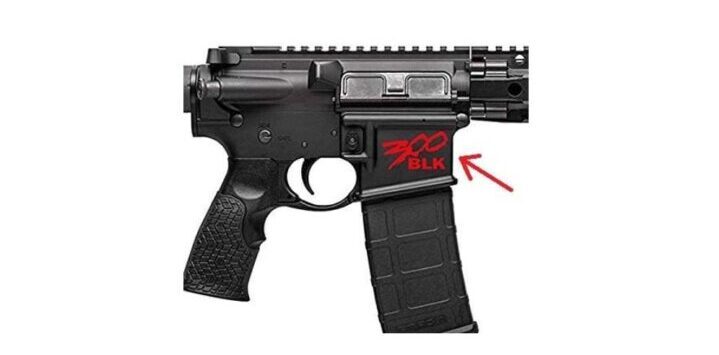
The .300 AAC Blackout (commonly called .300 Blackout or 300 BLK) has become one of the most popular rifle cartridges in the United States. It is loved for its versatility, excellent performance in short-barreled rifles, and compatibility with AR-15 platforms. However, one question many shooters ask is: Why is .300 Blackout so expensive compared to cartridges like 5.56 NATO or .223 Remington?
The answer comes down to a combination of manufacturing costs, market demand, ammunition design, and production volume. Understanding these factors can help shooters decide whether the benefits of .300 Blackout justify the higher price.
1) Cartridge Uses More Material
One of the biggest reasons .300 Blackout ammunition costs more is the amount of material required to manufacture it. A typical .300 Blackout bullet weighs anywhere from 110 to 220 grains, while a standard 5.56 bullet usually weighs between 55 and 77 grains. Heavier bullets require more lead, copper, and other raw materials, which increases production costs.
When manufacturers produce millions of rounds, even a small increase in material costs adds up quickly. Those costs are ultimately passed on to consumers.
2) Lower Production Volumes
The 5.56 NATO cartridge is one of the most widely produced rifle rounds in the world. Military contracts, law enforcement agencies, and civilian shooters create enormous demand, allowing manufacturers to produce it in massive quantities.
.300 Blackout, while popular, is still a niche cartridge compared to 5.56. Because manufacturers produce fewer rounds, they cannot benefit from the same economies of scale.
Simply put, making fewer cartridges means each round costs more to produce.
3) Specialized Market Demand
The .300 Blackout was designed to fill a specific role. It performs exceptionally well in short-barreled rifles and suppressed firearms while maintaining compatibility with standard AR-15 magazines and bolts.
This specialized purpose attracts enthusiasts, hunters, tactical shooters, and suppressor owners who are often willing to pay a premium for the cartridge’s unique capabilities.
Manufacturers know that .300 Blackout buyers are seeking a specialized product, and pricing often reflects that demand.
4) Subsonic Ammunition Is More Complex
Many shooters purchase .300 Blackout specifically for subsonic shooting with suppressors.
Producing reliable subsonic ammunition is more challenging than producing standard high-velocity rounds. Manufacturers must carefully balance bullet weight, powder charge, and pressure to ensure consistent performance while keeping velocities below the speed of sound.
This additional engineering and quality control increases production costs, making subsonic .300 Blackout ammunition significantly more expensive than standard rifle ammunition.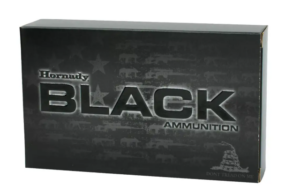
5) Fewer Military Contracts
Military adoption plays a huge role in ammunition pricing.
Cartridges like 5.56 NATO benefit from enormous military procurement programs. These contracts keep production lines running constantly and help lower manufacturing costs for civilian buyers.
Although some military and special operations units have used .300 Blackout, it has never achieved the widespread military adoption of 5.56 NATO. Without those massive contracts, manufacturers have less incentive to produce the cartridge at the same scale.
6) Premium Components
Many .300 Blackout loads are marketed as premium ammunition. Hunters often use expanding bullets designed for deer and hog hunting, while tactical shooters seek high-performance defensive loads.
Premium bullets cost more to manufacture than standard full metal jacket (FMJ) projectiles. As a result, many .300 Blackout loads carry a higher price tag than basic range ammunition.
7) Limited Competition Compared to 5.56
While numerous companies produce .300 Blackout ammunition, the number of manufacturers is still smaller than the vast network producing 5.56 NATO.
More competition generally leads to lower prices. Since 5.56 enjoys a much larger market, manufacturers constantly compete on price. The .300 Blackout market is smaller, which often results in less aggressive pricing.
8) Brass Availability Affects Cost
Although .300 Blackout cases can be formed from 5.56 brass, producing quality brass still requires additional manufacturing steps.
Many factory loads use newly manufactured brass, and fluctuations in brass supply can significantly impact ammunition pricing. During periods of high demand, brass shortages can push .300 Blackout prices even higher.
Is .300 Blackout Worth the Extra Cost?
For many shooters, the answer is yes.
The cartridge offers several advantages:
- Excellent performance from short barrels
- Outstanding suppressor compatibility
- Better energy transfer than 5.56 at close and medium ranges
- Effective hunting performance on deer and hogs
- Easy conversion for AR-15 owners
However, if your primary goal is inexpensive target shooting, 5.56 NATO remains the more economical choice.
Final Thoughts
.300 Blackout ammunition is expensive because it uses heavier bullets, is produced in lower quantities, often requires premium components, and serves a specialized market. The cartridge’s ability to perform exceptionally well in suppressed and short-barreled rifles makes it highly desirable, but those benefits come at a cost.
For shooters who value versatility, suppressor performance, and hard-hitting energy in a compact package, the higher price of .300 Blackout is often well worth it. For those focused solely on affordability and high-volume shooting, cartridges like 5.56 NATO will usually provide better value.
Ultimately, .300 Blackout is a premium cartridge designed for specific applications, and premium performance typically comes with a premium price tag.
Related