
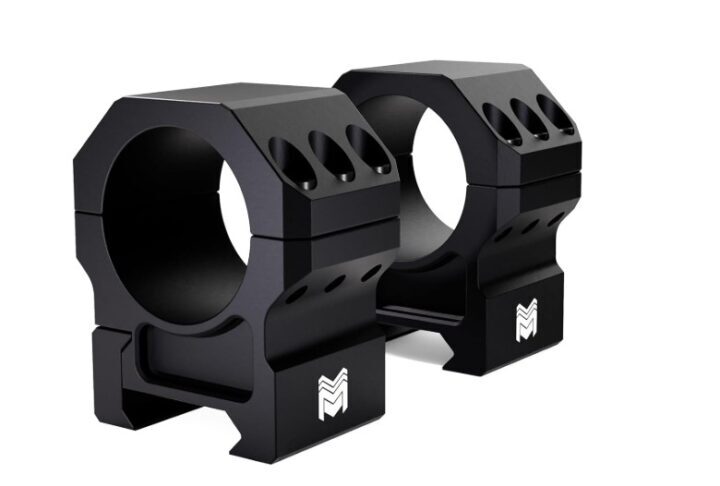
Picture a long uphill sheep hunt with a rifle slung over your shoulder, several miles between you and the next ridge, and every unnecessary ounce adding to the load. You have already trimmed weight from the stock, barrel, and optic, but the mounting hardware still deserves attention. Scope rings are easy to overlook because they occupy so little space, yet a pair of unnecessarily heavy rings adds weight to a rifle you carry far more often than you shoot.
The challenge is finding the best lightweight scope rings without sacrificing the clamping strength and stability that protect your optic’s zero. A poorly designed lightweight ring introduces problems that quickly outweigh the benefits of saving a few ounces, particularly when a rifle faces repeated recoil, temperature changes and hard knocks in the field.
This article looks at 5 of the best lightweight scope rings that approach weight reduction using different methods.
Quick Summary
- Warne HyperLite Riflescope Rings
- Talley Lightweight Alloy Scope Mounts
- Hawkins Precision Featherweight Remington 700 30mm Scope Rings
- Nightforce X-Treme Duty Ultralite 30mm Rings
- Vortex Pro Series Riflescope Rings
Best Lightweight Scope Rings -Reviews
1) Warne HyperLite Riflescope Rings
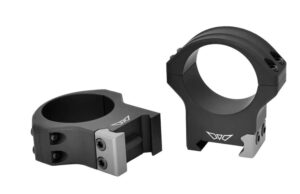
Warne HyperLite Riflescope Rings make a compelling case for hunters who want substantial weight savings without moving into an unusually specialized mounting system. Their standout feature is MagnaFusion alloy construction, which Warne developed to reduce weight while retaining the structural qualities expected from serious rifle-mounting hardware.
The machining is purposeful rather than decorative, and the integrated recoil lug works alongside the dual-screw clamping arrangement to establish a secure connection with compatible rails. That combination is particularly appealing on lightweight hunting rifles where recoil and repeated handling expose weaknesses in inexpensive mounting hardware.
Installation requires attention to rail engagement, ring alignment and the manufacturer’s torque instructions. The STANAG 4694 interface provides a more substantial cross-slot engagement arrangement, although Warne also lists compatibility with Weaver-style bases. I particularly like the flexibility of having 1-inch, 30mm and 34mm versions, since buyers do not need to change mounting families when moving between common scope configurations.
The trade-off is that these are premium rings, not an inexpensive way to shave weight. Buyers with conventional hunting rifles and Picatinny or Weaver mounting systems will appreciate their versatility, while owners of direct-mount bolt-action setups should look elsewhere.
Highlights
- MagnaFusion alloy material.
- Matte black Cerakote finish.
- 1 inch, 30mm and 34mm tube diameters
- Low, medium and high height options.
- Picatinny, Weaver, and Warne Maxima-style interfaces.
- 30mm medium configuration weighs 2.48 ounces per pair.
- Dual-screw rail clamps; four cap screws per ring.
- Designed and manufactured in the USA.
2) Talley Lightweight Alloy Scope Mounts
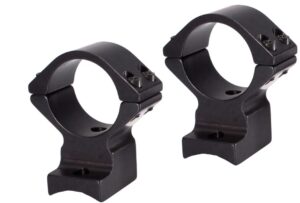
Talley Lightweight Alloy Scope Mounts take a different approach by combining the ring and base into one integrated component. Instead of attaching conventional rings to a separate rail or receiver-mounted base, Talley machines the complete mounting arrangement to fit a particular rifle action.
That design eliminates a connection between the rings and the base, reducing the number of interfaces that need to remain aligned under recoil. It also makes the finished installation look clean and compact, which suits traditional hunting rifles particularly well.
The aircraft-aluminum construction keeps the assembly light, while the CNC machining provides the consistent geometry needed to position an optic properly. Talley also states that its integrated design does not require lapping, although correct receiver fitment and careful installation remain essential.
What makes these mounts especially attractive is their broad rifle compatibility. The product family covers numerous popular actions, including Remington, Winchester, Savage, Weatherby, Browning, Bergara, Kimber, Tikka and Ruger. Most configurations accommodate 1-inch and 30mm scopes, with larger tube sizes available on selected models.
There is one important limitation: these are not universal rings. You must select the exact model for your rifle, and changing rifles often means buying another complete mounting system. For a hunter who wants a light, uncomplicated installation on a dedicated hunting rifle, that compromise is easy to accept.
Highlights
- High-grade aircraft aluminum alloy.
- Black anodized finish on common configurations fn.
- 1 inch and 30mm on most models; select 34mm and 35mm options.
- Generally low, medium and high height options
- Integrated, rifle-action-specific mounting interface.
3) Hawkins Precision Featherweight Remington 700 30mm Scope Rings
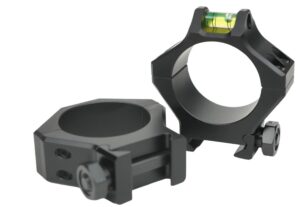
Hawkins Precision Featherweight Remington 700 30mm Scope Rings are aimed squarely at rifle builders who want to remove unnecessary mounting hardware from a lightweight bolt-action setup. Rather than using a conventional rail-and-ring arrangement, the Featherweight design attaches directly to compatible receiver actions.
The rings are machined from billet 6061 aluminum, and their construction is deliberately stripped down compared with Hawkins’ more feature-rich mounting products. That simplicity is a major part of their appeal: there is no separate Picatinny rail adding height and weight between the receiver and optic.
Despite the lightweight construction, Hawkins rates the Featherweight range for magnum-caliber firearms. The included recoil-pin provisions also provide additional support on compatible actions. For a Remington 700-based hunting rifle, that direct-mount arrangement creates a particularly tidy installation.
Installation deserves more attention than a conventional rail-mounted setup because the rings depend on the receiver’s screw pattern and the scope’s available mounting length. Hawkins supplies both 6-48 and 8-40 screws, and the manufacturer publishes separate torque specifications for the base and ring-cap screws.
Highlights
- CNC-machined billet 6061 aluminum.
- Black anodized Finish
- 1 inch and 30mm Tube diameters
- Low, medium and high height options.
- 0.4-inch low, 0.5-inch medium and 0.6-inch high
- Direct attachment to compatible Remington 700-pattern actions; no separate rail required.
- Approximately 2–3 ounces per set, depending on configuration.
- Supplied 6-48 and 8-40 base screws; ring-cap fasteners.
- Made in the USA.
4) Nightforce X-Treme Duty Ultralite 30mm Rings
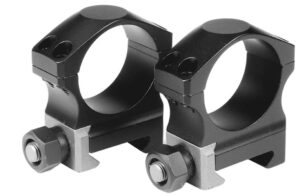
Nightforce X-Treme Duty Ultralite Rings demonstrate that lightweight construction does not require abandoning the use of premium structural materials. Their design combines machined 7075-T6 aluminum ring bodies with titanium crossbolts and jaws, giving the mounting system a particularly attractive strength-to-weight balance.
The hard-anodized aluminum provides the main ring structure, while the titanium components reinforce the rail-clamping arrangement. This is a more sophisticated construction approach than simply removing material from a conventional aluminum ring.
One of the strongest features is the choice between four-screw and six-screw ring caps. The four-screw configuration suits most conventional applications, while the six-screw version offers additional scope-tube contact and clamping distribution for buyers using larger, heavier optics. Nightforce offers six height options for 30mm tubes and four for 34mm tubes.
The rings are designed for Picatinny-style mounting, making them a natural fit for precision-oriented rifles that already use a compatible rail. Their installation demands careful attention to the clamp and cap hardware, and buyers should follow the instructions for their precise configuration rather than applying generic torque figures.
The downside is cost. These are premium components, and the extra investment makes less sense on a basic hunting rifle with a modest optic. However, for a lightweight precision build that still demands robust mounting hardware, they deserve serious consideration.
Highlights
- 7075-T6 aluminum with titanium crossbolts and jaws.
- Black hard-anodized aluminum Finish.
- 30mm and 34mm Tube diameters
- Six for 30mm and four for 34mm Height options.
- Mil-Std 1913 Picatinny rail Base compatibility.
5) Vortex Pro Series Riflescope Rings
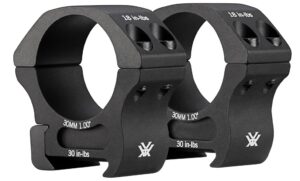
Vortex Pro Series Riflescope Rings are a sensible choice for buyers who want reliable, neatly machined mounting hardware without paying for specialized materials or elaborate design features. Their appeal lies in a straightforward construction that prioritizes dependable scope retention and compatibility with common rifle setups.
The Pro Series uses a streamlined aluminum-alloy design, with four Torx T-25-style cap screws providing the clamping arrangement. The machining is clean and the rings have a practical profile that suits hunting rifles and general-purpose sporting builds.
One advantage is the range of available configurations. The Pro Series family includes 1-inch and 30mm options, with different height configurations available. This gives buyers room to match the rings to a variety of scope and rifle combinations without moving into a premium mounting system.
Installation is relatively uncomplicated, although a calibrated torque driver remains essential. The supplied T-25 wrench is useful for basic assembly, but a proper torque tool is the better choice for consistent installation. Extra cap screws are also included, which is a practical touch.
The biggest attraction is Vortex’s VIP lifetime warranty, which adds considerable reassurance for buyers who intend to keep their equipment for years. These rings are not the most specialized or lightest option in this comparison, but they make a convincing case as affordable, practical scope rings for hunting rifles.
Highlights
- Aluminum alloy.
- 1 inch and 30mm Tube diameters.
- Low, medium, high and extra-high configurations
- Four T-25 ring-cap screws per ring, with additional screws supplied.
- Vortex VIP lifetime warranty.
Choosing Lightweight Scope Rings Without Sacrificing Reliability
Saving weight on a rifle is worthwhile, but the mounting system deserves more scrutiny than its size suggests. Rings secure an expensive optic, and their performance affects the rifle’s ability to maintain a consistent relationship between the scope and receiver.
The right choice starts with understanding where weight matters, how mounting materials behave and how the ring geometry fits the optic.
Why Scope-Ring Weight Matters
A few ounces do not sound significant until they are added to an already lightweight rifle. Backcountry hunters often carry their rifles for hours, and weight savings become more noticeable during long climbs, extended stalks and difficult terrain.
The important distinction is between useful weight reduction and unnecessary structural compromise. Removing a separate mounting base through an integrated design, for example, is a sensible way to reduce the number of components. Removing material without maintaining adequate clamping strength is a different proposition entirely.
Aluminum Alloy, Steel and Titanium
Aluminum alloy dominates the lightweight scope-ring market because it offers a useful balance of low mass, strength and machining precision. Higher-grade alloys such as 6061 and 7075 are common choices, although the final performance depends on design, dimensions and manufacturing quality.
Steel remains attractive for applications where durability and resistance to deformation take priority over minimum weight. It is generally heavier, which makes it less appealing for dedicated mountain rifles.
Titanium adds another option. Its strength and relatively low density make it useful in demanding mounting components, although its cost and manufacturing complexity are higher. Nightforce’s combination of 7075-T6 aluminum bodies and titanium clamping components demonstrates how manufacturers can use different materials where each offers the greatest benefit.
Match Tube Diameter
Your scope’s main tube diameter determines which rings fit. Common sizes include 1 inch, 30mm and 34mm, with larger diameters appearing on specialized optics.
A 30mm scope requires 30mm rings. Trying to compensate for a diameter mismatch through tightening is a mistake that risks damaging the scope tube or creating an unreliable mounting arrangement.
Ring height is equally important. The objective bell must clear the barrel, while the ocular assembly must clear the bolt handle and other receiver components. Choose the lowest practical height that provides adequate clearance, comfortable cheek weld and usable access to adjustment controls.
Remember that objective lens diameter alone does not determine clearance. The outside diameter of the objective housing, rather than the advertised lens measurement, is the dimension that matters.
Understand the Base and Receiver Interface
Not every scope ring attaches to the rifle in the same way. Picatinny and Weaver systems use cross-slot interfaces, while direct-mount systems attach to receiver-specific screw patterns.
Integrated mounts such as Talley’s Lightweight Alloy system combine the ring and base into one component. Hawkins Featherweight rings also attach directly to compatible actions, but they are a separate two-ring arrangement rather than a conventional rail-mounted setup.
Before buying, verify the receiver pattern, screw thread, action length and mounting compatibility. A ring that fits a Remington 700 does not automatically fit every rifle marketed as a 700-pattern action.
Torque, Alignment and Lapping
Correct installation matters as much as ring construction. Excessive torque can damage a scope tube, distort the ring caps or compromise the mounting hardware. Insufficient torque creates the opposite problem, leaving the optic vulnerable to movement under recoil.
Use a calibrated inch-pound torque driver and follow the ring manufacturer’s specifications alongside the scope manufacturer’s limits. When those instructions differ, do not exceed the scope manufacturer’s permitted clamping torque.
Lapping is another area that deserves careful judgment. It can help correct alignment issues in conventional two-piece ring systems, but it should not be treated as an automatic step for every mounting arrangement. Talley specifically states that its integrated mounts do not require lapping.
For any installation, inspect the receiver and mounting surfaces, confirm the ring halves align correctly and ensure the scope sits naturally without being forced into position. A properly fitted system protects the optic and gives the rifle a dependable foundation.
Final Verdict
The Warne HyperLite Riflescope Rings earn my best overall recommendation because they combine low weight, a sophisticated alloy construction, recoil-lug support and compatibility with common Picatinny and Weaver mounting systems. They deliver the most convincing balance for buyers who want one versatile mounting solution.
For the lightest specialist hunting builds, the Hawkins Precision Featherweight Remington 700 30mm Scope Rings deserve the nod. Their direct-mount design removes the need for a separate rail and keeps the installation compact.
The Talley Lightweight Alloy Scope Mounts are my value-oriented choice for hunters who own a compatible rifle and prefer an integrated mounting system. Their simplicity and broad action-specific coverage make them particularly attractive for conventional hunting rifles.
For precision-focused lightweight builds, I would choose the Nightforce X-Treme Duty Ultralite Rings. The titanium clamping components, premium aluminum construction and optional six-screw caps provide a particularly strong feature set.
Finally, the Vortex Pro Series remains a sensible budget-conscious option backed by an excellent lifetime warranty. Choose according to your rifle’s mounting interface, optic dimensions and intended use, rather than chasing the lowest number on a scale.
Related