
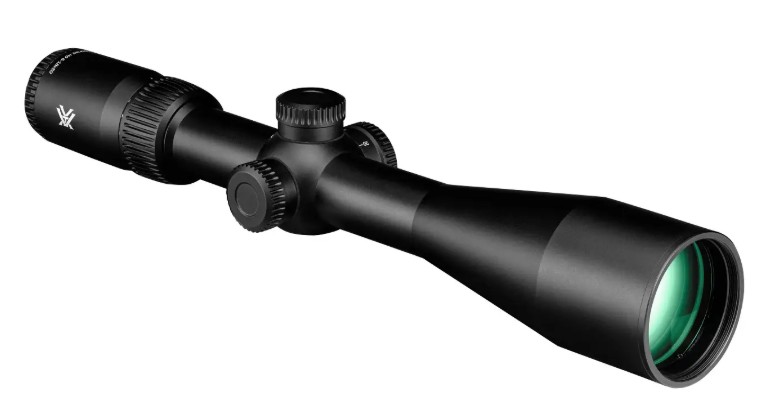
A .22 LR rifle can teach you a surprising amount about shooting, and a poor scope can make those lessons more expensive than they need to be. At 25 yards, almost any halfway decent optic can make a target look larger. Move to 50 yards, put a squirrel in the branches at dusk, or try to hit a small steel plate at 100 yards, and the differences become obvious. A fuzzy image, a reticle that covers too much of the target, or parallax that shifts the apparent point of aim can turn a capable rimfire into a frustrating one.
That is why choosing the best .22 rifle scope for the money requires more thought than simply buying the highest magnification available for the lowest price. Most .22 LR shooting happens inside 100 yards, where a bright image, a useful field of view, sensible parallax adjustment, and reliable mounting matter more than elaborate tactical features.
This guide covers eight scopes aimed at different budgets and shooting styles, from inexpensive rimfire-specific models to more refined optics for hunting and precision practice. The goal is to help you buy the scope that makes your rifle more useful without spending money on features you will rarely use. For most owners, the right answer will be a dependable 2–7× or 3–9× scope. A few shooters, however, will benefit from something more specialized.
Summary
- Vortex Crossfire II 2–7×32 Rimfire
- BSA Optics Sweet .22 AO 3–9×40
- SIG SAUER WHISKEY4 3–12×44mm
- Burris Droptine 3–9×40mm
- TRACT 22 FIRE 4–12×40 Rimfire
- CVLIFE EagleFeather 2–10×32 MPVO AO
- Hawke Vantage 3–9×40 AO
Best 22 Rifle Scopes for the Money -Reviews
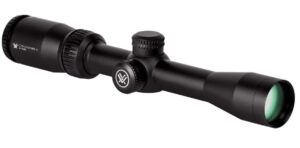
1) Vortex Crossfire II 2–7×32 Rimfire, V-Plex Reticle
>>View on Amazon
For most people buying a .22 LR scope, I’d start with something simple, light, and easy to use. That’s where the Vortex Crossfire II Rimfire makes sense. It avoids unnecessary complexity and gives you a practical setup for plinking, range practice, and small-game hunting.
The lower magnification is a good match for ordinary rimfire distances. You can acquire a target without feeling as though you’re looking through a tunnel, then increase the power when you want to aim more carefully. If most of your shooting happens at familiar distances, you may not miss the higher magnification offered by larger scopes.
I also like the simplicity of the V-Plex reticle. You can concentrate on placing the crosshair where you want the shot to land instead of sorting through multiple holdover marks. For everyday shooting, that uncomplicated approach is often enough. When you move farther out, you can learn the holdover your ammunition requires rather than assume a generic reference will work for every load.
The main compromise is the lack of adjustable parallax on this rimfire version. For many casual shooters, that won’t be a deal-breaker. If you’re working on very small groups at different distances, however, you may prefer a scope that lets you adjust parallax to suit each target.
I’d also make sure you’re buying the Crossfire II Rimfire rather than confusing it with another model in the Crossfire family. Similar names can make product listings confusing, and the exact version matters.
If you want a straightforward, well-balanced scope for typical .22 LR use, this would be one of my first choices. You get a practical setup without paying extra for features you may never need.
Pros
- Practical magnification for common rimfire distances.
- Simple reticle is easy to use.
- Compact design suits a lightweight rifle.
- Good choice for general plinking and small-game hunting.
Cons
- No adjustable parallax on this version.
- No built-in ballistic holdover references.
- Buyers need to distinguish it from other Crossfire models.
2) BSA Optics Sweet .22 AO 3–9×40
 >>View on Amazon
The BSA Sweet .22 makes sense if you want a scope built around the way you actually use a rimfire rifle. Rather than paying for features you may never touch, you get a straightforward hunting and target-shooting setup with a few useful additions for dealing with the .22 LR’s curved trajectory.
I like the idea behind its interchangeable elevation turrets, especially if you tend to stick with one type of ammunition. They can give you a convenient starting point when shooting at different distances, but don’t assume the markings will line up perfectly with every cartridge. You’ll still need to check your point of impact with the ammunition you intend to use.
The adjustable objective is another welcome feature. When you’re shooting at close targets, getting the image properly focused and reducing parallax can make precise aiming less frustrating. It’s particularly useful when you’re trying to tighten your groups rather than simply knock over cans.
Where I’d keep expectations realistic is optical refinement. This is a budget-oriented scope, so I wouldn’t choose it expecting the same image quality or overall refinement as a more expensive optic. You should also take your time mounting it and make sure the included rings suit your rifle.
If you want an affordable scope that gives you useful rimfire-specific features without making the setup unnecessarily complicated, the Sweet .22 deserves a look.
Pros
- Designed with .22 LR shooting in mind.
- Adjustable objective helps with close-range focus.
- Interchangeable elevation turrets offer useful trajectory references.
- Familiar controls make it approachable for beginners.
Cons
- Optical refinement is a likely compromise at this price.
- You need to confirm the ballistic turrets with your ammunition.
- Correct mounting and eye placement require care.
3) SIG SAUER WHISKEY4 3–12×44mm
 >>View on Amazon
The SIG SAUER WHISKEY4 is worth considering if you want your rimfire rifle to do more than casual plinking. Its extra magnification can be useful when you’re aiming at small targets, checking your groups, or spending time at the range working on precision.
The trade-off is that this is a more substantial optic than many .22 LR rifles need. If you mostly shoot at short distances, you may find yourself paying for magnification you rarely use. You’ll also want to think about the balance of your rifle before choosing a larger hunting-style scope. A lightweight rimfire is enjoyable partly because it’s easy to carry and handle, and adding a bulky optic can take away some of that appeal.
I’d favor the simpler reticle configuration if you want a clean sight picture without a complicated network of aiming marks. It keeps your attention on the target and makes ordinary range sessions straightforward. If you regularly shoot at longer distances, however, remember that more magnification doesn’t solve the .22 LR’s bullet drop or sensitivity to wind.
One thing I’d check carefully before buying is the exact WHISKEY4 version. Different configurations can have different reticles and adjustment controls, so don’t assume the scope in one listing is identical to the one in another.
For someone who wants a versatile optic for careful shooting and occasional hunting, the WHISKEY4 has appeal. For a rifle that spends most of its time shooting at close targets, I’d put a lighter, simpler scope higher on the list.
Pros
- Useful magnification for small targets and careful shooting.
- Straightforward reticle options are easy to work with.
- Suitable for shooters who want a more versatile hunting-style optic.
- Offers room to grow beyond casual plinking.
Cons
- May offer more magnification than you need.
- You must check the exact reticle and turret configuration.
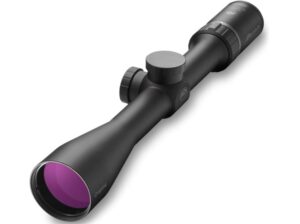
4) Burris Droptine 3–9×40mm, Ballistic Plex Reticle
>>View on Amazon and OpticsPlanet
The Burris Droptine is an appealing option if you want a conventional hunting scope with a reticle that offers more than a plain crosshair. Its familiar layout makes it easy to approach, and you don’t have to learn an elaborate aiming system just to enjoy an afternoon at the range.
The Ballistic Plex reticle is the main attraction. Those additional aiming references can help you compensate for bullet drop when you move beyond your usual zero distance. But you need to treat them as a starting point, not a promise. The .22 LR’s trajectory changes with ammunition, and a hold that works with one load may put you noticeably off target with another.
I’d spend time confirming the reticle’s aiming points at the distances you actually shoot. Once you understand how your rifle and ammunition behave, those references can make longer shots more predictable. Without that practice, they’re just marks in the scope.
The main drawback is that this isn’t the most specialized choice for close-range precision work. If you regularly shoot at very short distances and want to fine-tune focus as you move between targets, an adjustable-parallax rimfire scope may suit you better.
Be especially careful when shopping for this model. You want the version intended for rimfire use, not a similar-looking centerfire model. That distinction matters more than a familiar name or an attractive product photograph.
I’d recommend the Droptine to someone who wants a traditional hunting-style optic and appreciates having extra aiming references. Just be prepared to learn those references with your own rifle instead of relying on assumptions.
Pros
- Familiar layout that’s easy to learn.
- Ballistic Plex reticle provides additional aiming references.
- Suitable for general hunting and range use.
- A good option if you prefer a traditional scope design.
Cons
- Similar centerfire and rimfire versions can cause confusion.
- Ballistic references need to be checked with your ammunition.
- Not the strongest choice if adjustable parallax is essential.
- Less specialized for precision rimfire shooting than some alternatives.
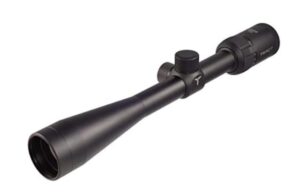
5) TRACT 22 FIRE 4–12×40 Rimfire Scope
>>View on Amazon
The TRACT 22 FIRE stands out because it takes rimfire shooting seriously rather than treating a .22 LR as a smaller version of a centerfire rifle. If you enjoy working on accuracy, shooting at different distances, or making careful shots on small targets, that focus is appealing.
I’d look closely at the reticle before choosing your version. The BDC model is intended for shooters who want additional references for dealing with bullet drop, while the T-Plex Dot version offers a different aiming experience. They aren’t interchangeable choices, so decide whether you prefer trajectory references or a simpler aiming point.
The higher magnification is useful when you settle into a supported position and want to concentrate on a small target. You can inspect your groups more easily and take your time refining your aim. The downside becomes apparent when you’re moving around or trying to acquire a target quickly. A scope that starts at higher magnification can feel restrictive when the target is close or the shooting situation changes suddenly.
I’d also pay attention to the ammunition you use if you choose the BDC version. The extra aiming marks only help when you understand how they relate to your rifle’s zero and the load in your magazine. Change ammunition without checking the results, and you may find the references no longer behave as expected.
For a rimfire that spends plenty of time on a bench or in a supported field position, I’d put the 22 FIRE high on the shortlist. If you want a lightweight setup for casual plinking and quick shots, a simpler scope may be more enjoyable.
Pros
- Designed specifically around rimfire shooting.
- Useful for deliberate shooting at small targets.
- BDC version offers additional aiming references.
- Good fit for shooters who enjoy learning their rifle’s trajectory.
Cons
- Higher starting magnification is less convenient for quick shots.
- Reticle choice affects how you use the scope.
- Less appealing if you prioritize a compact, lightweight setup.
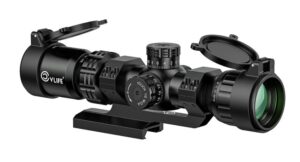
6) CVLIFE EagleFeather 2–10×32 MPVO AO
>>View on Amazon
The CVLIFE EagleFeather takes a feature-heavy approach to budget optics. If you want adjustable focus, an illuminated reticle, and a flexible magnification range without spending much, it’s easy to see why this scope attracts attention.
The adjustable objective is one of its more useful features for rimfire shooting. When you move between close targets and more distant ones, being able to adjust the focus can make careful aiming easier. I’d consider that a real advantage if you enjoy shooting groups or regularly change distances during a range session.
The illuminated reticle can also help you pick out the aiming point against a dark or cluttered background. You don’t need to run it at full brightness, though. A bright reticle can become distracting when you’re trying to hold on a small target, so use the lowest setting that remains easy to see.
Where I’d be cautious is long-term confidence. A long list of features doesn’t automatically tell you how consistently a scope will hold zero, track adjustments, or perform after repeated use. If you’re buying on a tight budget, those are important considerations rather than minor details.
Before ordering, check the mounting arrangement too. The included mount may not be the right fit for your particular rimfire rifle, especially if it uses a different rail or dovetail system. You don’t want to discover that problem after the scope arrives.
I’d consider the EagleFeather if you want plenty of features for the money and understand the compromises that can come with a budget optic. If I were choosing a scope for a rifle that would see frequent hunting trips, I’d give proven reliability and a secure mounting setup more weight than an impressive feature list.
Pros
- Flexible magnification for different shooting situations.
- Adjustable objective is useful for close-range work.
- Illuminated reticle offers extra visibility options.
- Attractive choice for buyers who want several features on a budget.
Cons
- Included mounting hardware may not suit every rifle.
- Exposed controls require more attention.
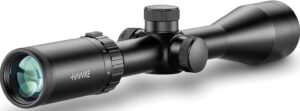
7) Hawke Vantage 3–9×40 AO
>>View on Amazon
The Hawke Vantage is a sensible option if you prefer a traditional hunting scope that can also handle regular rimfire practice. It doesn’t need a complicated reticle or an overwhelming set of controls to be useful. For many shooters, a familiar aiming pattern and a practical magnification range are all that’s needed.
I like the adjustable-objective version for a .22 LR because rimfire shooting often involves close targets. If you’re trying to place several shots into a tight group, being able to focus for the distance and reduce parallax can make the process less frustrating. It’s especially useful when you’re switching between common range distances rather than shooting at one fixed point all day.
The conventional design also makes the Vantage easy to understand. You can keep your attention on the target instead of spending time learning a complicated reticle. That’s a plus if you want one rifle for casual practice and small-game hunting.
The larger objective has its advantages, but you shouldn’t assume bigger glass automatically means a better shooting experience. Depending on your rifle, you may need different rings, and a poor mounting height can leave you fighting for a comfortable cheek position. I’d rather have a scope that fits the rifle properly than one that looks impressive on paper.
Check the exact version before buying, too. The Vantage family includes different configurations, and you want to make sure you’re getting the adjustable-objective model you intended to choose.
If you want a straightforward optic that can move between range practice and hunting, the Vantage is worth considering. Just make sure the particular version matches your needs.
Pros
- Familiar design suits hunting and general range use.
- Adjustable objective helps with close-range focus.
- Simple reticle keeps aiming uncomplicated.
- Versatile choice for shooters who share one rifle between different uses.
Cons
- Model variations can make online shopping confusing.
- The larger objective may complicate mounting.
Buyer’s Guide: Choosing the Right .22 LR Scope
Magnification
For most .22 LR rifles, 2–7× and 3–9× are the sensible starting points. A 2–7× scope is especially good for hunting and informal shooting because its low setting gives a generous field of view. That helps when a squirrel moves around a trunk or a target appears close to the shooting position. A 3–9× scope adds more enlargement at the top end, which is useful for careful aiming at small targets and evaluating groups.
Fixed 6× scopes occupy a different niche. They keep the operation simple and can suit a shooter who spends most of the day at 50 yards or farther. The trade-off is that you cannot turn down the power when you want a wider view. Scopes that reach 10× or 12× can be useful for target work, but high magnification also makes wobble, mirage, and poor shooting position more obvious. It magnifies the problem as readily as the target.
Low-Light Performance
A 32mm objective helps keep a rimfire compact and light. A 40mm objective can be useful for hunting near dawn or dusk, but the number alone does not guarantee a brighter image. Lens quality, coatings, magnification, and how well your eye sits behind the scope all affect what you see. A 40mm scope at 9× also has a smaller exit pupil than it does at 3×, so the view can become less forgiving as magnification rises.
Think about the rifle you want to carry, not only the scope you want to own. A lightweight .22 LR carbine used for hours in the woods benefits from a compact optic. A rifle used mainly from a bench can tolerate more glass and weight.
Parallax
Parallax describes an apparent shift between the reticle and target when your eye moves away from the center of the scope’s sight picture. At short distances, this can matter because a scope designed for a more distant focus may not be perfectly aligned for a 25-yard target. If you shoot tiny groups, a small apparent shift can become a real source of frustration.
A fixed parallax setting around 50 yards suits a large share of ordinary rimfire use. An adjustable objective or side-focus control is more versatile when shooting at 25, 50, 75, and 100 yards. It also allows you to bring the image into focus at the distance you are using. Focus carefully, maintain a consistent cheek weld, and do not assume that a sharp-looking image automatically means parallax has been eliminated.
Reticle and Focal Plane
A simple duplex or V-Plex-style reticle is easy to understand and quick to use. It is a sensible option for plinking, hunting, and a first rifle. A ballistic reticle can be helpful when the shooter regularly works beyond 50 yards, because the .22 LR drops significantly as distance increases. However, its holdover references must be confirmed with the actual load and zero. High-velocity ammunition, standard-velocity ammunition, and subsonic loads do not share the same trajectory.
In a second-focal-plane scope, the reticle appears to stay the same size as magnification changes, and any calibrated subtensions generally apply at a specified magnification. For ordinary .22 LR hunting, this is not a serious drawback. A first-focal-plane scope is more useful when a shooter needs reticle measurements to remain consistent across magnification settings, but that complexity is rarely essential for a rifle used at 25–100 yards.
Tube Size, Rings, and Mounting
A 1-inch tube is common on rimfire scopes and offers plenty of mounting options. A 30mm tube is larger and may be found on more feature-heavy optics, but it requires compatible rings. Tube diameter is not the same as objective diameter, and neither determines ring height by itself.
The scope must clear the barrel and receiver while allowing a comfortable cheek weld. A large 40mm or 44mm objective may need taller rings than a 32mm scope, depending on its actual outside diameter and the rifle’s shape. Low rings are desirable when they provide adequate clearance and a natural head position; rings that are too low can cause contact, while unnecessarily high rings can leave the shooter searching for the eye box.
Rimfire rifles also differ in rail design. Some use a 3/8-inch or 11mm dovetail, while others have a Picatinny or Weaver-style rail. The included rings on a budget scope are not automatically compatible with every rifle. Check the interface before ordering, and tighten the mounting hardware to the manufacturer’s specified torque rather than guessing.
Eye Relief, Durability, and Price
Eye relief is the distance between your eye and the scope’s ocular lens at which you see a full image. It matters on every rifle, including a low-recoil .22 LR. If the scope is too far forward, the shooter may lean awkwardly to find the image; if it is too far back, the scope can sit uncomfortably close to the face. This is especially important for children and smaller shooters, whose stock dimensions may differ from an adult’s.
At budget prices, waterproof, fogproof, and shockproof claims are useful, but they do not tell the whole story. A scope can survive ordinary handling and still have less refined glass or less consistent adjustments than a premium optic. Mounting quality matters, too. Cheap rings installed poorly can undermine a more expensive scope, while a well-fitted optic with a properly confirmed zero can make a modest rifle remarkably enjoyable.
Purpose
For plinking and general use, start with a compact 2–7×32 scope and a simple reticle. For squirrel hunting, choose a useful low-power setting, manageable weight, and parallax appropriate to your normal distances. If you shoot from a bench and care about small groups, consider adjustable parallax and more top-end magnification. If you are buying a first scope for a young shooter, prioritize a forgiving eye box, manageable weight, simple controls, and proper fit over an elaborate reticle.
The best value is not the scope with the longest feature list. It is the one that suits the rifle, the ammunition, and the distances you actually shoot.
Final Verdict: Which .22 LR Scope Should You Buy?
For most shooters, the Vortex Crossfire II 2–7×32 Rimfire is the best overall choice in this group. It has the right magnification for everyday use, a sensible 50-yard parallax setting, a straightforward V-Plex reticle, and a compact build that suits a lightweight rifle. It does not try to turn a simple rimfire into a long-range precision system, and that restraint is part of its appeal.
Buy the BSA Sweet .22 AO 3–9×40 if keeping the initial cost down matters most and you want rimfire-specific features such as an adjustable objective and interchangeable ballistic turrets. It is a budget purchase, so confirm the model and ammunition calibration rather than expecting every load to match the turret markings automatically.
The Burris Droptine 3–9×40 .22 LR is the more traditional hunting choice. Its familiar magnification and ballistic references suit a shooter who wants a scope for the woods as well as the range.
Related
- Best vortex scope for 22lr scope
- Good scopes for 300 yards
- Best pinty scope reviews
- Best 1-6x LPVO scopes