
The thunder of a gunshot isn’t just noise. It’s raw energy unleashed in a split second. The sound of a gun ranges from 135db to anywhere above 165db. The sound is so powerful that prolonged exposure can cause temporary hearing loss, which may last up to 15 minutes.
That sharp crack that echoes across a shooting range or open field is physics, chemistry, and engineering colliding in perfect chaos. But have you ever stopped to wonder why guns are so loud?
In this article, we’ll dive into the explosive science behind every trigger pull. How burning powder, pressurized gases, and supersonic bullets combine to create that ear-splitting sound.
But first, let’s examine how a gun works
How Guns Work
The sole purpose of a gun is to propel a bullet, and it does so by firing a spring that hits the bullet hard on the primer part. Wait a minute, we didn’t discuss the bullet, did we?.
The bullet is made up of 4 parts
- The Casing
- Primer
- Projectile
- Gun powder
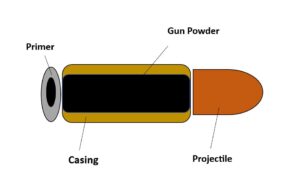
When a bullet is struck, the explosive charge in the bullet’s primer ignites, igniting the gunpowder that has been stored in the casing directly behind the projectile. When the gunpowder is ignited, it releases gases that quickly expand and propel the bullet out of the gun and toward the target.
So Where Does The Loud Bang Come From?
Imagine the pop of champagne once you remove the cork. This is the same principle that applies to a gun. The loud pop of champagne is a result of the gases inside all trying to exit the bottle at the same time.
However, compared to the champagne bottle, the gases inside a bullet are more compressed, and the pressure is so great that the bullet is expelled at supersonic speed—faster than the speed of sound. The loud bang of a gun, therefore, is a result of the gases exiting the barrel at a supersonic speed. The projectile will also create a swish sound as it cuts through the air.
FAQs
1) Do suppressors really make guns “silent”?
No, suppressors don’t make guns silent; they reduce noise by 20–40 decibels by slowing and cooling escaping gases. A typical suppressed gunshot still measures 120–135 dB, about as loud as a rock concert. The suppressors also help reduce muzzle flash.
2) Why does indoor shooting sound louder than outdoor shooting?
Indoor shooting sounds louder because sound waves bounce off walls, floors, and ceilings, creating echoes and amplifying the noise. Outdoors, sound dissipates more freely into the open air.
3) Is hearing protection necessary when shooting?
Yes. Gunfire regularly exceeds 140 decibels, well above the 120 dB threshold for immediate hearing damage. Even a single unprotected shot can cause permanent hearing loss or tinnitus. Always wear earmuffs, earplugs, or both, especially indoors or around large calibers, and during extended shooting sessions.
4) Can subsonic ammunition make a gun quieter?
Yes. Subsonic ammo travels below the speed of sound (about 1,125 ft/s), eliminating the loud “crack” of a supersonic bullet. When paired with a suppressor, it significantly reduces overall noise. It’s ideal for quiet shooting, though it trades some velocity, range, and terminal energy compared to standard rounds.
5) What makes some guns louder than others?
Several factors influence the loudness of a gun’s sound. Caliber size, barrel length, and ammunition type play key roles. Larger cartridges burn more powder, producing greater pressure and noise. Shorter barrels amplify sound since gases exit sooner, while muzzle brakes or compensators redirect blast, increasing perceived loudness.
CONCLUSION
There you have it, it’s now clear that the sound of the gun has got nothing to do with the gun itself, but rather the bullet, as it exits the gun. It’s important to realize that the loud pop of the gun also depends on the size of the bullet and the amount of gunpowder present inside.
Related