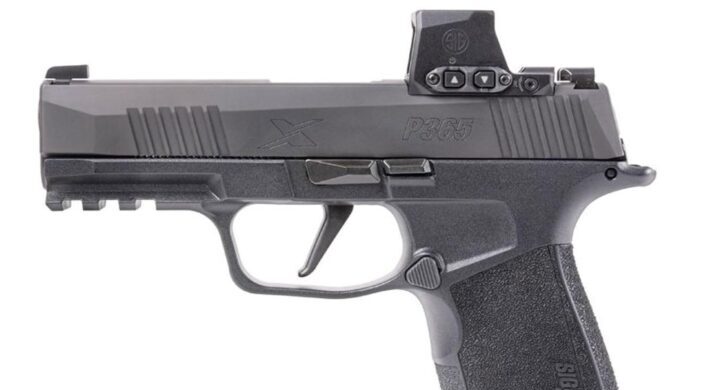
If you’re running the Springfield Echelon, you already know it’s built to take full advantage of modern optics. The Variable Interface System makes mounting straightforward, but the real difference comes down to choosing a red dot that complements the pistol’s fast, flat shooting nature.
Below are six of the best options, each reviewed from the perspective of a shooter who actually cares about performance, not just specs.
A quick summary
- HOLOSUN 507C-X2 -Best Overall
- Trijicon RMR Type 2 -Most Durable
- Leupold DeltaPoint Pro
- Vortex Defender-CCW
- Trijicon SRO
- Holosun EPS Carry
Best Red Dots for Springfield Echelon -Reviews
1) HOLOSUN 507C-X2
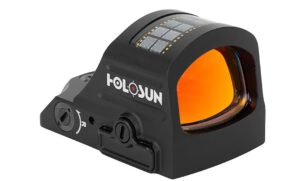
The HOLOSUN 507C-X2 is one of those optics that simply works on a duty-sized pistol like the Echelon. What makes it stand out immediately is the Multi-Reticle System. You can switch between a 2 MOA dot, a 32 MOA circle, or a combined circle-dot depending on how you shoot. That flexibility matters on the Echelon because it’s a pistol that can stretch from defensive distances to more deliberate shots without feeling out of place.
The durability is not an afterthought either. With a 7075-T6 aluminum housing and strong resistance to shock and water, it’s built to handle recoil cycles and real-world abuse. The side-loading battery tray is another detail Echelon shooters will appreciate, you don’t have to remove the optic to swap batteries, so your zero stays intact. Add in Shake Awake and up to 50,000 hours of battery life, and you get an optic that is always ready without constant maintenance.
On the range, the 507C-X2 feels fast. The circle-dot option makes target acquisition almost automatic, especially when transitioning between targets.
Pros
- Multi-reticle system adds versatility
- Excellent battery life with Shake Awake
- Durable aluminum construction
- Side battery tray preserves zero
Cons
- Open emitter design collects debris
- Slightly bulkier than micro optics
2) Trijicon RMR Type 2 (3.25 MOA)
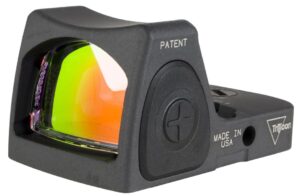
The Trijicon RMR Type 2 is the benchmark for pistol red dots, and it pairs exceptionally well with the Echelon if your priority is absolute reliability. This optic is built like a tank. The forged aluminum housing and proven electronics are why it’s trusted by military and law enforcement worldwide. You’re not buying features here, you’re buying confidence.
The 3.25 MOA dot is arguably the best all-around size for the Echelon. It’s small enough for precise shots at distance but large enough to pick up quickly under stress. On a pistol that tracks as flat as the Echelon, that balance becomes noticeable when you’re pushing speed.
Where the RMR shines is consistency. It holds zero through thousands of rounds and harsh conditions without complaint. There’s no gimmickry, no solar panels, no reticle switching, just a clean dot that works every time you press the trigger. That simplicity is exactly why many experienced shooters still default to it.
The downside is the bottom-loading battery. You’ll need to remove the optic to replace it, which means rechecking your zero. Still, for many Echelon owners, that trade-off is worth it for unmatched durability.
Pros
- Legendary durability and reliability
- Clean, crisp 3.25 MOA dot
- Proven track record in hard use
- Excellent for duty or defensive setups
Cons
- Bottom-loading battery
- Expensive for its feature set
3) Leupold DeltaPoint Pro
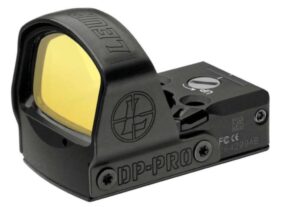
The Leupold DeltaPoint Pro feels like it was designed for pistols exactly like the Echelon. Its standout feature is the large viewing window, which gives you a wider field of view than most competitors. When you’re shooting fast, especially in transitions, that extra visibility makes a real difference.
The dot is bright, crisp, and easy to track under recoil. On the Echelon, which already manages recoil well, the DeltaPoint Pro helps you stay visually locked onto the dot shot after shot. It’s one of the easiest optics to shoot quickly with, especially for newer red dot users.
Another practical advantage is the top-loading battery. You can swap batteries without removing the optic, which keeps your zero intact. That’s something Echelon shooters who train regularly will appreciate.
Durability is solid, though not quite as bombproof as the RMR. Still, it holds up well for duty, range, and competition use. If your focus is speed and visibility rather than extreme abuse resistance, this optic fits perfectly.
Pros
- Large window for fast target acquisition
- Top-loading battery design
- Bright, easy-to-track dot
- Excellent for speed shooting
Cons
- Slightly bulkier profile
- Not as rugged as RMR
4) Vortex Defender-CCW
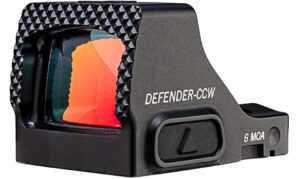
The Vortex Defender-CCW is a newer entry that punches above its weight, especially if you’re building an Echelon setup on a tighter budget. It’s compact, lightweight, and surprisingly tough for its size.
This optic is designed with concealed carry in mind, but it works well on the Echelon if you want a lower-profile setup. The dot is clean and responsive, and the controls are intuitive. You don’t have to fight the optic to adjust brightness or settings, it just works.
One thing that stands out is Vortex’s approach to durability and warranty. While it may not feel as overbuilt as premium options, it’s backed by one of the best warranties in the industry. That adds peace of mind, especially for shooters who are hard on their gear.
On the Echelon, the Defender-CCW gives you a lighter, more streamlined feel without sacrificing usability. It’s a practical choice if you want solid performance without spending RMR-level money.
Pros
- Compact and lightweight
- User-friendly controls
- Strong warranty support
- Good value for money
Cons
- Smaller window
- Not as proven as premium optics
5) Trijicon SRO (2.5 MOA)
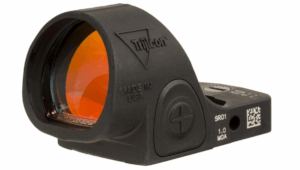
The Trijicon SRO is built for speed, and on the Echelon, it absolutely shines in that role. The first thing you notice is the massive circular window. It gives you one of the best sight pictures available on any pistol optic.
The 2.5 MOA dot is ideal for fast shooting while still allowing for precise hits. Combined with the Echelon’s shootability, the SRO makes rapid target transitions feel almost effortless. If you’re into competition or just want the fastest possible setup, this optic delivers.
Unlike the RMR, the SRO uses a top-loading battery, which is a big convenience upgrade. Adjustments are also easier to access, making it more user-friendly overall.
The trade-off is durability. While still solid, it’s not as rugged as the RMR. This is more of a performance optic than a duty optic. For range use, competition, or a performance-focused Echelon build, it’s one of the best options available.
Pros
- Huge window for unmatched visibility
- Extremely fast target acquisition
- Top-loading battery
- Excellent for competition shooting
Cons
- Less rugged than RMR
- Larger footprint
6) Holosun EPS Carry
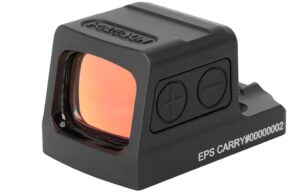
The Holosun EPS Carry brings something different to the table: a closed emitter design. That alone makes it incredibly appealing for real-world Echelon use, especially in dusty or harsh environments where open emitters can get obstructed.
Despite its compact size, the EPS Carry offers a clear, crisp dot and excellent battery efficiency. Like other Holosun optics, it includes Shake Awake and long battery life, so it’s always ready when you need it.
On the Echelon, this optic works well if you want a cleaner, more protected setup. The enclosed design keeps the emitter safe from debris, rain, and lint, something open optics can struggle with over time.
It may not have the large window of something like the SRO, but it makes up for it with reliability in adverse conditions. For a defensive or everyday carry-focused Echelon build, this is one of the smartest choices you can make.
Pros
- Enclosed emitter for reliability
- Compact and lightweight
- Long battery life with Shake Awake
- Excellent for harsh environments
Cons
- Smaller window
- Less immersive sight picture
Factors To Consider on a Red Dot for the Echelon
Intended Use
The first thing you need to be honest about is how you plan to use the optic, because that decision shapes everything else. If your setup is for concealed carry or home defense, reliability and simplicity matter far more than fancy features. You want something that turns on when needed and holds zero without question.
On the other hand, if you’re shooting at the range or competing, speed becomes the priority, and that’s where larger windows and faster reticles start to shine. Many people make the mistake of buying a competition-style optic for carry, only to realize it’s bulky or less durable than they expected.
Open vs Closed Emitter
This choice often gets overlooked, yet it directly affects how your optic performs in real conditions. Open emitter optics are more common and usually lighter, but the emitter is exposed, which means dust, lint, or water can block the dot at the worst possible moment. Closed emitter optics solve that problem by sealing the system, keeping the dot visible regardless of the environment. If you carry daily or train outdoors, the added reliability of a closed emitter becomes very noticeable over time.
Dot Size (MOA)
Dot size might seem like a small detail, but it completely changes how the optic feels when shooting. A smaller dot, like 2 MOA, gives you better precision for longer shots, but it can be slightly slower to pick up under stress.
A larger dot is easier to see quickly, especially during rapid fire, but it can cover more of the target at distance. Most shooters settle into the middle ground because it offers the best of both worlds. The key is finding a size that your eye picks up naturally without forcing you to hunt for it.
Window Size & Field of View
The size of the optic’s window has a huge impact on how quickly you can find the dot. A larger window gives you more visual space, which makes target acquisition feel almost effortless, especially when you’re moving between targets. It also helps newer shooters who are still learning to present the pistol consistently. The trade-off is that bigger windows usually mean a larger optic, which may not be ideal if you’re trying to keep your setup compact or easy to conceal.
Durability
A red dot has to survive constant recoil, and not all optics are built to handle that long-term stress. A well-built optic uses strong materials and is designed to absorb impact without losing zero. This is one of those areas where cutting corners can cost you later, because an optic that fails under recoil is essentially useless. If you’re relying on your pistol for anything serious, durability should never be an afterthought.
Battery Life
Battery performance determines how much you can trust your optic over time. A long battery life means you’re not constantly worrying about replacements, and features like motion activation ensure the dot is ready when you pick up the pistol. Some optics adjust brightness automatically, while others give you full manual control. What matters most is that the dot is visible when you need it and don’t require constant attention.
Battery Access
This is one of those practical details that doesn’t seem important until you’ve lived with it. A top- or side-loading battery lets you replace it without removing the optic, which means your zero stays intact. Bottom-loading designs require you to take the optic off, and that usually means rechecking your zero afterward. If you shoot often, that extra step quickly becomes frustrating.
Mounting Compatibility
Even the best optic won’t perform well if it doesn’t mount securely to your pistol. You need to make sure the footprint matches your slide system so the optic sits properly and holds zero under recoil. A good mounting system ensures everything lines up correctly and stays locked in place, which is critical for consistent performance.
Size & Weight
The size and weight of the optic affect how the pistol feels in your hand and how it carries. A larger optic may offer a better sight picture, but it can also make the pistol feel top-heavy or harder to conceal. A smaller optic keeps things streamlined but may sacrifice some visibility. It’s all about finding the right balance for your setup.
FAQs
How long do red dot batteries last?
Modern red dots are extremely efficient. Many quality optics run anywhere from 20,000 to 50,000 hours on a single battery, which translates to years of use. Some models include motion activation features that turn the optic off when idle and instantly on when moved, further extending battery life. Even with long runtimes, it’s still smart to replace the battery on a schedule, often once a year, just to be safe.
What MOA dot size should I choose?
Most shooters do best with a dot in the 2 to 3.25 MOA range because it balances speed and precision. Larger dots are easier to see quickly but can cover more of the target, while smaller dots allow for more precise aiming but may take longer to pick up. The right choice depends on your eyes and how you shoot, but the middle ground works well for most people.
Are red dots worth it on a handgun?
Yes, and once you get used to one, it’s hard to go back. A red dot allows you to focus on the target while the aiming point stays in the same visual plane, which speeds up target acquisition and improves accuracy, especially at distance. That said, there is a learning curve. At first, you might struggle to find the dot during presentation, but with consistent practice, it becomes faster and more natural than iron sights.
Final Thoughts
The Springfield Echelon deserves a red dot that matches its capability. If you want durability above all, go RMR. If you want speed, the SRO or DeltaPoint Pro stand out. If you want value and features, Holosun dominates with the 507C-X2 and EPS Carry.
Each of these optics brings something different, but all of them can unlock what the Echelon is really capable of when you run it hard.
Related