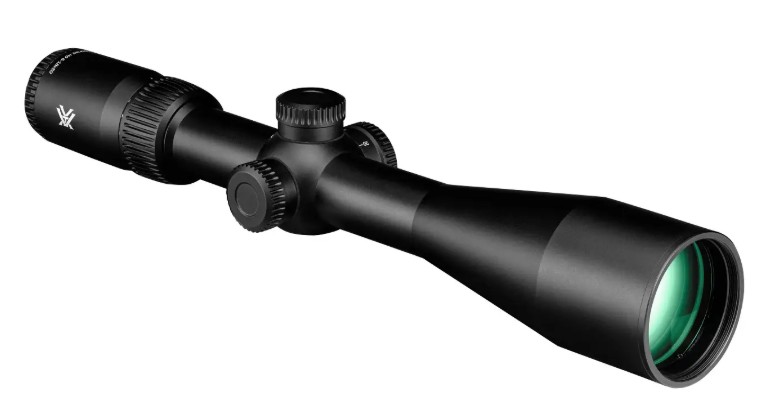
The .22 LR remains one of the most popular cartridges for target shooting, training, and small game hunting, and choosing the right scope can make a noticeable difference in performance. Vortex has built a strong reputation for producing reliable, clear, and affordable optics that suit a wide range of shooters.
In this guide, we take a closer look at the best Vortex scopes for .22 LR, focusing on options that offer the right balance of clarity, magnification, and value for this versatile cartridge.
In This Article
- Vortex Crossfire II 2–7×32 Rimfire
- Vortex Diamondback Rimfire 2–7×35
- Vortex Crossfire II 3–9×40
- Vortex Crossfire II 4–16×50 AO
- Vortex Strike Eagle 1–6×24
Best Scopes for 22LR Rifle- Reviews
1) Vortex Crossfire II 2-7×32 Rimfire
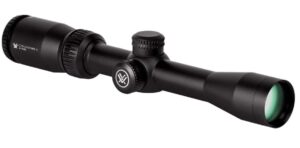
The Vortex Crossfire II 2-7×32 Rimfire is a purpose-built optic that breathes new life into any rimfire rifle, making it a premier choice for small-game hunters and casual plinkers alike. Vortex specifically engineered this variant to handle the unique demands of the .22 LR, most notably by setting the parallax at a fixed 50 yards. This is a massive advantage for rimfire shooters, as standard centerfire scopes are usually parallax-free at 100 yards, leaving you with a blurry sight picture when trying to headshot a squirrel at closer distances.
The 2-7x magnification range is practically ideal for the effective distance of a .22 LR, offering a wide field of view at the lower end for quick target acquisition and enough zoom at 7x to stretch your shots out to 75 or 100 yards.
Built with a 1-inch aircraft-grade aluminum tube, it handles the bumps and scrapes of thick brush without losing its zero. The V-Plex reticle is clean and uncluttered, ensuring that small targets aren’t completely obscured by thick crosshairs. Its capped reset turrets are crisp, allowing for easy finger-adjustable tuning in the field. For a budget-friendly optic, the brightness and clarity provided by the fully multi-coated lenses are remarkably impressive, even during the dim light of dawn and dusk when small game is most active.
Pros
- Factory-set 50-yard parallax perfect for close-range rimfire distances.
- Lightweight, compact profile keeps the rifle nimble.
- Highly forgiving eye box with long eye relief.
Cons
- Fixed parallax limits clarity if you shoot past 100 yards.
- V-Plex reticle lacks holdover marks for bullet drop.
2) Vortex Diamondback Rimfire 2-7×35
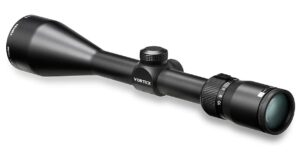
The Vortex Diamondback Rimfire 2-7×35 steps things up in terms of ruggedness and optical refinement, solidifying itself as a top-tier companion for a precision rimfire setup. While it shares the same practical 2-7x magnification range as its Crossfire cousin, the Diamondback family is known for superior glass quality and enhanced durability. Featuring a slightly larger 35mm objective lens, it draws in noticeably more light, delivering edge-to-edge sharpness and vibrant color fidelity that punches way above its price class.
Like any true rimfire specialist, it features a fixed 50-yard parallax configuration, ensuring your crosshairs stay locked onto your target without any optical shifting at typical rimfire distances. What really sets this optic apart is its construction; the single-piece tube is incredibly tough and highly resistant to impacts.
The precision-glide erector system ensures that magnification adjustments remain smooth and consistent, even in freezing winter conditions. It utilizes the V-Plex reticle, which keeps your field of view clear so you can focus entirely on small, moving targets. The turrets offer highly audible and tactile clicks, giving you absolute confidence when making fine adjustments. It is completely argon-purged and O-ring sealed, guaranteeing absolute fogproof and waterproof performance during unpredictable backcountry treks.
Pros
- Premium Diamondback glass offers exceptional low-light clarity.
- 35mm objective lens provides a brighter image than standard 32mm scopes.
- Highly durable construction with exceptionally crisp turret clicks.
Cons
- Slightly heavier than other 2-7x options in its class.
- No illuminated reticle option for dense timber hunting.
3) Vortex Crossfire II 3-9×40
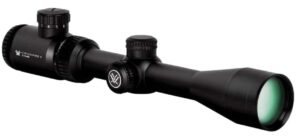
If you want a versatile all-rounder that can pull double duty on both your rimfire trainer and a centerfire deer rifle, the Vortex Crossfire II 3-9×40 is a classic choice. This scope moves away from rimfire-specific dimensions and embraces the time-tested 3-9x magnification configuration, which provides a bit more reach for target shooting at the local range. The generous 40mm objective lens is a massive benefit, acting as a light bucket to keep your sight picture bright and clear even under heavy tree canopy. However, because this is a standard centerfire scope, the parallax is fixed at 100 yards.
While this means you might experience minor parallax error at hyper-close distances under 25 yards, the sheer versatility of the Dead-Hold BDC reticle more than makes up for it. This reticle features customized hashmarks that are incredibly useful for estimating bullet drop, allowing you to map out your .22 LR holdovers for those ambitious 100-to-150-yard shots.
The eye relief is incredibly generous, and the ultra-forgiving fast-focus eyepiece lets you acquire targets instantly. It features a nitrogen-purged design that keeps moisture out, and the capped turrets prevent accidental adjustments while slinging your rifle over your shoulder in the field.
Pros
- Dead-Hold BDC reticle helps calculate holdovers for looping .22 LR trajectories.
- Excellent 40mm light transmission for bright imaging.
- Highly versatile magnification range for longer target distances.
Cons
- Fixed 100-yard parallax can cause slight blurriness inside 25 yards.
- Bulkier footprint on smaller rimfire receivers.
4) Vortex Crossfire II 4-16×50 AO
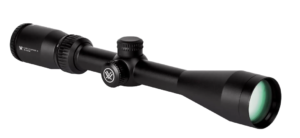
The Vortex Crossfire II 4-16×50 AO is a powerhouse optic that pushes the absolute boundaries of what a rimfire rifle can achieve, making it a dream come true for benchrest shooters and long-range .22 LR enthusiasts. The defining feature of this scope is its massive 50mm objective lens, which acts as a massive light collector, feeding a brilliant, high-contrast image to your eye even under heavily overcast skies or late evening shadows.
Vortex equipped this model with an Adjustable Objective (AO), meaning you can manually dial out parallax error down to 25 yards. This makes it incredibly versatile, allowing you to transition smoothly from mid-range target practice to extreme rimfire distances. The expansive 4-16x magnification range gives you the serious magnification needed to see tiny .22-caliber holes in paper targets at 100 yards without needing a separate spotting scope.
Built around a rugged 1-inch single-piece aircraft aluminum tube, the scope is nitrogen-purged and O-ring sealed to completely lock out moisture and fog. Combined with the Dead-Hold BDC reticle, this high-power optic allows shooters to precisely map out the looping trajectory of the .22 LR cartridge for incredibly precise holdovers at extended distances.
Pros
- Massive 50mm objective lens delivers unparalleled brightness and clarity.
- 16x top-end magnification allows for hyper-precise shot placement.
- Adjustable Objective (AO) easily eliminates parallax error down to 25 yards.
Cons
- Large, heavy footprint can make smaller rimfire rifles feel top-heavy.
- Requires high scope rings to clear the large 50mm objective bell.
5) Vortex Strike Eagle 1-6×24
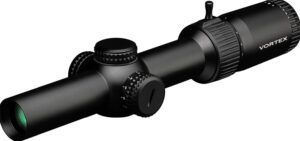
The Vortex Strike Eagle 1-6×24 introduces a tactical, modern sporting rifle dynamic to the rimfire world, making it an incredibly fun and functional choice for tactical .22 LR platforms or fast-paced steel challenge competitions. As a Low Power Variable Optic (LPVO), it functions like a red dot sight at true 1x magnification, allowing you to shoot with both eyes open for unparalleled situational awareness and blindingly fast close-range transitions.
Cranking the smooth throw lever up to 6x gives you plenty of magnification to precisely engage targets out to the practical limits of the .22 LR cartridge. What makes this scope stand out is its glass-etched, illuminated AR-BDC3 reticle.
The illuminated halo naturally draws your eye to the center for rapid shooting, while the subtle BDC steps can be adapted to map out your rimfire drop points. Built on a beefy 30mm main tube, it offers excellent structural integrity and ample internal adjustment travel. The fully multi-coated lenses deliver a crystal-clear image, and the shockproof build ensures it can take a beating. It brings a level of speed, versatility, and tactical utility that traditional hunting scopes simply cannot match.
Pros
- True 1x magnification allows for lightning-fast, both-eyes-open shooting.
- Fully illuminated reticle excels in dark conditions and rapid shooting.
- Heavy-duty 30mm tube provides excellent durability and adjustment range.
Cons
- The AR-BDC3 reticle is designed for centerfire rounds, requiring custom conversion for .22 LR.
- Considerably more expensive than traditional rimfire-specific options.
Factors to Consider When Buying a 22LR Scope
Magnification
Magnification determines how close your target appears through the scope, and for a .22 LR, you generally do not need very high magnification. Because this cartridge is most effective at shorter distances, a moderate range like 2–7x or 3–9x provides a good balance between visibility and control.
Lower magnification makes it easier to quickly find and track targets, especially in hunting situations, while higher magnification helps with precision when shooting at smaller targets. Choosing the right magnification ensures you can shoot comfortably without overcomplicating your setup.
Parallax
Parallax refers to the apparent shift of the reticle when you move your eye behind the scope, and it can affect accuracy if not properly set. Since .22 LR rifles are commonly used at short distances, it is important to choose a scope with parallax set around 50 yards or one that allows adjustment through an adjustable objective (AO) or side focus. Proper parallax adjustment ensures that the reticle stays aligned with the target, which improves shot consistency. Without it, even small movements of your head can cause noticeable aiming errors.
Reticle
The reticle is the aiming point inside the scope, and its design affects how easily you can aim and make adjustments. For a .22 LR, a simple duplex or Truplex reticle is often the best choice because it is clean, easy to see, and quick to use in the field. More complex reticles like BDC can help compensate for bullet drop at longer distances, but they are not always necessary for typical .22 LR ranges. A straightforward reticle allows you to focus on accuracy without unnecessary distraction.
Weight and size
The weight and size of the scope play an important role in how your rifle handles. Since most .22 LR rifles are lightweight, adding a heavy or bulky scope can make the setup feel unbalanced and harder to maneuver. A compact and lightweight scope maintains the natural feel of the rifle and makes it easier to carry for extended periods, especially during hunting trips. Keeping the setup light improves overall comfort and control.
Glass quality
Glass quality determines how clear and bright the image appears through the scope, and it is often more important than high magnification. Good-quality lenses allow more light to pass through, producing a sharper and clearer image, which is especially useful in low-light conditions such as early morning or late evening. Poor glass can make targets appear dull or blurry, reducing your ability to aim accurately. Investing in decent glass quality improves your shooting experience significantly.
Frequently Asked Questions (FAQs)
Is .22 LR good for hunting?
The .22 LR is good for hunting, but it is best suited for small game rather than large animals. It is commonly used for squirrels, rabbits, and similar-sized animals because it offers enough accuracy and penetration without excessive damage to meat. Its low recoil and quiet report also make it ideal for precision shots. However, it lacks the power needed for larger game, so ethical hunting requires limiting its use to appropriate targets and maintaining good shot placement.
What’s the difference between rimfire and centerfire?
The difference between rimfire and centerfire lies in how the cartridge is ignited. A rimfire cartridge like the .22 LR has the primer built into the rim of the casing, so the firing pin strikes the edge to ignite it. In contrast, a centerfire cartridge has a separate primer located in the center of the base. Rimfire rounds are generally cheaper and less powerful, while centerfire rounds are more powerful, more reliable, and often reloadable. This makes centerfire cartridges more suitable for larger game and defensive use.
What distance should I zero a .22 LR?
The ideal zero distance for a .22 LR depends on how you intend to use it, but a common and practical zero is between 25 and 50 meters. A 25-meter zero is useful for close-range shooting and indoor ranges, while a 50-meter zero provides a better balance for small game hunting and general outdoor use. Because the .22 LR has a relatively curved trajectory, choosing a zero distance within this range helps keep bullet drop manageable and improves accuracy across typical shooting distances.
Is .22 LR good for self-defense?
The .22 LR is not generally considered the best choice for self-defense, but it can still be used if no better option is available. Its main advantages are low recoil, ease of control, and the ability to place shots accurately, especially for inexperienced shooters. However, it lacks the stopping power of larger calibers, which can make it less effective in critical situations. For this reason, while it can serve as a defensive option, most experts recommend more powerful cartridges when possible.
Can a .22 LR kill a deer or coyote?
A .22 LR is capable of killing animals such as a deer or coyote, but it is not an appropriate or ethical choice for doing so in most situations. While precise shot placement, such as a well-placed headshot, can be lethal, the cartridge does not provide enough consistent power for a humane and reliable kill on larger animals. For coyotes, it may be used at close range with careful shot placement, but for deer, most regions prohibit its use due to ethical concerns and the risk of wounding rather than cleanly harvesting the animal.
Conclusion
Vortex makes great scopes for .22 LR rifles that are clear, reliable, and easy to use. The best choice depends on how you plan to use your rifle. By focusing on simple features like good magnification, clear glass, and proper parallax, you can choose a scope that improves your accuracy and overall shooting experience.
Related
- Best 1-6x scopes
- Best rifle scope for 500 yards
- Vortex scope for 300 Win Mag
- Best Vortex scope for 223 Rifle