A target appears at an unfamiliar distance, the wind changes, and you need to correct your hold without taking your eye off the rifle. That is where a good first focal plane scope earns its place. The reticle remains proportionally accurate throughout the magnification range, so the same subtensions work at low power and high power.
That convenience comes with a price. FFP reticles become smaller as magnification drops, sometimes shrinking into fine lines that are difficult to pick up against dark timber, a shaded target, or a busy background. Add the usual premium over comparable second focal plane optics, and the decision deserves more thought than simply buying the scope with the highest magnification number.
The best FFP scopes balance reticle visibility, useful magnification, reliable adjustments, optical performance, and weight. This guide compares six established models, to help you identify a scope which you can actually spend your money on.
Quick comparison: the six best FFP scopes
The six models cover distinct jobs, from a compact 2-10x optic to a dedicated 5-25x long-range scope. Reticle and adjustment variants matter: the Vortex models below offer MOA and MRAD configurations, while the Argos BTR Gen3 and EP-5 Gen II also have variant-specific reticles.
| Scope | Magnification / objective | Reticle and unit | Illumination | Best use |
| Vortex Viper PST Gen II 2-10×32 FFP | 2-10x / 32 mm | EBR-4 MOA or MRAD | Yes | Compact precision and field use |
| Vortex Diamondback Tactical 4-16×44 FFP | 4-16x / 44 mm | EBR-2C MOA or MRAD | No | Entry-level precision, mid-range targets |
| Vortex Diamondback Tactical 6-24×50 FFP | 6-24x / 50 mm | EBR-2C MOA or MRAD | No | Bench and long-range target shooting |
| Vortex Venom 3-15×44 FFP | 3-15x / 44 mm | EBR-7C MOA or MRAD | No | All-round target and varmint work |
| Athlon Argos BTR Gen3 6-24×50 | 6-24x / 50 mm | APRS11 FFP IR MIL or APLR11 FFP IR MOA | Yes | Budget long-range shooting |
| Arken EP-5 Gen II 5-25×56 FFP | 5-25x / 56 mm | VPR-MIL, VPR-MOA, or TOR-MIL | Red illumination | High-magnification precision |
FFP vs SFP: What You Actually Give Up and Gain
The difference between first focal plane and second focal plane optics is simple in principle. The consequences are more interesting once a rifle leaves the bench.
In an FFP scope, the reticle changes apparent size as you turn the magnification ring. At low power, the reticle looks smaller; at high power, it looks larger. Because the reticle and image scale together, the spacing between its marks represents the same angular measurement at every magnification setting.
A second focal plane (SFP) reticle appears approximately the same size as magnification changes. Its subtensions are accurate at a designated magnification, commonly the highest setting, unless the manufacturer specifies otherwise. At other powers, the shooter must account for the changed relationship between the reticle and target.
What to Look for in an FFP Scope
A long magnification range looks impressive in a product listing. It is not the first thing I would check.
Match the reticle to the turrets
Choose MRAD/MRAD or MOA/MOA. A scope with an MRAD reticle and MRAD turrets keeps corrections in one unit, while an MOA reticle paired with MOA turrets does the same. Mixing units is workable, but it introduces conversion arithmetic that offers no benefit to most shooters.
MRAD is convenient for decimal-based corrections and communication among shooters who already use the metric angular system. MOA is a good fit for shooters accustomed to minute-of-angle adjustments and ballistic data expressed in MOA. Neither unit makes a rifle inherently more precise.
Reticle
The reticle is the part you use to aim, range, and correct. Look for clear reference marks, a center that stands out from the surrounding grid, and enough open space to see the target.
Fine subdivisions are useful for precise corrections, but dense designs become visually crowded. For hunting, a simpler reticle with an obvious center is often preferable to a complicated grid. For target work, useful wind references and numbered hold marks can justify the extra detail.
Illumination
Illumination can improve center visibility against a dark target or background. It does not replace a well-designed reticle, and it is not the same as a bright red-dot sight. Check whether the illumination covers the central aiming point or a larger portion of the reticle, and whether the adjustment range suits your conditions.
Several scopes in this group use non-illuminated reticles. That is a cost and complexity trade-off, not necessarily a defect. It does, however, matter if you intend to hunt in low light.
Turrets, and tracking
Exposed tactical turrets are useful when you regularly dial elevation or windage. Look for a clearly stated click value, usable markings, and a practical method of returning to zero. A zero stop is particularly useful for long-range work because it gives the elevation turret a repeatable reference point.
A published adjustment range tells you how much movement is available; it does not prove that the scope tracks perfectly. Without documented testing, claims of flawless tracking or exceptional mechanical repeatability should be treated cautiously.
Parallax, eye relief, and magnification
Side-focus parallax adjustment helps bring the target image and reticle into the correct relationship, particularly at varying distances. Check its minimum distance if you shoot close-range targets or rimfire rifles.
Eye relief matters for comfort, consistent positioning, and recoil management. A large objective lens also affects mounting height and rifle balance: a 56 mm objective generally needs more clearance than a 44 mm objective, depending on the rifle, barrel contour, rail, and rings.
Finally, buy magnification for the job. A 3-15x scope is useful across a broad range of field and range tasks. A 6-24x or 5-25x scope makes more sense for a rifle that spends most of its time supported on a bench or in a prone position. Extra power is not free: it usually narrows the field of view and makes head position less forgiving.
Best FFP scopes- Reviews
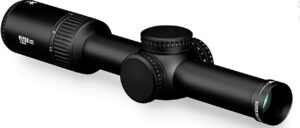
1) Vortex Viper PST Gen II 2-10×32 FFP
>>See it on Amazon and OpticsPlanet
The Viper PST Gen II 2-10×32 FFP occupies a useful middle ground between traditional hunting glass and a full-size tactical scope. Its 2x minimum magnification gives you a wider viewing window for close targets, while 10x is enough for careful aiming at moderate distances and practical precision exercises.
The 32 mm objective is part of the appeal. It keeps the optical package relatively compact compared with the 50 mm and 56 mm scopes in this lineup. That does not automatically make the complete rifle lightweight, but it reduces the temptation to turn a handy field rifle into a bench-only setup.
Vortex offers the EBR-4 reticle in MOA and MRAD configurations. Pick the version that matches your preferred adjustment system and ballistic data. Its graduated references support holds and corrections across the magnification range, which is the principal reason to choose FFP in this format.
There is a trade-off. At 2x, the reticle occupies less of the sight picture than it does at 10x. On a dark background, the fine references are harder to distinguish than a bold hunting reticle. The low end is useful for field acquisition, but this is not the same experience as looking through a simple, heavy duplex.
The Viper line sits above Vortex’s entry-level tactical options. Buyers should expect a more developed precision-oriented feature set, but they should not assume that the smaller objective delivers the same low-light viewing experience as a well-designed 50 mm scope.
Its published overall length is 12.64 inches, and the model uses a 30 mm tube. Vortex also backs the product with its VIP warranty. The price position is the awkward part: this is a substantial investment for a 2-10x optic, especially if you rarely use reticle holds.
Specifications
- Focal plane: First focal plane
- Magnification: 2-10x
- Objective: 32 mm
- Tube: 30 mm
- Reticle: EBR-4 MOA or EBR-4 MRAD
- Published length: 12.64 inches
- Warranty: Vortex VIP warranty
Pros
- Decent glass quality.
- 2x minimum magnification suits close-to-moderate field use
- 10x maximum power supports deliberate aiming without demanding a large 50 mm objective.
- EBR-4 is available in both MOA and MRAD versions.
- A 30 mm tube offers a broad selection of compatible mounting options.
Cons
- The 32 mm objective is less suited to maximizing low-light viewing than larger objectives.
- Struggles with small targets at long range
Verdict: Buy it if you want a compact precision optic with a useful low-power setting; skip it if your rifle spends nearly all its time on a bench shooting small targets at long distance.
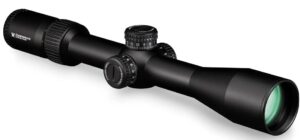
2) Vortex Diamondback Tactical 4-16×44 FFP
>>See it on Amazon and OpticsPlanet
The Diamondback Tactical 4-16×44 is the more flexible of the two Diamondback Tactical models here. Its 4x starting point makes it more comfortable for general range work, target transitions, and moderate-distance varmint shooting than an optic that starts at 6x.
That distinction matters more than the extra eight powers advertised on the larger model. A shooter who practices at mixed distances often benefits more from a broad working range than from maximum magnification alone. At 4x, the field of view is more forgiving, and finding a target is less of a chore.
The EBR-2C reticle comes in MOA and MRAD versions. It provides graduated references for elevation and windage, allowing the shooter to apply corrections without relying exclusively on turret dialing. The reticle is not illuminated, so its fine lines rely on contrast and ambient light. In shaded cover, that limitation deserves attention.
The main compromises are typical of a budget-oriented precision scope. The glass and sight picture are best evaluated against realistic expectations for the price tier rather than against premium competition optics. A clear central image is more important than chasing a large magnification number, and the narrow field of view at 16x is a normal consequence of zooming in.
The 4-16×44 is also the more sensible choice for shooters who want one optic to cover paper targets, steel, and occasional field use. It is not a substitute for a lightweight hunting scope, but it is less specialized than its 6-24x sibling.
Vortex lists a 30 mm tube and a 14.06-inch overall length. The product includes a sunshade, and the company offers its VIP warranty. This model makes most sense when the budget is limited and the rifle is being built to learn dialing, reticle holds, and repeatable shooting fundamentals.
Specifications
- Focal plane: First focal plane
- Magnification: 4-16x
- Objective: 44 mm
- Tube: 30 mm
- Reticle: EBR-2C MOA or EBR-2C MRAD
- Published length: 14.06 inches
- Illumination: None
- Warranty: Vortex VIP warranty
Pros
- 4x minimum magnification gives a wider magnification range
- 16x maximum power is sufficient for many conventional range targets and moderate-distance field work.
- EBR-2C is offered in both common angular units.
- The included sunshade helps manage stray light and glare.
Cons
- The non-illuminated reticle depends on target contrast
- A 44 mm objective still requires sensible ring-height and barrel-clearance planning.
Verdict: Buy it if you want a budget-friendly scope for learning precision shooting and handling varied target distances; skip it if your main priority is maximum magnification for small targets.
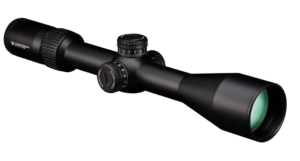
3) Vortex Diamondback Tactical 6-24×50 FFP
>>See it on Amazon and OpticsPlanet
The Diamondback Tactical 6-24×50 shares a family name and reticle system with the 4-16×44, but it serves a different shooter. Its extra magnification and larger objective make it a more natural fit for paper targets, small steel, and long-range practice where target identification and precise aiming take priority over quick acquisition.
The difference is not simply four extra powers. At 24x, a distant target occupies more of the sight picture, which helps the shooter establish a precise aiming point. It also magnifies mirage, wobble, and optical limitations. High power is useful only when conditions and the target justify it.
The EBR-2C reticle is available in MOA and MRAD configurations. That gives the shooter a graduated reference system for holds and corrections at changing magnifications. Like the 4-16×44, this model has no reticle illumination. The fine reticle can be less conspicuous against dark targets, especially when the scope is dialed down to its minimum setting.
The 6x minimum is the important limitation. It makes target acquisition less forgiving than the 4-16×44, particularly when switching between targets or working from an improvised position. For a rifle that rarely leaves the bench, that is a reasonable compromise. For a hunting rifle expected to handle close encounters, it is the wrong direction.
The 50 mm objective also affects mounting. It generally demands more clearance than a 44 mm objective, and the correct ring height depends on the barrel profile, rail, and stock geometry. Expect a scope that feels more at home on a purpose-built precision rifle than a light field rifle.
The published overall length is 14.28 inches, with a 30 mm tube. The scope is covered by Vortex’s VIP warranty. Compared with the smaller Diamondback, the choice is plain: buy this one for high-power target work; choose the 4-16×44 for a broader working range.
Specifications
- Focal plane: First focal plane
- Magnification: 6-24x
- Objective: 50 mm
- Tube: 30 mm
- Reticle: EBR-2C MOA or EBR-2C MRAD
- Published length: 14.28 inches
- Illumination: None
- Warranty: Vortex VIP warranty
Pros
- 24x maximum magnification is better suited to small targets
- The 50 mm objective offers a larger light-gathering aperture
- EBR-2C MOA and MRAD versions accommodate different established shooting systems.
- The 30 mm tube and exposed precision-style controls suit a dedicated target-rifle layout.
Cons
- The 50 mm objective generally requires higher mounting clearance
- No illumination means fine reticle marks rely on background contrast.
Verdict: Buy it if your priority is supported long-range target shooting on a budget
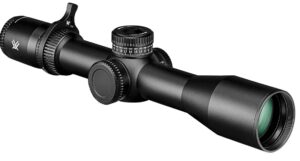
4)Vortex Venom 3-15×44 FFP
>>See it on Amazon and OpticsPlanet
The Venom 3-15×44 FFP occupies a useful position in Vortex’s range. Three-power minimum magnification gives it a more practical starting point for mixed field and range use than the 6-24x Diamondback. At the other end, 15x is enough for many ordinary target sessions and gives the shooter more room for deliberate aiming than a low-power hunting optic.
The EBR-7C reticle is available in MOA and MRAD versions. As with the other FFP scopes, the relationship between its subtensions and the target remains consistent as magnification changes. That is helpful for shooters who alternate between dialing and holding, and it reduces the need to memorize a specific magnification for reticle-based corrections.
Vortex lists a 34 mm tube for this model, which distinguishes it from the 30 mm Diamondback Tactical scopes and the Viper PST Gen II 2-10×32. Tube diameter alone does not establish optical quality or adjustment precision, but it is an important mounting specification. Confirm the correct ring size before ordering accessories.
The 44 mm objective keeps the scope from becoming as front-heavy as many 50 mm and 56 mm options. It still needs a proper mounting setup, but the format makes more sense for a rifle that has to serve both range and field duties.
The limitation is magnification at the top end. Shooters who spend most of their time inspecting tiny aiming points at long range will prefer 24x or 25x. The Venom is not intended to replace those scopes in a dedicated target setup. Its appeal is that it does not push the owner into a single specialized use.
Vortex publishes a length of 13.4 inches and offers its VIP warranty. The line’s position is between entry-level and premium precision optics. For a shooter building one rifle to do several jobs, the 3-15x range is a practical compromise rather than a spec-sheet compromise.
Specification.
- Focal plane: First focal plane
- Magnification: 3-15x
- Objective: 44 mm
- Tube: 34 mm
- Reticle: EBR-7C MOA or EBR-7C MRAD
- Published length: 13.4 inches
- Warranty: Vortex VIP warranty
Pros
- 3x minimum magnification is more forgiving for general field use
- 15x maximum power suits many mixed-distance target and varmint applications.
- EBR-7C is offered in both MOA and MRAD variants.
- The 44 mm objective is less demanding for clearance than a 50 mm or 56 mm objective.
Cons
- Fine FFP reticle marks become less prominent at 3x.
Verdict: The Venom is the sensible middle ground for shooters who want more reach than a compact optic without committing to a large 24x scope.
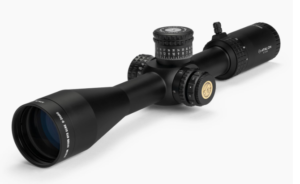
5) Athlon Argos BTR Gen3 6-24×50
>>See it on Amazon
The Argos BTR Gen3 6-24×50 is aimed at shooters who want a dedicated target scope without stepping into the premium price bracket. Athlon’s published specification sheet identifies two FFP configurations: APRS11 FFP IR MIL and APLR11 FFP IR MOA. The first is the MRAD-based option; the second uses MOA.
That choice should be made before buying. Match the reticle to the turret unit and to the ballistic information you already use. The model’s illuminated reticle gives it an advantage over the non-illuminated Diamondback Tactical pair when the central aiming area needs a little help against a dark or low-contrast target.
The 6-24x range is squarely aimed at target work. Six power is not ideal for fast close-range acquisition, but it is reasonable for a rifle that spends most of its time on a bench, bipod, or shooting mat. At 24x, fine target details become easier to resolve, provided the atmosphere and the optical system cooperate.
The manufacturer lists a 30 mm tube, 3.3 inches of eye relief, and a side-focus parallax adjustment from 10 yards to infinity. That close parallax setting is useful for shooters who also work at shorter distances, including certain rimfire and air-rifle setups. It is a specification, not a promise of identical performance on every platform.
The listed elevation and windage adjustment ranges are both 18 MIL for the MIL configuration, and the specification sheet lists 10 MIL per rotation. Those are useful figures to check against the intended rifle and ballistic requirements before purchase.
The trade-off is the same one that accompanies many budget 24x scopes: high magnification does not guarantee premium edge performance or a generous eye box. Buyers should evaluate the sight picture at the powers they actually use rather than judging the scope only at maximum magnification.
Specifications
- Focal plane: First focal plane
- Magnification: 6-24x
- Objective: 50 mm
- Tube: 30 mm
- Reticle: APRS11 FFP IR MIL or APLR11 FFP IR MOA
- Eye relief: 3.3 inches
- Parallax: 10 yards to infinity
- Click value: 0.1 MIL for the MIL configuration
- Total adjustment: 18 MIL elevation and 18 MIL windage for the MIL configuration
- Illumination: Yes
- Weight and length: Confirm the selected SKU’s current specification sheet
Pros
- 24x maximum magnification supports deliberate aiming on small targets.
- Illuminated reticle offers great visibility.
- Side-focus parallax adjustment begins at 10 yards
- The zero-stop feature helps establish a repeatable return-to-zero reference.
Cons
- The 50 mm objective requires more mounting clearance than a 44 mm objective in many setups.
- The 3.3-inch eye-relief specification deserves a careful fit check on the intended rifle.
Verdict: Buy it if you want a feature-rich budget FFP scope for regular target shooting; skip it if you need a lightweight, low-power hunting optic.
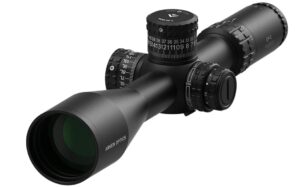
6) Arken EP-5 Gen II 5-25×56 FFP
>>See it on Amazon
The Arken EP-5 Gen II 5-25×56 FFP is built around the needs of precision shooters. Its 5-25x magnification range, 56 mm objective, 34 mm tube, illuminated reticle, and zero-stop system put it firmly in the dedicated target-rifle category.
Arken lists three reticle configurations: VPR-MIL, VPR-MOA, and TOR-MIL. The distinction matters because the VPR and TOR designs are not interchangeable names for one reticle. Choose the version that fits your preferred angular unit and the amount of reference detail you want in the sight picture.
The 5x minimum is more flexible than the 6x minimum of the Diamondback Tactical and Argos BTR Gen3, but this remains a large optic. It is better suited to a rifle that spends time supported than one carried all day over rough ground. At 25x, a small target fills more of the view, but mirage and rifle movement become more obvious.
The published specification lists 3.5 inches of eye relief, a 34 mm tube, and side-focus parallax adjustment from 20 yards to infinity. It also identifies an elevation adjustment range of 28 MIL for the MIL configuration, with a 10 MIL adjustment per revolution. The exact figures differ by unit variant, so the order-specific specification should govern any final comparison.
Arken’s Gen II revision is presented as an optical and mechanical refinement of the original EP-5. That makes the exact generation important: the older EP-5 and the EP-5 Gen II are distinct products, not merely different ways of writing the same model name.
The 41.2-ounce listed weight is substantial. It is not a minor consideration for a rifle carried for miles, but it is less troubling on a dedicated target rifle where stability and repeatable positioning matter more than carry comfort.
The EP-5 Gen II’s appeal is its collection of long-range features, rather than any claim that it is indistinguishable from far more expensive glass. It gives the shooter a serious set of tools, provided the rifle and use case justify the size.
Specifications
- Focal plane: First focal plane
- Magnification: 5-25x
- Objective: 56 mm
- Tube: 34 mm
- Reticle: VPR-MIL, VPR-MOA, or TOR-MIL
- Eye relief: 3.5 inches
- Parallax: 20 yards to infinity
- Weight: 41.2 ounces
- Length: 15.6 inches
- Adjustment: 0.1 MIL or 0.25 MOA, depending on variant
- Illumination: Red
- Zero stop: Yes
Pros
- 25x maximum magnification is the highest top-end power among these six models.
- The 56 mm objective offers a large aperture for a dedicated target scope.
- The published 3.5-inch eye relief gives buyers a clear starting point for fit checks.
- Illuminated reticle and zero-stop features suit frequent dialing and precision target work.
Cons
- At 41.2 ounces, the scope is heavy
- The 5x minimum remains less forgiving for close targets than a 2x or 3x starting point.
Verdict: The EP-5 Gen II is the strongest choice here for shooters who want a 25x ceiling, a large objective, and a developed long-range feature set.
How to Choose the Right FFP Scope
The right optic depends less on the most impressive specification than on how the rifle is used. Start with the position from which you shoot, the distance at which you normally engage targets, and whether you carry the rifle for long periods.
Hunting rifle with occasional long shots
For a hunting rifle, the Viper PST Gen II 2-10×32 and Venom 3-15×44 are the more natural fits among these six models.
A 2-10x scope is attractive when close targets and compact handling matter more than maximum magnification. A 3-15x scope gives additional reach for careful aiming at moderate distances, while still starting low enough for mixed field use.
The objective lens affects both clearance and balance. A 32 mm or 44 mm objective generally makes mounting easier than a 56 mm objective, though actual ring height depends on the rifle. Avoid raising the scope more than necessary, because a comfortable cheek weld is part of a repeatable shooting position.
For a hunting rifle, do not pay extra for 25x magnification if your usual shooting distances and field conditions rarely demand it. Consider whether illumination, a visible center aiming point, and generous eye relief matter more than the ability to inspect tiny targets at extreme magnification.
An FFP reticle is useful for a hunter who genuinely uses holds at different powers. If the rifle is normally set at one magnification and elevation is dialed for occasional longer shots, an SFP scope is also a reasonable option.
Entry-level precision rifle
The Diamondback Tactical 4-16×44 is the logical starting point for a shooter learning the mechanics of precision shooting.
Its 4x minimum is more accommodating than the 6x minimum on the two dedicated budget long-range scopes. The 16x maximum is enough for many training exercises, paper targets, and steel targets at moderate distances.
Spend money on the parts of the system that support repeatability: a solid mount, ammunition the rifle shoots consistently, and time spent confirming zero and learning the reticle. A more expensive optic cannot correct a poor shooting position or an unverified ballistic solution.
Choose MOA or MRAD before ordering. Both work well; the important point is keeping the reticle, turret, and ballistic references consistent. A scope with a clear reticle and usable controls is a better learning tool than one selected purely for maximum magnification.
Mid-range target and varmint work
The Vortex Venom 3-15×44 is the best fit in this group for shooters who divide their time between ordinary range practice and field targets.
Its 3-15x range gives more flexibility than the 6-24x scopes without limiting the shooter to the compact Viper’s 10x ceiling. A 44 mm objective also avoids some of the mounting compromises associated with 50 mm and 56 mm optics.
For varmint work, field of view and target acquisition matter. The highest magnification setting is useful for carefully identifying an aiming point, but a wider view is more helpful when scanning and locating targets. Choose the magnification that makes the target easy to see without making the rifle unnecessarily difficult to handle.
If your target work moves toward smaller groups at longer distances, the 24x scopes become more attractive. Until then, a mid-power optic keeps the rifle more adaptable.
High-magnification long-range shooting
For dedicated long-range work, compare the Athlon Argos BTR Gen3 6-24×50 and Arken EP-5 Gen II 5-25×56 first.
Both provide the magnification range expected for a precision rifle. The Arken’s 25x ceiling and 56 mm objective make it the more specialized choice, while the Athlon’s illuminated reticle, zero stop, and published 10-yard parallax minimum make it a strong budget-oriented alternative.
Objective diameter affects more than light gathering. A larger objective generally needs more clearance over the barrel, which influences ring selection and cheek position. It also adds bulk to a rifle that is already likely to carry a bipod, rail, and other equipment.
The most important features for a long-range scope are a reticle you can read, adjustments that suit your workflow, a useful parallax range, and a repeatable zero reference. A large magnification range is useful only if the image remains comfortable to use at the powers you choose.
Spend on the reticle and mechanical features you use regularly. Skip features that add cost but do not solve a real problem. No optic replaces a verified zero, reliable ammunition, sound wind judgment, or disciplined shot selection.
Frequently Asked Questions (FAQs)
1. Is FFP better than SFP for hunting?
FFP is useful for hunters who use reticle holds at different magnifications, particularly when distances vary and there is little time to adjust the scope. Its weakness is reticle visibility at low power, where fine markings appear smaller. Hunters who dial corrections and keep the scope at one preferred power often do just as well with SFP, especially when a bold reticle matters in low light.
2. Why does an FFP reticle look so thin at low power?
The reticle scales with the image in a first focal plane scope. As magnification decreases, the reticle’s apparent size decreases too, so fine hash marks and wind references become harder to distinguish. This is normal behavior rather than a defect. Reticle design and illumination affect visibility, but illumination does not make every fine line equally easy to see against every background.
3. Is MRAD or MOA better in an FFP scope?
Neither unit is inherently more accurate. MRAD is convenient for decimal-based corrections, while MOA suits shooters who already use minute-of-angle measurements and ballistic data. The practical rule is to match the reticle, turret adjustments, and ballistic references. A consistent system reduces arithmetic and makes corrections easier to communicate, regardless of which unit you choose.
4. Do I need an FFP scope for long-range shooting?
No, but FFP is particularly convenient for long-range shooters who use reticle-based holds, range targets using angular subtensions, or change magnification during a stage. SFP scopes also work well for long-range shooting when the shooter knows the calibrated magnification and uses that setting for reticle measurements. The better choice depends on the shooting method, not distance alone.
5. Is a budget FFP scope accurate enough for 600 yards?
A budget FFP scope can provide a useful aiming system at 600 yards, but the scope alone does not determine accuracy. The rifle, ammunition, verified zero, ballistic data, environmental conditions, and shooter all contribute. Choose an optic with a readable reticle, appropriate adjustment range, and useful parallax adjustment. Then confirm the setup on the range before relying on its corrections.
Related