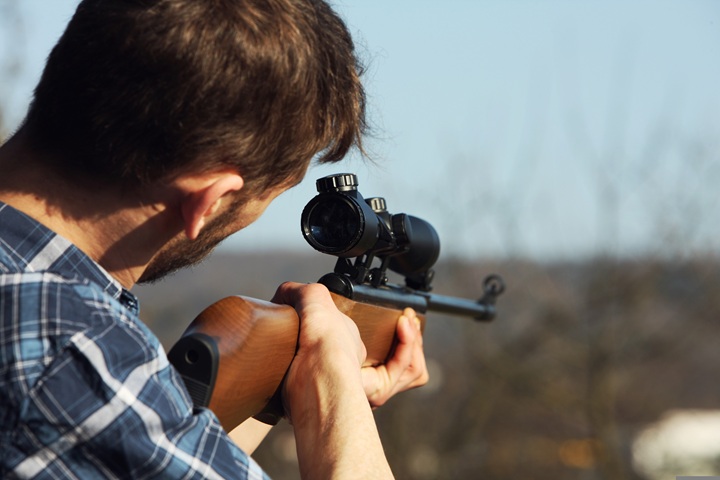
The 7mm-08 Remington is an excellent hunting cartridge, offering manageable recoil, dependable accuracy, and enough reach for most deer-hunting situations. It is particularly well suited to whitetail, mule deer, antelope, and hog hunting, making it a popular choice for hunters who want a versatile rifle without excessive recoil or weight. Pairing it with the right scope makes an already capable hunting rifle even more effective.
In this guide, I review six of the best scopes for 7mm08, covering everything from lightweight hunting optics to higher-magnification options for open-country shooting.
7mm-08 Scope Comparison Table
The following table summarizes the eight scopes and their main differences.
| Scope | Magnification | Objective | Focal plane | Tube size |
| Leupold VX-3HD
|
3.5-10x | 50mm | SFP | 1 inch |
| Leupold VX-3HD
|
4.5-14x | 40mm | SFP | 1 inch |
Leupold VX-Freedom  |
3-9x | 40mm | SFP | 1 inch |
| Leupold VX-5HD
|
3-15x | 44mm | SFP | 30mm |
| Arken SH4 GEN2
|
4-16x | 50mm | FFP | 34 mm |
| Vortex Crossfire HD
|
3-9x | 40mm | SFP | 1 inch |
| Burris Fullfield
|
2.5-10x | 42mm | SFP | 1 inch |
| Vortex Viper HS
|
4-16x | 44mm | SFP | 30 mm |
Best Scopes for 7mm08: Detailed Reviews
1) Leupold VX-3HD 3.5-10x50mm
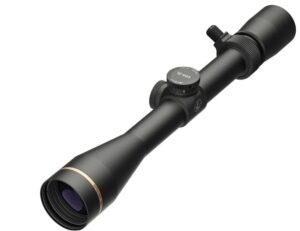
The Leupold VX-3HD 3.5-10x50mm is an attractive option for hunters who spend a lot of time in the woods during early mornings and late afternoons. Its magnification range suits the distances most 7mm-08 hunters encounter, while the 50mm objective gives it an advantage for those who prioritize gathering available light.
I particularly like the balance of this magnification range. At 3.5x, the scope remains practical for relatively close encounters, while 10x gives enough magnification for more deliberate shots across a field. There is little reason to push a typical 7mm-08 deer rifle toward extreme magnification when most hunting opportunities occur at moderate distances.
The 50mm objective is the main selling point. Combined with Leupold’s optical system and Twilight Light Management System, it makes this model worth considering for hunters who regularly find themselves glassing or aiming as daylight fades. However, the larger objective requires attention to mounting height. On a compact rifle, the extra clearance can affect cheek position and overall handling.
This model uses a 1-inch main tube and a second focal plane reticle. It is available with different reticle and turret configurations, including CDS-equipped versions. The commonly listed 3.5-10×50 CDS-ZL configuration weighs approximately 15.1 ounces and offers 4.4 inches of eye relief at low magnification, decreasing to 3.6 inches at maximum power.
For a hunting rifle that spends most of its time in a deer blind or moving through wooded country, this is a sensible combination. The main drawback is that the 50mm objective adds bulk without being essential for every hunting situation.
Pros
- 50mm objective suits hunters prioritizing low-light performance.
- Practical 3.5-10x magnification range.
- Lightweight for a scope with this objective size.
- Second focal plane reticle is straightforward for hunting.
- CDS-compatible configurations offer convenient elevation adjustments.
Cons
- Larger objective can require taller mounting rings.
- Not the most compact option for lightweight rifles.
- Limited maximum magnification compared with longer-range alternatives.
2) Leupold VX-3HD 4.5-14x40mm
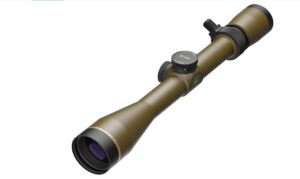
The Leupold VX-3HD 4.5-14x40mm makes sense for hunters who want more magnification without moving to a bulky 50mm scope. Its 4.5-14x range is particularly useful for open-country hunting, where spotting and identifying game at greater distances becomes more important.
One of its strongest features is the relatively compact 40mm objective. This makes mounting easier and allows the scope to sit closer to the rifle’s barrel. That is useful on a lightweight 7mm-08, where maintaining a comfortable cheek weld and keeping the rifle balanced matter more than adding unnecessary equipment.
The higher magnification is useful when shooting from a supported position. At 14x, you have more room to inspect the target and establish a precise aiming point. This can be helpful for hunters who practice regularly at extended distances. Still, I would not leave the scope at maximum power throughout a hunt. The lower end of its range is relatively high for thick timber, and a moving animal can be harder to acquire through a narrow field of view.
The standard 1-inch CDS-ZL Duplex configuration is a second focal plane optic. It weighs approximately 13.4 ounces, making it one of the lighter choices in this group. Its eye relief ranges from 4.4 inches at low magnification to 3.6 inches at maximum power. Adjustment clicks are in 1/4 MOA increments.
There are also different configurations, including models with side focus and different reticles. Check the exact version before buying because weight, tube diameter, and focusing features vary.
For a 7mm-08 used in open country, this is a strong choice. It offers more magnification than a traditional deer-hunting scope without the weight penalty of a large tactical optic.
Pros
- Lightweight construction suits compact hunting rifles.
- 4.5-14x range offers useful magnification for open country.
- 40mm objective allows relatively low mounting.
- 1/4 MOA adjustments on the standard CDS-ZL configuration.
- CDS compatibility is useful for shooters who dial elevation.
Cons
- 4.5x minimum power is less suitable for thick timber.
- Smaller objective is less appealing for dedicated low-light hunting.
- Maximum magnification is unnecessary for many ordinary deer hunts.
3. Leupold VX-5HD 3-15x44mm

If I had to choose one scope from this list for a versatile 7mm-08 hunting rifle, the Leupold VX-5HD 3-15x44mm would be near the top of my shortlist. It combines a useful low magnification setting with enough additional power for open-country hunting, making it suitable for several different hunting environments.
The 3x minimum is important. It gives the shooter a wider field of view than the 4.5x minimum found on the VX-3HD 4.5-14×40. That makes it easier to locate game when hunting through brush or scanning the edge of a clearing. Increasing magnification to 15x provides more flexibility for supported shots across open terrain.
Its 44mm objective is a practical middle ground. It is larger than the 40mm objective on the smaller VX-3HD but does not have the mounting considerations of a 50mm lens. Leupold’s professional-grade optical system and Twilight Light Management System also make this model attractive to hunters who place a high value on contrast and visibility in changing light.
The VX-5HD uses a 30mm main tube and a second focal plane reticle. The standard 3-15×44 CDS-ZL2 Duplex configuration weighs approximately 19.7 ounces, with eye relief ranging from around 3.7 to 3.8 inches. Its elevation adjustment uses 1/4 MOA increments, and the CDS-ZL2 system provides a locking elevation dial and revolution indicator.
The additional weight is the main compromise. It is noticeably less attractive for a rifle built around minimum carry weight. However, for someone who wants one scope that handles timber, open fields, and longer-range practice, the versatility is difficult to dismiss.
The VX-5HD is especially appealing for a 7mm-08 used with 140- to 150-grain hunting bullets. The cartridge has enough practical reach to benefit from the scope’s higher magnification, provided the shooter has confirmed the rifle’s actual trajectory and wind performance.
Pros
- Versatile 3-15x magnification range.
- 44mm objective balances light gathering and mounting practicality.
- Professional-grade optical system.
- 30mm tube and useful CDS-ZL2 elevation system.
- Suitable for both woodland and open-country hunting.
Cons
- Heavier than the VX-3HD alternatives.
- More expensive than conventional hunting optics.
- 15x magnification is unnecessary for most close-range deer hunting.
4. Leupold VX-Freedom 3-9x40mm
The Leupold VX-Freedom 3-9x40mm is a sensible choice for a 7mm-08 hunting rifle, particularly for someone who spends long hours carrying their rifle through the woods. Its lightweight at 12.2 Oz, and a compact 40mm objective helps keep the overall setup manageable.
The simple design, meanwhile, makes it easy to use without spending time adjusting unnecessary features. The scope is well suited to deer hunting, where a clear sight picture and dependable performance matter more than having a long list of technical features.
One detail I like about the VX-Freedom is its straightforward approach to hunting. It doesn’t turn a lightweight rifle into a bulky setup, and its 3-9x range covers the distances most deer hunters encounter. The main compromise is its relatively basic feature set, which won’t appeal to shooters who want advanced reticle options or extensive adjustment capabilities. However, for someone who wants a practical hunting scope without adding unnecessary complexity to a 7mm-08, it deserves consideration.
Pros
- Compact design that suits a lightweight hunting rifle
- Practical magnification range for deer hunting
- Straightforward controls and operation
- Available in a useful 40mm objective configuration
Cons
- Basic feature set
- Limited flexibility for specialized long-range shooting
- May not satisfy hunters who prefer advanced reticle and adjustment options
5. Arken Optics SH4 GEN2 4-16×50 FFP
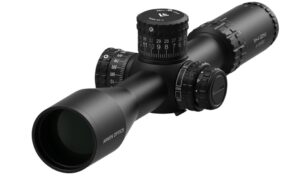
The Arken Optics SH4 GEN2 4-16×50 FFP takes a different approach from the traditional hunting scopes above. It is built around a first focal plane reticle, exposed adjustment turrets, and a zero-stop system. These features make it more appealing to shooters who spend considerable time practicing at different distances.
The first focal plane design is particularly useful. Reticle subtensions remain accurate throughout the magnification range, allowing the shooter to use the same holdover references at 4x and 16x. That is useful when making elevation and windage corrections at varying distances.
Its 4-16x magnification range gives the 7mm-08 plenty of flexibility for range work and supported shooting. The 50mm objective also provides a substantial front lens, although the overall optical experience still depends on lighting, magnification, and the shooter’s eye position.
The turret system is another major attraction. The SH4 GEN2 features a mechanical zero stop, resettable turrets, and adjustment options in either 0.1 MIL or 1/4 MOA, depending on the model. Its 34mm tube provides room for a generous elevation adjustment range. The official specifications list up to 36 MIL of elevation adjustment.
There is, however, a significant trade-off: weight. At approximately 35.6 ounces, this scope is substantially heavier than the Leupold and Vortex hunting options. Adding it to a lightweight 7mm-08 can change the rifle’s balance considerably. It also has a 3.6-inch eye-relief specification, which deserves careful consideration when establishing mounting position.
I would choose the Arken for a rifle intended to spend more time on a shooting bench or shooting support than on a hunter’s shoulder. It offers features that make longer-range practice more convenient, but those features are not necessary for most ordinary deer hunts.
Pros
- First focal plane reticle works across the magnification range.
- Mechanical zero-stop system.
- Generous elevation adjustment capability.
- Side parallax adjustment.
- Available with MIL and MOA configurations.
Cons
- Heavy for a lightweight hunting rifle.
- 34mm tube requires compatible mounting rings.
- Exposed turrets are less convenient for hunters who prefer capped adjustments.
- Shorter eye relief requires careful mounting.
6. Vortex Crossfire HD 3-9×40 SFP
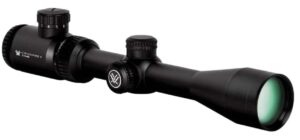
The Vortex Crossfire HD 3-9x40mm is a practical choice for someone who wants a straightforward hunting scope without paying for features they are unlikely to use. Its 3-9x magnification range is well suited to the distances at which many 7mm-08 rifles are used.
I like the simplicity of this setup. At 3x, the scope offers a wide field of view for close encounters, while 9x provides enough magnification for ordinary deer hunting across fields and clearings. It is a sensible arrangement for whitetail hunters who rarely take shots beyond 300 yards.
The 40mm objective also keeps the scope relatively compact. That matters on a 7mm-08, particularly if the rifle has a lightweight stock and a short barrel. There is little reason to turn a convenient hunting rifle into a heavy package by adding a large optic when most shooting opportunities happen at moderate distances.
The Crossfire HD uses a second focal plane reticle and a 1-inch main tube. Its specifications include 3.8 inches of eye relief, capped turrets, and 1/4 MOA adjustment increments. The standard non-illuminated model weighs approximately 16.2 ounces.
The capped turrets are a useful feature for a hunting rifle. Once zeroed, they help protect the adjustment settings from accidental movement while carrying the rifle through brush or transporting it in a vehicle. Its simple reticle also suits hunters who prefer a clear aiming point rather than numerous holdover markings.
I would not put the Crossfire HD in the same optical category as the more expensive Leupold VX-5HD. However, it provides the essential features needed for a conventional hunting setup. Its main limitation is that it does not offer the higher magnification and more advanced adjustment systems found on the other models. For a budget-conscious 7mm-08 owner, it is a sensible place to start.
Pros
- Practical 3-9x magnification for deer hunting.
- Compact 40mm objective.
- Relatively lightweight construction.
- Capped turrets help protect the zero.
- Simple second focal plane reticle.
- Vortex VIP warranty.
Cons
- Limited maximum magnification for longer-range shooting.
- Less sophisticated adjustment system than premium alternatives.
- Not the first choice for dedicated low-light hunting.
- Basic feature set compared with higher-priced optics.
7. Burris Optics Fullfield 2.5-10x42mm
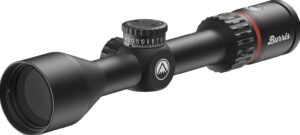
The Burris Fullfield 2.5-10x42mm is a practical hunting scope for a 7mm-08, especially for hunters who move between woodland and open terrain. Its 42mm objective gives it a useful balance of size and light-gathering capability, while the overall design remains appropriate for a rifle carried over long distances. I also like that it offers enough magnification for ordinary hunting without making the scope unnecessarily complicated.
The Fullfield’s appeal also lies in its straightforward hunting-oriented design. It gives you the flexibility to handle different shooting situations without turning the rifle into a dedicated long-range setup. For deer and antelope hunting, that is a sensible arrangement, particularly if most of your shots are taken at moderate distances. Hunters who need extensive elevation adjustments or advanced features for regular long-range shooting should look elsewhere, but those requirements are outside the scope’s main purpose.
Pros
- Useful 42mm objective for a general-purpose hunting scope
- Practical design for mixed hunting terrain
- Suitable magnification range for common hunting distances
- Straightforward layout without unnecessary complexity
Cons
- Not designed for specialized long-range shooting
- Limited appeal for shooters who need extensive adjustment features
- Not the smallest option for a lightweight rifle
8. Vortex Optics Viper HS 4-16×44
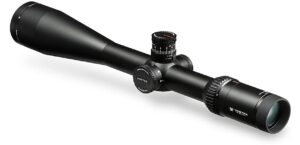
The Vortex Viper HS 4-16x44mm is worth considering for hunters who want more magnification than a traditional 3-9x scope provides. Its 4-16x range makes it suitable for open-country hunting, where animals can be spotted at considerable distances and shooting positions are often supported.
The 44mm objective is a useful compromise between a compact hunting optic and a larger 50mm model. It allows the scope to offer additional magnification without becoming as bulky as some larger tactical optics. The optical system also features Vortex’s XD glass and XR lens coatings, designed to improve resolution, contrast, and light transmission.
One feature I particularly appreciate in this configuration is the capped turret arrangement. The Viper HS is designed for hunters who want additional adjustment capability but do not necessarily need exposed competition-style turrets. Its 30mm main tube provides more adjustment room than a conventional 1-inch tube, while the V-Plex reticle keeps the aiming picture relatively uncluttered.
The scope is a second focal plane model, with 1/4 MOA adjustment increments and four inches of eye relief. It weighs approximately 19.2 ounces and has a parallax adjustment range from 50 yards to infinity.
The higher magnification is useful for more deliberate shooting, but I would be careful about using it in thick timber. At 4x, the scope is less forgiving for close, fast encounters than an optic starting at 3x or below. The extra power also comes with a weight penalty compared with the Crossfire HD and VX-3HD 4.5-14×40.
For a 7mm-08 used for mule deer or antelope hunting across open ground, the Viper HS offers a useful combination of magnification and adjustment capability. It is less compelling for someone who spends most of their hunting time in dense woodland.
Pros
- 4-16x magnification range suits open-country hunting.
- 44mm objective offers a practical balance.
- 30mm tube provides additional adjustment capability.
- Capped turrets protect the zero.
- XD glass and XR lens coatings.
- Four inches of eye relief.
Cons
- Heavier than traditional hunting scopes.
- 4x minimum power is less suitable for close encounters.
- Higher magnification is unnecessary for many deer hunters.
- Not as lightweight as the VX-3HD alternatives.
What to Look for When Buying a 7mm-08 Scope
The 7mm-08 is a versatile hunting cartridge, but that does not mean every rifle needs a high-magnification tactical scope.
Here are the features I would pay attention to before spending money.
Magnification Range
For most 7mm-08 hunting rifles, a 3-9x or 3.5-10x scope provides more than enough magnification. These ranges work particularly well for whitetail hunting, where shots frequently happen inside 300 yards and opportunities can appear quickly.
At 3x, you get a wider field of view, making it easier to locate moving animals and acquire a target in thick cover. Increasing magnification to 9x or 10x helps with more deliberate shots across fields and open hillsides.
Hunters who regularly shoot across open country can benefit from something in the 4-14x or 4-16x range. The additional magnification helps with target identification and precise aiming at longer distances. However, higher power is not automatically better. A narrow field of view and reduced image brightness at maximum magnification can become frustrating in changing hunting conditions.
For typical 7mm-08 hunting, I would prioritize a useful low-power setting over impressive maximum magnification.
Objective Lens Size
The objective lens is the front lens of the scope. Common sizes for 7mm-08 hunting optics include 40mm, 44mm, and 50mm.
A larger objective lens can help deliver a brighter image, particularly when combined with good glass and effective lens coatings. This makes 50mm scopes attractive to hunters who spend considerable time in the woods during the first and last hours of daylight.
However, objective size alone does not determine optical performance. Glass quality, lens coatings, magnification, and exit pupil all influence the image you see.
A 40mm objective is usually sufficient for general deer hunting, especially when paired with a sensible magnification setting. It also allows a lower mounting position, which can improve cheek weld and overall rifle handling.
A 50mm objective has advantages in low-light applications, but it generally requires higher mounting rings and adds bulk to the rifle. On a lightweight 7mm-08, that trade-off deserves consideration.
First Focal Plane vs. Second Focal Plane
The difference between first focal plane (FFP) and second focal plane (SFP) scopes becomes important when choosing a reticle for different shooting distances.
In a first focal plane scope, the reticle changes size as you adjust magnification. Its holdover and windage markings maintain their intended relationship to the target at every magnification setting. This is particularly useful for shooters who regularly use reticle measurements for longer-range corrections.
Second focal plane scopes maintain a consistent reticle size regardless of magnification. However, the subtensions are calibrated for a particular magnification, usually the highest setting. If you use the reticle for holdovers at a different power setting, you need to account for that difference.
For ordinary deer hunting with a 7mm-08, I generally favor SFP optics. Their reticles are often less cluttered and easier to see against brush, making quick shots more straightforward.
FFP becomes more attractive for hunters who regularly shoot at varying distances and want to use their reticle for precise corrections.
Tube Diameter and Elevation Adjustment
Most traditional hunting scopes use either a 1-inch or 30mm main tube. Larger tactical-style optics also use 34mm tubes.
A 30mm tube does not automatically produce a brighter image than a 1-inch tube. Its main advantage is that it generally provides more room for internal adjustment, although actual elevation travel depends on the scope’s internal design.
For a 7mm-08 used primarily inside 300 yards, a conventional hunting scope rarely needs an enormous amount of elevation adjustment. A reliable zero and a suitable hunting reticle are more important.
If you intend to stretch the cartridge toward 400 or 500 yards, adjustment range becomes more relevant. You will also need to understand your ammunition’s ballistic performance and confirm your actual trajectory at the range.
Pay attention to turret design, too. Capped turrets are practical for hunters who prefer a set-and-forget zero. Exposed turrets make dialing easier but need protection against accidental movement.
Eye Relief and Recoil
The 7mm-08 has relatively manageable recoil, but that does not make eye relief unimportant. A scope should allow you to maintain a comfortable head position without moving excessively close to the eyepiece. This is especially important when shooting from awkward positions or using a lightweight rifle.
Look for a scope that offers consistent eye relief throughout its magnification range. Some optics have slightly different eye-relief measurements at minimum and maximum power.
I would also check how much adjustment is available when mounting the scope. A good optic mounted too far forward or backward can make finding a comfortable shooting position unnecessarily difficult.
Reticle Choice
A simple Duplex-style reticle remains an excellent choice for ordinary 7mm-08 hunting. Its thicker outer posts draw the eye toward the center, while the thinner central section provides a clear aiming point. Against trees, brush, and darker backgrounds, this straightforward design is often easier to use than a complicated tactical reticle.
BDC reticles are useful for hunters who want additional aiming references for different distances. However, their accuracy depends on the ammunition, bullet weight, velocity, sight height, and environmental conditions used to establish the ballistic profile.
A BDC reticle should never replace proper range verification. A 120-grain hunting load and a 160-grain load do not follow identical trajectories.
Glass Quality and Lens Coatings
A scope’s glass quality becomes particularly important during poor lighting. Cheap optics can produce noticeable color distortion, reduced contrast, and soft edges, making it harder to distinguish an animal from its surroundings.
Good optical coatings improve light transmission and help reduce reflections. They also contribute to contrast and image clarity.
For deer hunting, I would prioritize a sharp, high-contrast image over a long list of marketing features. Being able to distinguish an animal’s outline against dark vegetation is more useful than having excessive magnification that rarely gets used.
Weight and Rifle Balance
Weight deserves more attention than many buyers give it. The 7mm-08 is popular partly because it works well in relatively compact, lightweight hunting rifles. Adding a heavy scope can change how the rifle handles, particularly when carrying it through thick woods or climbing hills.
A scope weighing around 13 to 17 ounces is attractive for a lightweight hunting setup. Heavier optics can still make sense if you regularly shoot from a supported position or prioritize long-range adjustments.
I would rather have a balanced rifle with a good 3-9x or 3.5-10x hunting scope than a cumbersome setup carrying magnification I rarely need.
Frequently Asked Questions About 7mm-08 Scopes
What Is the Best Magnification for a 7mm-08?
A 3-9x or 3.5-10x scope is sufficient for most 7mm-08 hunting applications. These ranges work well for typical deer hunting distances inside 300 yards. Hunters who regularly shoot across open country can consider 4-14x or 4-16x optics.
Is a 50mm Scope Too Big for a 7mm-08?
No. A 50mm scope works well on a 7mm-08, particularly for hunters who prioritize low-light performance. However, it adds bulk and usually requires higher mounting rings. A 40mm or 44mm objective is often a better choice for a lightweight hunting rifle.
Can a 7mm-08 Shoot Accurately at 400 to 500 Yards?
Yes, the cartridge has sufficient ballistic capability for these distances with suitable ammunition and a properly configured rifle. However, hitting a target at 400 or 500 yards requires more than high magnification. Shooters need to understand bullet drop, wind drift, ammunition performance, and their own shooting limitations. A scope with reliable adjustments or a useful reticle can help, but it cannot replace practice.
Is First Focal Plane or Second Focal Plane Better for a 7mm-08?
Second focal plane is generally the more practical choice for ordinary hunting. It offers a consistent reticle appearance and works well for straightforward aiming. First focal plane is more useful for shooters who regularly use reticle subtensions for holdovers and wind corrections at different magnification settings.
What Bullet Weight Works Best for a 7mm-08 Hunting Rifle?
The 7mm-08 commonly uses bullets between 120 and 160 grains. Loads around 140 to 150 grains are popular for general deer hunting, while lighter bullets can suit smaller game and certain hunting applications. The appropriate choice depends on the game, bullet construction, expected impact velocity, and the rifle’s preferences.
Final Verdict: Which Is the Best Scope for 7mm08?
The best scope for a 7mm-08 should complement the rifle’s versatility without compromising its balance. Most hunters do not need extreme magnification, complicated reticles, or heavy tactical-style optics. They need clear glass, dependable adjustments, comfortable eye relief, and a magnification range suited to the distances they actually shoot.
My best choice from this group is the Leupold VX-5HD 3-15x44mm. Its broad magnification range, 44mm objective, and CDS-ZL2 adjustment system make it a strong all-around option for hunters who move between woodland and open country. It is not the lightest choice, but it offers considerable versatility.
For hunters who want to keep their rifles light, the Leupold VX-Freedom 3-9x40mm is an excellent alternative.
Related
- Good scopes for 300 yards
- Scopes for shooting 500 yards
- Best FFP scopes
- Vortex scopes for AR-15
- Best scopes for quick target acquisition