
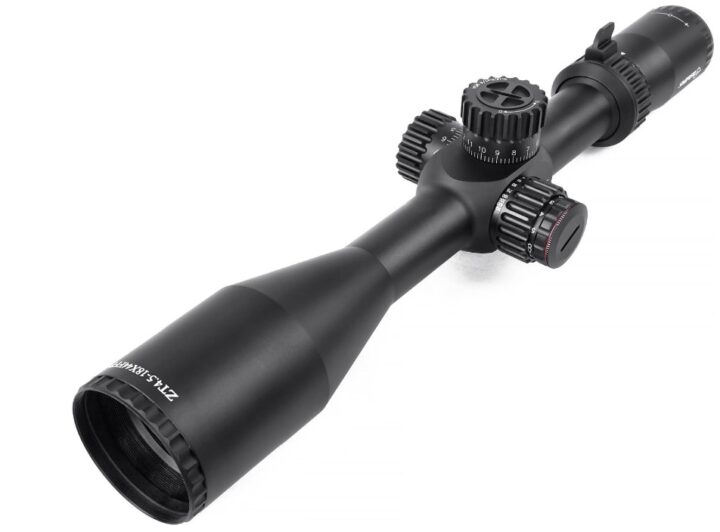
The best scope for quick target acquisition is usually a low-power variable optic that starts at 1x, gives you a generous field of view, and presents a reticle your eye can find without a deliberate search. For most AR-pattern carbines and general-purpose rifles, that points toward a 1-6x LPVO rather than a traditional hunting scope. My leading candidates are the SIG Sauer Tango-MSR 1-6×24 and Vortex Razor HD Gen II-E 1-6×24, with the Leupold VX-Freedom 1.5-4×20 offering a simpler, lighter alternative.
The important distinction is between a scope that can resolve a distant target and one that helps you establish a clear sight picture quickly. Those are different jobs. A 4.5-14x or 6-18x optic can excel at deliberate hunting or range work while being a poor fit for close-range, moving-target acquisition. This ranking prioritizes the latter without pretending that one optic suits every rifle or shooting discipline.
Quick-Pick Table
| Rank and scope | Best for | Magnification | Focal plane | Weight |
| 1. SIG Sauer Tango-MSR LPVO 1-6x24mm | Value-focused AR carbine | 1-6x | SFP | 18.5 oz |
| 2. Vortex Razor HD Gen II-E 1-6×24 | Premium general-purpose carbine | 1-6x | SFP | 21.5 oz |
| 3. Leupold VX-Freedom 1.5-4x20mm | Lightweight hunting rifle | 1.5-4x | SFP | 9.6 oz |
| 4. Trijicon ACOG 4×32 TA31-D-100288 | Fixed-power 5.56 rifle | 4x | Fixed reticle; FFP/SFP not applicable | 14.9 oz |
| 5. Leupold VX-3HD 4.5-14x50mm | Longer-range hunting | 4.5-14x | SFP | 15 oz |
| 6. Vortex Crossfire HD 6-18×50 | Deliberate target shooting | 6-18x | SFP | 1.16Lbs. |
What Makes a Scope Fast?
Speed starts with how quickly the shooter can establish a usable sight picture, not how much magnification the optic offers.
True 1x: the starting advantage
A genuine 1x setting lets the shooter look through the optic without the magnified appearance of a conventional hunting scope. With both eyes open, the unmagnified scene remains easier to reconcile with the view through the scope. The shooter can locate the target, bring the rifle into position, and place the reticle without first solving a magnified image.
An LPVO does not automatically behave like a red dot. Optical distortion, reticle design, eye position, and illumination all affect how natural the view feels. Still, a well-designed 1-6x optic gives the shooter a useful choice: stay at 1x for close work or increase magnification for identification and more deliberate aiming.
Field of view and eye box
Field of view describes the width of the scene visible through the optic at a specified distance. A wider field of view makes it easier to locate a target and retain awareness of its surroundings. It does not guarantee a fast sight picture, but a narrow view creates a smaller visual window to search.
The eye box is the range of head positions that preserve a complete image. A forgiving eye box accommodates imperfect alignment during shouldered, kneeling, or other awkward positions. A tight eye box produces a dark crescent or partial image when the eye moves off-axis. That interruption costs time.
Eye relief and reticle visibility
Eye relief is the distance between the eyepiece and the shooter’s eye. Adequate eye relief gives room for a consistent mount without forcing the head into one exact position. The published figure alone does not describe the full eye box, so try the scope in the position you actually use.
A reticle also needs to stand out against the target background. An illuminated center point, bold outer posts, or a clear chevron can make the aiming reference easier to find. Illumination is not the same as daylight brightness; a dimly lit reticle can disappear against a bright background.
First versus second focal plane
In a first focal plane (FFP) scope, the reticle changes apparent size with magnification, keeping its subtensions consistent with the target. In a second focal plane (SFP) scope, the reticle stays the same apparent size, which can preserve a more familiar aiming reference at low power. Neither arrangement is inherently faster in every situation. At 1x, a bold, visible reticle matters more than the label.
Mount height matters
A suitable mount lets the shooter establish a repeatable cheek weld and place the eye behind the optic naturally. A mount that is too low can force the head down; one that is too high can make consistent contact difficult. On an AR-pattern rifle, check the complete stock, optic, and mount combination rather than choosing height by habit.
1) SIG Sauer Tango-MSR LPVO 1-6x24mm -Best Overall ValueThe SIG Sauer Tango-MSR earns first place because it combines a true 1x starting point, an illuminated reticle, a useful 6x upper end, and a relatively accessible price class. It gives a carbine owner the flexibility to work at low magnification without giving up the ability to identify and aim at more distant targets.
>>View it on Amazon and OpticsPlanet Suggested alt text: SIG Sauer Tango-MSR 1-6×24 SFP riflescope with illuminated HELLFIRE FL-6 reticle and 30mm main tube. Specifications
Field performance The Tango-MSR’s central advantage is the breadth of its low-power view. A published field of view of 124.8 feet at 100 yards gives the shooter a generous viewing window at 1x. That matters when the rifle is moving into position or the target does not arrive neatly in the center of the image. At 6x, the field narrows substantially, as it should, but the extra magnification supports more deliberate aiming farther away. The second-focal-plane arrangement keeps the reticle’s apparent size consistent as magnification changes. For a shooter who spends most of the time at 1x and occasionally turns up the magnification, that is straightforward to understand. The illuminated HELLFIRE FL-6 reticle adds a visible aiming reference, while the included throw-lever interface helps make magnification changes less fiddly. The 30mm tube and 24mm objective are conventional LPVO dimensions, so this is not an unusually bulky optic for its class. Its listed weight is reasonable for a feature-rich variable scope, although the mounted rifle’s balance will depend on the mount and other accessories. Where it falls short The Tango-MSR is not the lightest optic here, and the SFP reticle’s usefulness at higher magnification depends on the exact reticle design and intended holds. The manufacturer’s published figures do not establish a universal advantage over more expensive optics in edge clarity, contrast, or tracking. Do not claim those benefits without testing. Also, confirm the click value before presenting the scope as a precision-adjustment choice. Pros and cons
Who should buy it: A budget-conscious AR-15 owner who wants one optic for close-range use and occasional shots at intermediate distances. |
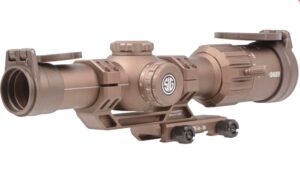
2) Vortex Razor HD Gen II-E 1-6×24 -Best Premium LPVOThe Razor HD Gen II-E ranks second because its optical system and illuminated reticle make it a serious premium LPVO contender. It delivers the same basic 1-6x flexibility as the SIG, but its published weight is higher, and the difference in price needs to be justified by the shooter’s priorities rather than assumed speed gains.
>>View it on Amazon and OpticsPlanet Suggested alt text: Vortex Razor HD Gen II-E 1-6×24 second-focal-plane LPVO with EBR-7F illuminated reticle. Specifications
Field performance A premium optic still has to obey the geometry of the sight picture. The Razor’s 115.2-foot field of view at 1x is slightly narrower on paper than the SIG’s listed 124.8 feet, but both offer the fundamental advantage of an unmagnified starting setting. The Razor’s four-inch eye relief gives a clear setup reference, though the number alone does not tell the whole story about eye-box forgiveness. The EBR-7F reticle has an illuminated center dot, with additional stadia and hold marks for elevation and wind. That combination is useful for a shooter who wants a simple aiming point at low power and more information when the magnification goes up. Because the scope is SFP, the reticle remains the same apparent size as the view changes; the shooter should learn which subtensions are valid at which setting before relying on them for holdovers. The Razor’s short published length is another practical point in its favor. It does not occupy quite as much rail space as some longer hunting scopes. Its 21.5-ounce weight, however, is substantial for a carbine optic. A premium LPVO should be evaluated as part of the complete rifle, not as a glass tube in isolation. Where it falls short It is expensive compared with value-oriented LPVOs, and its weight does not disappear because the glass is premium. The published 1x field of view is narrower than the SIG’s. The Razor makes the most sense when optical quality, reticle features, and the broader premium package matter enough to justify the additional cost. Do not assume it will produce a faster first shot for every shooter. Pros and cons
Who should buy it: An experienced AR-15 owner who wants a premium general-purpose optic and is comfortable paying for features beyond basic close-range aiming. |
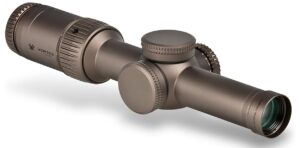
3) Leupold VX-Freedom 1.5-4x20mm -Best Lightweight Hunting ScopeThe VX-Freedom takes third place because its low weight, broad low-power field of view, and simple Duplex reticle suit traditional hunting rifles. It is not a true 1x optic, so it loses ground to the LPVOs for close, fast presentation. For a hunter who wants a compact scope with useful low magnification, however, its design is sensible.
>>View it on Amazon Suggested alt text: Leupold VX-Freedom 1.5-4×20 second-focal-plane riflescope with Duplex reticle. Specifications
Field performance At 9.6 ounces, the VX-Freedom is the sort of optic that makes sense on a rifle carried for hours rather than moved from a bench to a firing line. Its 1.5x minimum power is not equivalent to a true 1x setting. That difference matters: the shooter sees a magnified scene at the lowest setting, so maintaining a natural, broad view with both eyes open is less straightforward than with a well-set-up LPVO. The compensation is a 74.2-foot field of view at 100 yards on low power. That is useful for a conventional hunting scope, especially in open or mixed terrain where the rifle is shouldered before a deliberate shot. The Duplex reticle has heavier outer posts and a fine center, giving the eye a clear path toward the aiming point without filling the center with excessive markings. Its 4.2-inch low-power eye relief gives the shooter a reasonable setup dimension, while the reduction to 3.7 inches at 4x deserves attention when positioning the scope. The modest 20mm objective keeps the scope compact. That is not a substitute for evaluating low-light performance, but it does suit a lightweight hunting-rifle setup. Where it falls short The lack of true 1x and illumination is the concrete penalty. A dark reticle can also be less distinct against shadowed cover, and the 1.5x minimum makes the VX-Freedom a weaker fit for snap shooting than either LPVO above it. It earns third place as a lightweight hunting compromise, not as the fastest optic on this list. Pros and cons
Who should buy it: A deer hunter carrying a lightweight bolt-action rifle who wants a compact optic for woods and field-edge shots. |
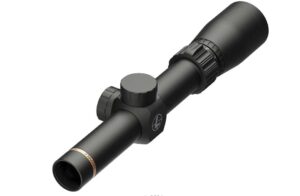
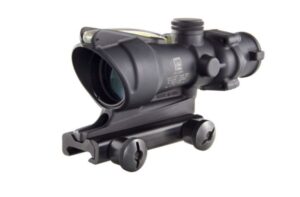
4) Trijicon ACOG 4×32 TA31-D-100288 -Best Fixed-Power ChoiceThe ACOG is a different proposition from the variable scopes above it. The exact TA31-D-100288 is a 4×32 BAC model with a red chevron and a dual-illuminated reticle calibrated for M193 5.56 ammunition. It is compact and does not require a battery for its fiber-optic and tritium illumination, but fixed 4x magnification and short eye relief limit its appeal for fast close-range acquisition.
>>View it on Amazon and OpticsPlanet Suggested alt text: Trijicon ACOG TA31-D-100288 4×32 BAC optic with red chevron reticle and thumbscrew mount. Specifications
Field performance The TA31-D-100288 has a clear design priority: a fixed magnified sight picture, a visible chevron, and a ballistic reticle intended for a defined ammunition and barrel combination. The fiber-optic element adjusts the reticle’s daytime brightness to ambient light, while tritium provides illumination in darkness. This is a useful arrangement for a shooter who does not want battery management to be part of the optic’s routine. The Bindon Aiming Concept is intended to support both-eyes-open use. That technique can help the shooter maintain a wider awareness of the scene, but it does not turn the ACOG into a true 1x optic. The magnified image still requires adaptation, and the 1.5-inch eye relief demands a deliberate, repeatable head position. Its field of view is 36.8 feet at 100 yards. That is narrower than the LPVOs’ published low-power views, and there is no lower setting to select for close targets. In return, the fixed design keeps the optic compact, at 5.98 inches long, with no magnification ring to adjust. Where it falls short The short eye relief is the most immediate practical weakness, especially for shooters who struggle to obtain a consistent head position. Four-power magnification is also a hard limit: it offers no true 1x view for close work and no zoom flexibility for changing distances. The BDC is specifically calibrated for M193 ammunition from a 16-inch barrel; users should not assume the holds transfer exactly to different ammunition or barrel setups. Pros and cons
Who should buy it: A 5.56 AR-15 owner who values a compact fixed-power optic and already understands the ACOG’s eye-position requirements. |
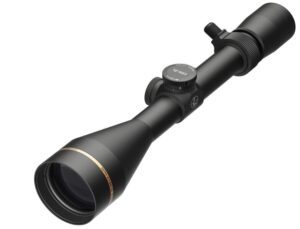
5) Leupold VX-3HD 4.5-14x50mm -Best for Deliberate Longer-Range HuntingThe VX-3HD is a hunting scope that makes sense when the shot is planned, the target is distant, and low-light image quality matters more than a wide close-range view. It ranks fifth because its 4.5x minimum magnification is a fundamental disadvantage for quick acquisition, even though the scope is relatively light for its objective size.
>>View it on Amazon and OpticsPlanet Suggested alt text: Leupold VX-3HD 4.5-14×50 CDS-ZL Duplex hunting scope with 1-inch tube. Specifications
Field performance This optic illustrates why ranking scopes for speed requires more than looking at glass quality or objective diameter. The VX-3HD starts at 4.5x. At that setting, the published field of view is 20.5 feet at 100 yards, shrinking to 7.6 feet at 14x. The shooter is looking through a narrow window from the start, with no low-power mode available for rapid target location. For deliberate hunting, those numbers are not a defect in isolation. The magnification range supports identifying details and placing a careful shot across open country. The 50mm objective is part of the scope’s low-light-oriented design, while the 15-ounce weight is comparatively manageable for a hunting optic with this range and objective size. The Duplex reticle keeps the center uncluttered. Its heavier outer posts lead the eye toward fine central lines, making it easier to maintain a clear aiming reference on an appropriate target. The second-focal-plane design preserves the reticle’s apparent size as magnification changes. The important distinction is that a simple reticle cannot compensate for a small field of view. If the target appears unexpectedly at close range, the scope provides no quick route back to an unmagnified sight picture. Where it falls short The minimum 4.5x power is a hard limitation for close-range acquisition. At maximum power, the field of view is only 7.6 feet at 100 yards, which makes initial target location and tracking more demanding. This is not the right scope for a general-purpose carbine expected to work at close distances. Pros and cons
Who should buy it: A western hunter using a bolt-action rifle for deliberate shots across open terrain, where magnification is more useful than rapid close-range target acquisition. |
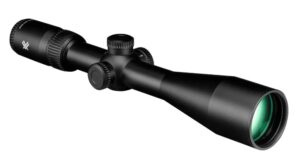
6) Vortex Crossfire HD 6-18×50 -Best for Bench and Deliberate Target WorkThe Crossfire HD 6-18×50 belongs near the bottom of this ranking because its design starts at 6x. It is built around detail at distance, not fast acquisition at close range. A shooter who primarily uses a bench, a rest, or a stable field position can put its magnification to work; a shooter expecting fast, broad situational awareness should look elsewhere.
>>View it on Amazon and OpticsPlanet Suggested alt text: Vortex Crossfire HD 6-18×50 variable riflescope for deliberate hunting and target shooting. Specifications
Field performance The 6x minimum determines the Crossfire HD’s place in this article. At its lowest setting, the target is already magnified six times. That can be helpful for reading detail on a stationary target, but it gives the shooter a restricted visual window when first locating something in the scene. Turning the magnification down as far as the scope allows still does not create the wide view of a true 1x optic. The 50mm objective is consistent with a scope intended to gather light and support a larger magnification range. It does not cancel the field-of-view penalty that accompanies high power. At the top end, the view becomes even more restrictive, and small head-position changes become more consequential to maintaining a full image. For a bench shooter, this is a sensible division of labor: establish a stable position, locate the target deliberately, and use magnification to see detail. A hunter who primarily shoots from a supported position at longer distances can use the same approach. That is a legitimate purpose, but it is not the same as quick acquisition from an improvised position. Where it falls short The 6x minimum is the central weakness, not a minor trade-off. There is no low-power escape hatch for a close target, and the exact eye-relief and field-of-view figures should be checked before purchase. Without the confirmed SKU, claims about its reticle, illumination, and weight would be guesswork. Pros and cons
Who should buy it: A range shooter using a bolt-action .22 LR or centerfire rifle from a bench who values visible target detail over a wide field of view. |
Buyer’s Guide
Does a true 1x setting matter?
Yes, if quick acquisition at close range is a primary requirement. A true 1x setting gives the shooter an unmagnified view through the optic, which makes it easier to coordinate the scene seen by both eyes. That is particularly useful when presenting an AR-pattern carbine toward a target at an unpredictable angle or distance. A 1.5x minimum can still work well for conventional hunting, but it is not the same experience. If close-range speed matters more than maximum magnification, start your shortlist with a true 1x LPVO. For a dedicated close-range rifle, also compare a red dot before spending more on magnification you rarely use.
Is FFP faster than SFP?
Neither focal-plane arrangement guarantees faster acquisition. An FFP reticle scales with magnification, preserving its subtensions at every power setting. That helps shooters who rely on measured holds across a range of distances. An SFP reticle stays the same apparent size, which can make the aiming reference more familiar as magnification changes. At low power, a thin FFP reticle can become difficult to see, while an SFP reticle can remain visually prominent. The reticle’s actual shape, illumination, and contrast matter more than the acronym alone. Choose FFP for consistent subtensions when you need them; choose based on low-power visibility when rapid acquisition is the priority.
How much eye relief do I need?
Enough to maintain a full sight picture from a natural, repeatable shooting position, with appropriate clearance from the eyepiece. There is no single ideal number for every rifle or shooter. A published eye-relief measurement describes distance, not the full range of head positions that retain a complete image. That second property is the eye box, and it matters greatly when the rifle is shouldered quickly or used from an awkward position. Check low- and high-power eye relief on variable scopes, confirm the mount allows a comfortable head position, and follow the manufacturer’s mounting instructions
Can a 4x fixed optic beat a variable scope for speed?
It can beat a variable scope in simplicity, but not automatically in close-range acquisition. A fixed optic has no magnification ring to manage and can offer a compact package with a clearly defined aiming reference. The Trijicon ACOG, for example, combines fixed 4x magnification with a dual-illuminated reticle. Its short eye relief and lack of a 1x view remain important limitations. An LPVO set to 1x offers a wider low-power field of view and greater flexibility. The right comparison is fixed-power simplicity versus the LPVO’s broad visual window at low magnification, not fixed versus variable in the abstract.
Is a red dot a better choice?
For a rifle dedicated to close-range use, a red dot is often the more direct choice. It provides a simple aiming reference without magnifying the scene and generally supports a forgiving head position. An LPVO makes more sense when the same rifle also needs magnification for identifying details or aiming at longer distances. That flexibility comes with additional weight, a magnification ring, and more demanding eye alignment than many red-dot setups. Decide what the rifle actually does most often. If nearly every shot is close, compare red dots first. If the rifle must cover both close and intermediate distances, a 1-6x LPVO is the more versatile compromise.
What mount height suits my rifle?
Choose a mount that gives you a repeatable, comfortable head position and follows the optic manufacturer’s mounting guidance. On an AR-pattern rifle, the receiver, stock, cheek rest, and shooting posture all affect the correct setup. A mount that is too low forces the shooter to drop the head; one that is too high can undermine consistent cheek contact. Neither problem is solved by buying a more expensive optic. Check ring or mount compatibility with the tube diameter, ensure the optic has the required clearance, and verify that the mounting arrangement follows the manufacturer’s torque and placement instructions
Which scope works best for both close and mid-range shooting?
For the scopes reviewed here, a 1-6x LPVO is the clearest fit. It starts at 1x for a wide, unmagnified view and offers 6x for more deliberate aiming when distance increases. The SIG Sauer Tango-MSR takes the value-oriented top spot, while the Vortex Razor HD Gen II-E targets buyers who prioritize its premium feature set. The Leupold VX-Freedom suits lightweight hunting rifles but starts at 1.5x. The ACOG offers fixed-power simplicity, while the three high-minimum-magnification scopes belong in a different category. Match the optic to the distance and shooting positions you actually expect.
Final Verdict
The best scope for quick target acquisition is the optic that gives you a usable sight picture with the least visual and physical correction. On that basis, the SIG Sauer Tango-MSR LPVO 1-6x24mm wins for overall value, the Vortex Razor HD Gen II-E 1-6×24 is the premium runner-up, and the Leupold VX-Freedom is the lightweight hunting pick. The ACOG remains a credible fixed-power alternative, but it does not replace the low-power flexibility of an LPVO.
| If you want… | Buy… | Why |
| Best overall value for quick acquisition | SIG Sauer Tango-MSR 1-6×24 | True 1x, illuminated reticle, and a useful 6x upper setting |
| A premium LPVO | Vortex Razor HD Gen II-E 1-6×24 | Premium optical system and illuminated reticle features |
| A lightweight hunting setup | Leupold VX-Freedom 1.5-4×20 | 9.6 oz weight and simple Duplex reticle |
| Fixed magnification with dual illumination | Trijicon ACOG TA31-D-100288 | Compact 4x design and battery-free reticle illumination |
| Deliberate longer-range hunting | Leupold VX-3HD 4.5-14×50 | High magnification in a relatively light package |
| Bench shooting and deliberate target work | Vortex Crossfire HD 6-18×50 | High magnification for stationary targets |
Overall winner: SIG Sauer Tango-MSR LPVO 1-6x24mm. Its 1x starting point, generous published low-power field of view, illumination, and 6x upper setting make it the strongest value-oriented match for the brief. Runner-up: Vortex Razor HD Gen II-E 1-6×24. It offers a premium alternative with an illuminated center dot and useful reticle references, but its higher weight and price mean the value proposition is less straightforward. These are specification-based recommendations; a controlled field test could change the order.
FAQ
What is the best scope for quick target acquisition?
For a general-purpose AR-pattern rifle, the SIG Sauer Tango-MSR 1-6x24mm is the leading value-oriented pick in this comparison. Its true 1x setting and illuminated reticle suit close-range aiming, while 6x magnification provides additional flexibility. A red dot remains worth comparing for a rifle dedicated almost entirely to close-range use.
Is a 1-6x LPVO better than a 3-9x hunting scope?
For quick acquisition at close range, yes. A 1-6x LPVO starts at true 1x and gives a much broader low-power view. A conventional 3-9x hunting scope starts at 3x, which narrows the view and makes it harder to locate nearby targets quickly. The 3-9x design is better suited to deliberate hunting shots.
Does an illuminated reticle improve target acquisition?
An illuminated reticle helps when the aiming reference would otherwise blend into a dark or visually busy background. Its usefulness depends on the reticle design and brightness setting. Illumination does not fix a narrow field of view or poor eye alignment, and excessive brightness can obscure detail or distract the shooter.
Is the Trijicon ACOG good for quick shooting?
The ACOG TA31-D-100288 combines fixed 4x magnification, a red chevron, and fiber-optic/tritium illumination. Its compact design and simple reticle suit a specialized fixed-power setup. However, the 1.5-inch eye relief and lack of a 1x view make it less forgiving for close-range acquisition than a suitable LPVO.
Should I buy a 6-18x scope for a general-purpose rifle?
Not if quick close-range acquisition is a primary requirement. A 6-18x scope begins at six-power magnification and provides a restricted view compared with a true 1x optic. It makes more sense for supported target shooting or deliberate longer-range hunting. Choose the magnification range around the rifle’s main job, not its occasional shot.
Related