
The .223 Remington has long held its place as one of America’s most versatile cartridges. From target shooting to varmint hunting, it delivers accuracy, manageable recoil, and a wide range of applications.
But even the best rifle chambered in .223 can only perform to its potential with the right optic. The perfect scope doesn’t just magnify your view, it complements the round’s flat trajectory, balances precision with speed, and ensures reliability whether you’re on the range or out in the field.
With countless options flooding the market, finding the ideal match can be overwhelming. That’s why we’ve narrowed it down to a few of the most popular and trusted scopes due to their meaningful performance with the .223 Remington.
Here is a quick summary,
Best Scopes for 223 Hunting- Reviews
1) Burris Fullfield 2.5-10x42mm
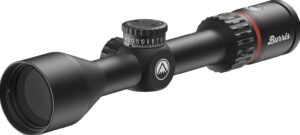
The Burris Fullfield 2.5-10x42mm has a magnification range that makes more sense on an AR-15 than many traditional hunting scopes. Starting at 2.5x gives you a reasonably forgiving sight picture for closer targets, while 10x provides enough magnification to work on smaller targets at distance. It doesn’t turn a .223 AR into a dedicated long-range rifle, but it gives you the flexibility to move between ordinary range shooting and more deliberate varmint work without changing optics.
I like the balance of this scope. At approximately 10.5 inches long and 14.7 ounces in its non-illuminated configuration, it doesn’t overwhelm the rifle with unnecessary bulk. The 42mm objective also keeps the package manageable while providing a useful sight picture in fading daylight. The glass is clear, and the fully multi-coated lenses help maintain contrast rather than leaving the image looking washed out.
The second focal plane reticle stays the same apparent size as you change magnification, which makes it easy to pick up against different backgrounds. Burris offers both Plex and illuminated Ballistic E3 reticle versions, so your choice depends on whether you prefer a straightforward crosshair or additional holdover references. The scope uses a fixed 100-yard parallax setting, which is worth remembering when shooting at considerably different distances.
My main criticism is that 2.5x still isn’t particularly fast for close-range AR work, and the fixed parallax limits its appeal as a dedicated precision optic. Still, the Fullfield is a sensible choice for someone who wants one straightforward scope for range use, hunting and occasional longer shots without adding excessive weight to the rifle.
Pros
- Versatile 2.5-10x magnification range.
- Relatively compact and lightweight.
- Clear, fully multi-coated optics.
- Plex and illuminated reticle options.
- Fixed, simple-to-use capped turrets.
Cons
- 2.5x minimum isn’t ideal for close-range drills.
- Fixed 100-yard parallax.
- No side-focus adjustment.
- Not designed for dedicated long-range precision shooting.
2) Vortex Crossfire II 3-9x40mm

The Vortex Crossfire II 3-9x40mm is a favorite among .223 Remington shooters for its balance of affordability, clarity, and durability.
Built with fully multi-coated lenses, it delivers sharp and bright images, even in fading light. The Dead-Hold BDC reticle is especially useful for the .223, as it provides reliable holdover references for long-range shooting without guesswork.
Its eye relief is generous, reducing strain during extended sessions, while the fast-focus eyepiece ensures quick reticle targeting. Crafted from aircraft-grade aluminum, the scope is shockproof, fogproof, and waterproof, making it ready for diverse environments.
Its capped reset turrets allow for smooth zeroing without accidental shifts. While it’s not packed with high-end features, the Crossfire II shines as a dependable optic that perfectly suits the .223 for hunting varmints, plinking, or even medium-game pursuits at moderate ranges.
Pros
- Dead-Hold BDC reticle ideal for .223 trajectory
- Bright, clear optics with multi-coated lenses
- Excellent value for the price
- Durable, shockproof, fogproof construction
Cons
- Lacks advanced features of premium scopes
- Best suited for short-to-medium range, not extreme distances
3) Leupold VX-Freedom 3-9x40mm Riflescope

The VX-Freedom 3-9x40mm boasts features that perfectly suit the 223 rifles. When hunting, dangers are often unpredictable. Therefore, a scope that allows for good vision even in the darkest situations is a life-saving investment.
The VX-Freedom is exactly that. The images captured by the 40mm objective lens are crisp and free of blur and distortion. The Twilight Light Management System makes this possible. Even better, the lenses are multi-coated. These features show how amazing the scope delivers in all lighting conditions.
Despite only weighing 12 ounces, the aircraft-grade aluminum build makes it sturdy enough. The durable line layers offer shockproof, waterproof, and fogproof capabilities.
The scope employs a Duplex reticle. The crosshair lines are thin but sufficient for eyes with poor vision. The predators are not spooked by it since it is precise and elegant. The scope’s eye relief can adjust from 4.2 to 3.7 inches. This is sufficient to prevent eye injury.
Pros
- Premium optics
- Durable edifice
- Easy to zero
- Lightweight
- Adequate eye relief
- Decent turrets
Cons
- Non-illuminated
4) Trijicon AccuPoint 3-9×40

The Trijicon AccuPoint 3-9×40 is built for serious shooters who want top-tier performance without being overburdened by weight or complexity.
What sets it apart is the dual illumination system: fiber-optic gathers daylight, and a tritium insert allows the reticle to glow in low light without needing batteries. The illumination is well done, bright enough to use at dawn/dusk, but not blinding.
The glass is very sharp and contrasty, with minimal edge distortion, and it holds zero reliably even under rough handling. The 40 mm objective gives solid light gathering without making the scope too bulky.
Turrets are precise ¼-MOA, and the reticle options (plain crosshair, illuminated cross with dot or triangle) give good flexibility. Eye relief is comfortable, at around 3.8 Inches, and the build is rugged: waterproof, fogproof, solid machined body.
This isn’t an ultra-budget optic, but in terms of “what you get per dollar” when comparing with high-end scopes, it performs exceptionally well.
Pros
- Excellent low-light usable reticle with no batteries
- Very high optical clarity.
- Precise ¼-MOA turrets
- Durable and rugged build.
- Good eye relief and manageable weight.
Cons
- Some users find the eye box tight at higher magnifications.
- Illumination is passive and depends on ambient light
5) Vortex Diamondback 4-12x40mm Riflescope

Vortex is a renowned brand in the scopes industry. It has a reputation for high-end manufacturing scopes at an easy price on your wallet. The Diamondback 4-12x40mm is one of their models that delivers stunning performance.
It includes fully multi-coated lenses for the flawless, clear, and anti-reflective image quality you expect from Vortex. This guarantees superb light transmission in all situations. Every time you head outdoors, you have strength, resilience, and waterproofness thanks to a single-piece tube body.
In addition, argon gas keeps your scope completely fog proof, protecting the quality of your images and internal components.
A highlight of the scope is the Precision Glide Erector System. This system’s zoom system comprises specifically engineered parts that guarantee a hassle-free transition during changes in magnification, even in the harshest situations.
A fast-focus eyepiece allows a quick focusing of the reticle to ensure you don’t miss a shot.
Pros
- Budget-conscious
- Lightweight design
- Weatherproof
- Durable build
Cons
- Non-Illuminated
6) Vortex Crossfire HD SFP 4-12×44
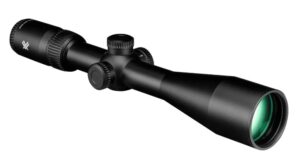
The Vortex Crossfire HD 4-12×44 makes more sense on an AR-15 that spends its time shooting paper and varmints than one built for fast target transitions. Its 4-12x magnification range gives the .223 room to stretch its legs, particularly when you’re working with smaller targets beyond typical carbine distances. At 4x, the sight picture is manageable, but it doesn’t give you the forgiving field of view I’d want for quick shots at close range. This is an optic for taking your time, settling into position, and making deliberate shots.
The 44mm objective and HD glass give you a clear, well-defined sight picture, with enough contrast to pick out target details without constantly fighting the image. Cranking the magnification to 12x helps when aiming at small targets, although the extra magnification also makes poor shooting positions and heat mirage more obvious. That’s something to remember if you’re shooting outdoors on a warm afternoon.
I also like the second focal plane reticle for its consistent appearance as you move through the magnification range. It doesn’t shrink into a thin, difficult-to-see crosshair at lower power, but you need to pay attention to the magnification setting when using reticle-based holdovers because the subtensions are calibrated at a specific power.
My biggest reservation is the 4x starting magnification. It gives away some of the AR-15’s close-range versatility, and shooters who split their time between short-range drills and distance shooting will notice that limitation. For a dedicated range or varmint AR, however, the Crossfire HD 4-12×44 offers a useful magnification range without demanding premium-optic money.
Pros
- Useful magnification for small targets and longer shots.
- Clear HD glass with good target contrast.
- Reticle remains the same apparent size.
- 44mm objective provides a bright sight picture.
- Vortex VIP warranty coverage.
Cons
- 4x minimum power is restrictive up close.
- Not ideal for rapid target transitions.
- Adds bulk compared with compact AR optics.
7) Primary Arms SLx 4-14x44mm Riflescope

The Primary Arms SLx 4-14×44 is for the AR-15 owner who enjoys working at distance rather than chasing fast target transitions. At 100 yards, 4x is perfectly usable, but the real appeal starts when you stretch things out and need to see exactly where your shots are landing. The 14x top end gives you considerably more detail than a typical LPVO, although you’ll also need a steady shooting position to make good use of it.
The ACSS reticle is what separates this scope from ordinary hunting optics. Instead of relying entirely on turret adjustments, you get built-in references for estimating range and accounting for bullet drop and wind. That’s handy with .223, particularly when shooting beyond 200 yards, where even modest wind changes start showing up on target. However, the BDC references aren’t magic shortcuts. A 55-grain load and a 77-grain load don’t follow identical trajectories, so you’ll need to confirm the reticle’s holdovers against your ammunition and actual zero.
I also appreciate the first focal plane design because the reticle scales with magnification, keeping its subtensions consistent throughout the zoom range. The side-focus adjustment helps sharpen the image at different distances, something you’ll appreciate when shooting small targets rather than simply aiming at a large paper plate.
The downside is weight and bulk. This isn’t the scope I’d put on a lightweight AR intended for quick handling. But if your .223 spends more time on a shooting bench or overlooking a field than moving between close-range targets, the SLx 4-14×44 has a clear purpose.
Pros
- 14x magnification helps with small targets and group checking.
- ACSS reticle offers practical ballistic references.
- First focal plane reticle maintains consistent subtensions.
- Side-focus adjustment for different shooting distances.
- Well suited to dedicated range and varmint rifles.
Cons
- Adds considerable weight to an AR-15.
- ACSS holdovers require ammunition-specific verification.
- More scope than necessary for ordinary 100-yard shooting.
8) SIG SAUER Tango-MSR 1-8×24

The real advantage of an LPVO on this platform is having a usable 1x setting for closer targets without giving up the magnification needed to see what you’re aiming at farther downrange. The 8x top end is useful for smaller targets and checking shot placement at distance, although I wouldn’t buy this scope expecting 8x to transform a standard .223 carbine into a precision setup.
The 24mm objective has its limitations, particularly as you increase magnification. The sight picture becomes less forgiving, and the relatively small exit pupil at 8x makes consistent eye positioning important. That’s a trade-off worth accepting for the extra magnification, but it’s noticeable.
The MSR BDC-8 illuminated reticle is another reason this scope suits the AR platform. Its holdover references are designed around ballistic applications, but you still need to confirm them against your actual .223 ammunition and zero rather than assuming the markings correspond perfectly to your trajectory. The second focal plane design also means the BDC references are calibrated at the specified magnification. SIG includes the ALPHA-MSR cantilever mount, throw lever and flip-back lens covers, which saves you from buying several accessories separately. At 18.6 ounces, the scope adds some weight, but the overall package remains manageable
Pros
- True 1x setting for close-range shooting.
- 8x magnification for smaller, distant targets.
- Illuminated BDC-8 reticle.
- Generous field of view at 1x.
- Cantilever mount included.
- Waterproof, fog-proof and shockproof construction.
Cons
- 24mm objective limits performance in poor light.
- Eye positioning becomes more demanding at 8x.
- BDC holdovers require verification with your ammunition.
See Also
Factors to Consider When Selecting the Best Scope for 223
Magnification Range
The .223 Remington is commonly used for both short and medium-range shooting. Choosing the right magnification ensures you don’t overcomplicate your setup. For hunting varmints or small game at 100–300 yards, a 3–9x or 4–12x scope is ideal.
If you want longer-range precision shooting, higher magnifications like 4–16x or even 6–24x may be helpful. The key is balancing clarity and target acquisition speed without limiting your field of view at closer distances.
Reticle Type
A scope’s reticle determines how effectively you can aim, estimate holdovers, or compensate for wind. For a .223, which has a relatively flat trajectory, a BDC (Bullet Drop Compensator) reticle is extremely useful.
Duplex reticles are simple and fast for hunting, while tactical shooters may prefer mil-dot or MOA-based reticles for precision adjustments. Choosing the right reticle depends on whether you value simplicity, speed, or ballistic precision.
Weight and Size
While the .223 is often used in lightweight rifles, mounting an oversized scope can throw off balance. A compact, lightweight optic is easier to carry for long hunts or field shooting. Conversely, precision benchrest shooters may accept a heavier scope for added magnification and features. Choose according to how and where you’ll use the rifle.
Eye Relief and Eye Box
Eye relief is the distance you can hold your eye from the scope while maintaining a clear view. The .223 has mild recoil, so extreme eye relief isn’t as critical as with magnum calibers. However, comfortable eye relief (around 3–4 inches) and a forgiving eye box make for faster target acquisition and less fatigue during extended shooting sessions
Objective Lens Size
The size of the objective lens influences how much light the scope gathers. Larger lenses provide better brightness and clarity in low-light conditions, making them great for early morning or dusk hunts.
However, they also add weight and require higher mounting rings. For most .223 rifles, a 40mm lens strikes an excellent balance between brightness and maneuverability.
Durability
The .223 Remington produces low to moderate recoil, but durability still matters. Scopes should be shockproof, fogproof, and waterproof to handle harsh weather and field use.
Look for models built from aircraft-grade aluminum with nitrogen- or argon-purged tubes. A rugged build ensures the scope holds zero after bumps, recoil, or long-term use outdoors.
FAQs on the Best Scope for 223
1) Can You Shoot 5.56 NATO in a .223 Rifle?
No. You should not fire 5.56 NATO ammunition in a rifle chambered exclusively for .223 Remington because 5.56 NATO generally operates at higher pressure, creating potential safety risks. However, rifles chambered in 5.56 NATO or .223 Wylde can safely fire both cartridges. Always check your rifle’s barrel markings and manufacturer’s recommendations before using 5.56 ammunition.
2) What is the Best Scope Magnification for a .223?
Varmint Hunting (3-9x or 4-12x)
Long-range shooting (4-16x or 6-24x)
Tactical Shooting (1-4x or 1-6x)
3) How far will a .223 Remington shoot?
The practical effective range for a .223 is 100–300 yards for reliable accuracy and terminal effect. With precision rifles and match ammo, you can reach 400–600+ yards for accurate shots. Supersonic flight typically ends around 600–900 yards, and a bullet can travel over a mile as a danger distance.
4) Is 308 faster than 223?
The majority of. 223 Remington cartridges travel at 3,000 fps or more, making them a fast round. Most of. 308 cartridges have muzzle velocities that are less than 3,000 feet per second.
5) What reticle is best for 223 scopes?
The most common and easily used reticle right currently is the BDC. The BDC reticle is not intended to provide in-depth details, so you should look at different solutions if you have certain hunting needs.
Conclusion
Before finalizing your purchase decision, go through this review of the best scope for 223, and it will go a long way in ensuring you get the best. Selecting the right scope enhances the power and accuracy of the 223 and dramatically increases your shooting and hunting skills.